
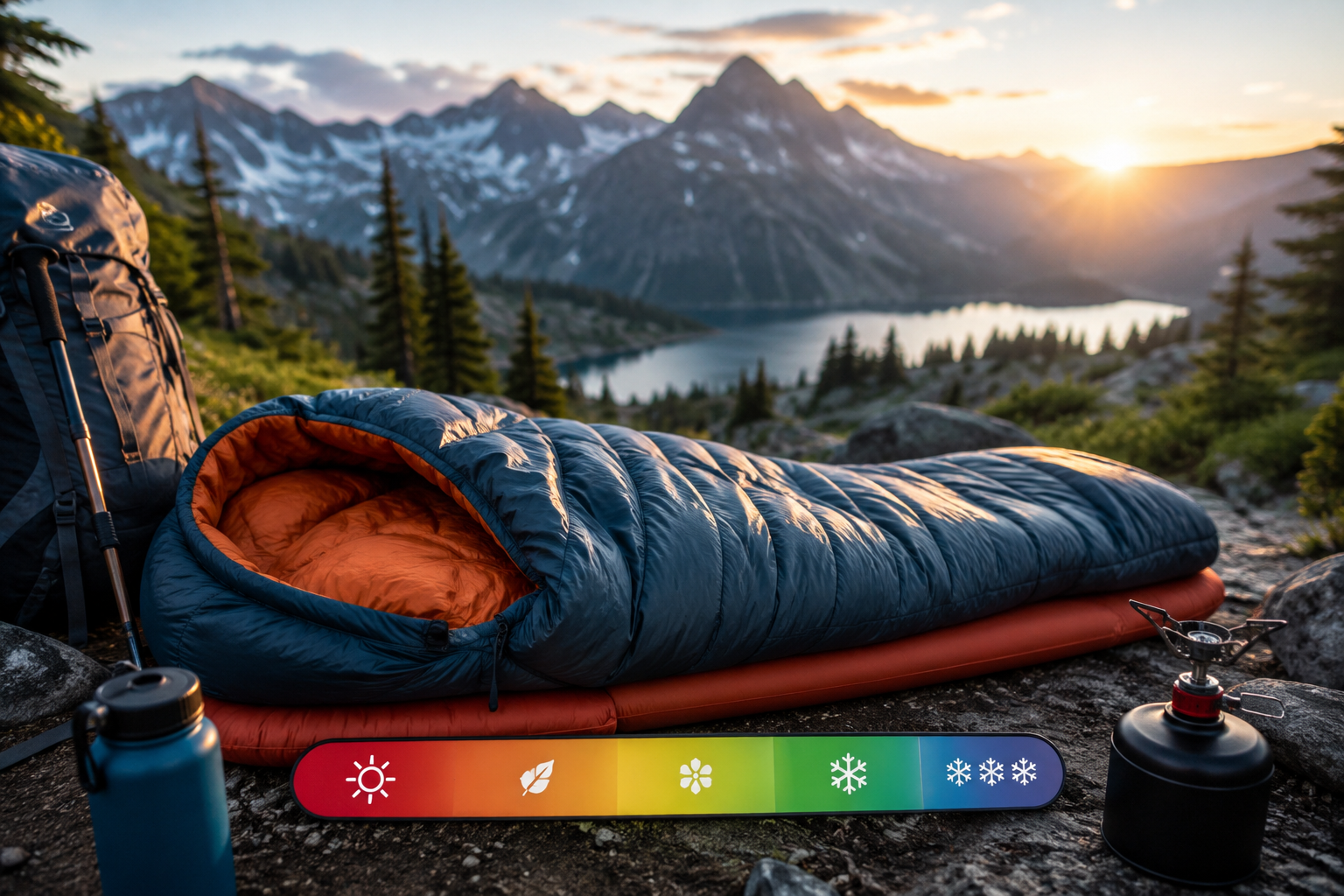
A sleeping bag’s temperature rating looks like it should be the simplest number in your entire gear list — a single figure telling you how cold it can get before you’re uncomfortable. In practice, it’s one of the most misunderstood specs in backpacking, and getting it wrong in either direction creates a genuinely miserable trip: too warm a rating for the conditions and you’re shivering through the night, too conservative and you’re hauling extra weight and bulk you never needed. Understanding what these numbers actually mean, and how much they diverge from your own real-world experience, is the difference between a sleep system that works and one that just looks right on a spec sheet.
The good news is that the industry has largely standardized how these ratings are measured, which makes comparing bags across brands far more reliable than it used to be. The bad news is that the standardized number still isn’t the same thing as “this bag will keep you warm at this temperature” — it’s a lab measurement under specific, controlled conditions that your actual camping trip will rarely replicate exactly. This guide covers what sleeping bag temperature ratings actually measure, how to translate that into a real buying decision, and the practical adjustments experienced backpackers make to avoid a cold night on trail.
For the rest of your sleep system, our best backpacking sleeping pads guide covers the insulation layer beneath you that affects your actual warmth as much as the bag itself.
The Industry Standard: ISO 23537
Most sleeping bags sold today are tested and rated according to ISO 23537-1:2022, an international standard that replaced the earlier EN 13537 rating system (the two produce results close enough — typically within 1 to 2 degrees Celsius of each other — that a bag rated under the older EN standard remains a reasonable point of comparison against newer ISO-rated bags). The standard exists specifically to solve a real problem: before it, manufacturers could essentially assign their own temperature numbers using whatever internal testing or marketing judgment they chose, making it genuinely difficult to compare a bag from one brand against a bag from another with any confidence.
The test itself uses a thermal manikin — a heated, sensor-equipped mannequin shaped and sized to represent a standard adult body — dressed in a single layer of long underwear and placed inside the sleeping bag on top of a standard insulating sleeping pad, all within a temperature-controlled chamber. The manikin’s internal heaters work to maintain a constant body temperature as the surrounding air is cooled, and sensors measure exactly how much energy is required to hold that temperature steady. A bag that requires very little added energy to keep the manikin warm at a given temperature is, by this measurement, genuinely insulating well at that temperature; a bag that needs significant added energy is not.
This produces a repeatable, standardized measurement — which is a real improvement over the pre-standard era — but it’s worth understanding exactly what it does and doesn’t capture before treating the resulting number as gospel for your own trip.
The Three Numbers: Comfort, Limit, and Extreme
ISO 23537 doesn’t produce a single temperature rating. It produces three, each describing a genuinely different scenario, and confusing them is one of the most common mistakes beginners make when shopping for a bag.
Comfort rating is the temperature at which a standard woman — as defined by the test’s specific manikin parameters — can sleep through the night in a relaxed position without feeling cold. This is the number most experienced backpackers recommend using as your primary planning figure, because it reflects a genuinely comfortable night’s sleep rather than a borderline-tolerable one. If you tend to sleep cold, run this rating as your baseline regardless of your actual gender, since it represents the more conservative of the standard’s two “comfortable” figures.
Limit rating (sometimes called Lower Limit) is the lowest temperature at which a standard man, sleeping in a curled, defensive position and actively working to stay warm, can make it through the night without waking from cold. This is a meaningfully less comfortable scenario than the Comfort rating describes — it’s the threshold of “tolerable if you’re actively fighting the cold,” not “comfortable.” The problem is that many manufacturers display the Limit rating most prominently on packaging and marketing, specifically because it’s the lower, more impressive-looking number, even though it doesn’t represent the sleep quality most backpackers actually want.
Extreme rating describes a genuine survival threshold — the temperature at which the standard test subject can survive for six hours without risk of death from hypothermia, with no expectation of actual sleep or comfort. This number should never inform a purchasing decision. It exists for safety-margin awareness only, and treating it as a usable rating is a genuinely dangerous misunderstanding of what it represents.
The practical takeaway: when you’re comparing bags, always compare Comfort rating to Comfort rating, not Comfort against Limit, and never plan a trip around the Extreme figure. A bag advertised primarily by its Limit rating may look warmer on paper than a competitor’s Comfort-rated equivalent while actually performing similarly or worse for genuine overnight comfort.
What the Lab Test Doesn’t Capture
The ISO 23537 test is a genuine improvement over unregulated manufacturer claims, but it’s still a laboratory measurement under specific, controlled conditions, and several real-world factors shift how warm you’ll actually feel that the lab number simply can’t account for.
Your sleeping pad’s insulation value matters as much as the bag itself. The test uses a standardized foam pad, but if your actual pad has a lower R-value (insulation rating) than the test pad, you’ll lose meaningfully more heat through the ground than the lab scenario predicts — a genuinely common and underappreciated source of cold nights that has nothing to do with the bag’s quality at all. Pairing a warm-rated bag with an inadequate pad is one of the most common reasons backpackers report being colder than their bag’s rating suggested.
Individual cold tolerance varies significantly and doesn’t map neatly onto the “standard man” or “standard woman” test parameters. Some people genuinely run cold and will feel chilly well above a bag’s stated Comfort rating; others run warm and stay comfortable meaningfully below it. There’s no way to know which category you fall into except through your own trail experience, which is exactly why experienced backpackers treat published ratings as a starting estimate rather than a guarantee.
Clothing, tent conditions, humidity, and wind all shift your effective warmth beyond what the lab test’s single long-underwear layer accounts for. Sleeping in additional base layers, a hat, or a liner genuinely extends a bag’s usable range downward; sleeping in a wet or humid tent, or with wind penetrating an open or poorly sealed shelter, pulls that effective range back up. The lab test happens in a still, controlled chamber — your actual campsite rarely offers that same consistency.
Bag fit and loft matter more than most beginners initially realize. A sleeping bag insulates by trapping warmed air in loft — the fluffed-up thickness of the insulation — and a bag that’s genuinely too large for your body has more empty air space to heat, which can leave you colder than the rating suggests despite technically having “more room.” A properly fitted bag traps your body heat more efficiently, which is part of why manufacturer sizing charts matter as much as the temperature rating itself.
How to Actually Choose a Rating for Your Trip
Start with the Comfort rating, not the Limit rating, as your baseline planning number. This is the single most important habit to build as a beginner comparing bags — always check which rating a displayed number refers to, and default to Comfort figures when comparing options across different brands.
Add a safety buffer below your expected overnight low. A widely echoed practical rule among experienced backpackers is to choose a bag with a Comfort rating at least 5 to 15 degrees Fahrenheit (roughly 3 to 8 degrees Celsius) below the coldest temperature you actually expect to encounter. This buffer absorbs the real-world variables the lab test can’t capture — an unexpectedly cold night, a lower-than-ideal pad, a tent that isn’t fully sealed against wind — without leaving you scrambling to layer up mid-trip.
Check whether the bag has separate men’s and women’s Comfort ratings, and use whichever applies to you. Because women’s average metabolic rate and body composition differ from the “standard man” baseline the test partially draws on, some manufacturers publish distinct ratings for women’s-specific bags. If a bag offers both a general and a women’s-specific Comfort figure, use the one that matches you rather than defaulting to whichever number is listed first or most prominently.
Match the bag category to your actual season and trip type rather than buying for the coldest hypothetical scenario you might ever encounter. A three-season bag, typically rated somewhere in the 20 to 35 degree Fahrenheit Comfort range, covers the overwhelming majority of spring-through-fall backpacking trips most people actually take. Buying a genuinely cold-rated winter bag for occasional summer use means carrying unnecessary weight and bulk, and likely overheating on the nights when the extra warmth genuinely isn’t needed.
Be honest with yourself about whether you sleep cold or warm, and adjust accordingly. If you know from prior camping or even just general experience that you tend to feel cold more than most people, lean toward a warmer-rated bag than the strict temperature math alone would suggest, and consider that buffer a genuine comfort investment rather than overkill.
Reading Real Product Listings
When you’re actually comparing bags on a shopping page, a few checks help you avoid the most common rating-related mistakes.
Confirm the bag is genuinely ISO 23537 (or the older EN 13537) tested, rather than relying on an unverified manufacturer-assigned number with no testing standard behind it. Most established outdoor brands will state this directly in the product description or spec sheet; if a bag’s temperature rating doesn’t reference any testing standard at all, treat the number with real skepticism.
Identify specifically which figure is being advertised — Comfort, Limit, or an unspecified single number that might be either. If a product listing shows only one number without labeling it, that’s often the Limit rating rather than Comfort, since it’s the more marketable (colder-sounding) figure; when in doubt, look for the manufacturer’s full spec sheet, which typically breaks out all three ISO figures even if the headline listing shows only one.
Cross-reference the stated rating against your specific trip’s realistic overnight lows, not the average temperature for the season or region — mountain and high-elevation camping in particular can see meaningfully colder nights than valley-floor forecasts suggest, and the number you should be planning around is the coldest night you might reasonably encounter, not a typical one.
Common Beginner Mistakes
Assuming the advertised rating is the temperature at which you’ll be comfortable, rather than checking whether it’s a Comfort or Limit figure. This single confusion accounts for a large share of beginners who end up colder than expected on their first backpacking trip.
Ignoring the sleeping pad entirely while shopping for a bag. A premium, well-rated sleeping bag paired with a thin, low-R-value pad can leave you colder than a mid-range bag paired with genuinely adequate ground insulation — the two pieces of gear work together, and treating the bag as the sole determinant of warmth overlooks a genuinely significant variable.
Buying the warmest-available bag “just to be safe” without considering the tradeoffs. A bag rated well beyond what your actual trips require adds real weight, bulk, and cost, and can leave you overheating and unzipping repeatedly on any night that isn’t at the extreme cold end of what you’re prepared for. Match the rating to your actual, realistic trip conditions rather than the coldest scenario you can imagine.
Trusting an unstandardized or unstated temperature rating on a budget bag without verifying it. Not every bag on the market is genuinely ISO tested, and a suspiciously warm rating at a suspiciously low price is worth researching further — through independent reviews or the manufacturer’s own testing documentation — before trusting it for a genuinely cold-weather trip.
Final Thoughts
A sleeping bag’s temperature rating is a genuinely useful, standardized tool once you understand what it actually measures — and a genuinely misleading one if you take the headline number at face value without checking whether it’s the Comfort or Limit figure, or without accounting for your own cold tolerance, your sleeping pad, and the real conditions your specific trip will involve. Start with the Comfort rating as your baseline, build in a real safety margin below your coldest expected night, and remember that the lab manikin in a climate-controlled chamber isn’t quite the same as you, on your pad, in your tent, on an unexpectedly cold night in the backcountry.
Get that translation right, and the rating on the tag becomes a genuinely reliable planning tool rather than a source of surprise on night one of your trip.
For the rest of your sleep system, our best backpacking sleeping pads guide covers the insulation beneath you that works alongside your bag’s rating to determine how warm you actually sleep, and our how to pack a backpack for hiking guide covers where your sleep system fits into your overall pack loading strategy.