
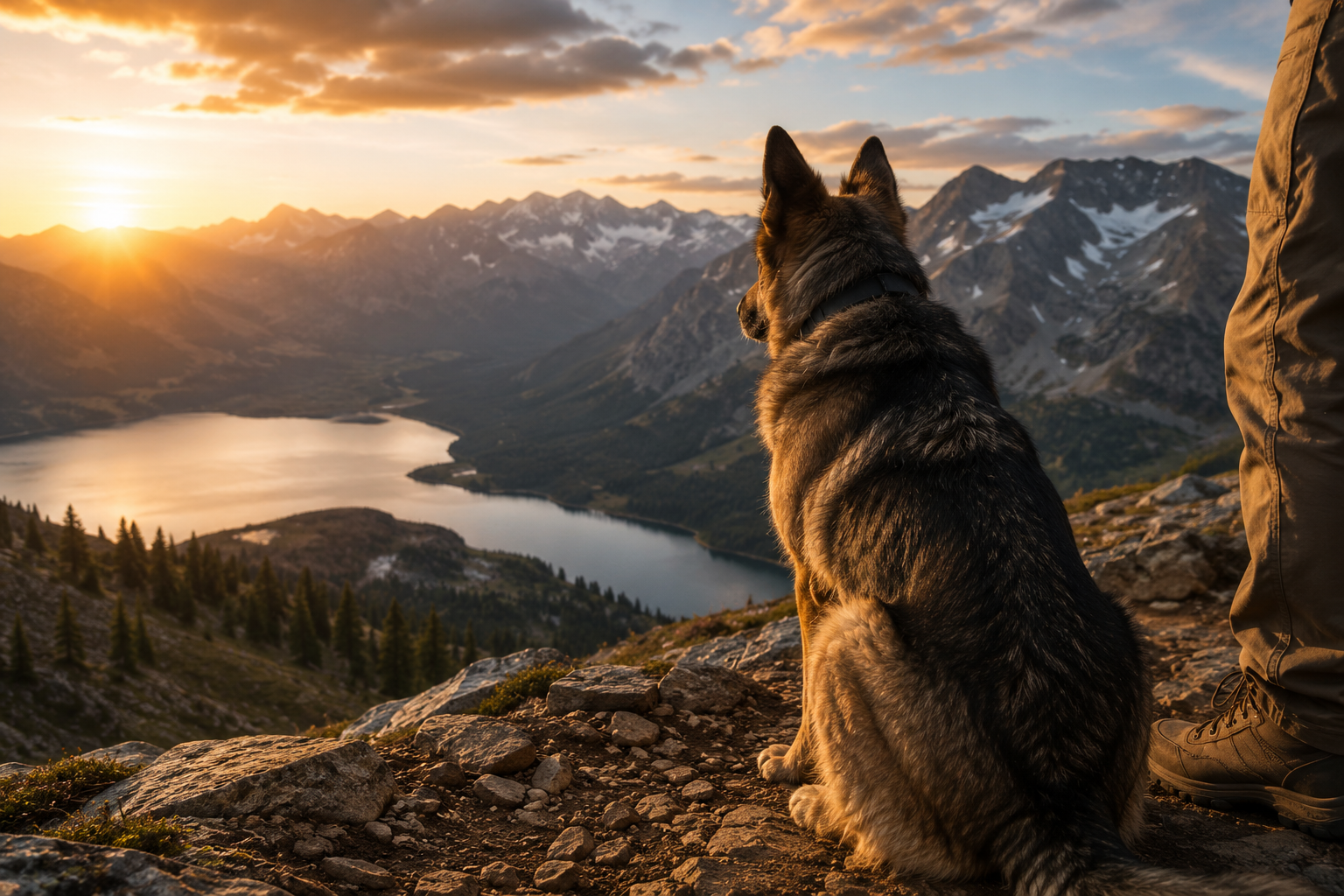
Most hikers who want a dog on the trail are looking for two things that most breed guides treat separately: a dog that can actually keep up on demanding terrain, and a dog whose presence makes remote hiking feel safer. The reality is that these qualities don’t have to be separate — some of the best trail dogs are also among the most naturally protective breeds available.
This matters more than it sounds. Hiking solo in remote backcountry, encountering wildlife on mountain trails, or covering serious mileage far from help is a different experience with a large, alert, protective dog beside you. The presence of a confident dog deters wildlife encounters, provides an early warning system for approaching dangers before you see or hear them, and creates a psychological confidence on remote routes that genuinely changes how you experience solo hiking.
The breeds on this list combine two essential qualities: genuine trail capability — the endurance, paw durability, and physical structure to cover serious miles on demanding terrain — and natural protective instincts that make them something more than just a hiking companion. Every breed here has real-world capability on both counts.
For more on hiking with dogs, check out our guides to the best dog backpacks for hiking, how to train your dog to hike long distances, and best hiking snacks for dogs.
What Makes a Dog Both Protective and Trail-Ready?
Before the breed breakdown, it’s worth understanding what these two qualities actually mean in practice — because a dog that’s protective but physically limited is a liability on the trail, and a dog that’s a great hiker but has zero protective instinct doesn’t serve the purpose.
Trail capability requires: Endurance for sustained multi-mile efforts, paw durability for varied terrain, appropriate body structure without short legs or compressed airways that limit performance, heat or cold tolerance matched to your hiking environment, and enough trainability for reliable trail manners including recall.
Protective instinct requires: Natural alertness to environmental changes and approaching strangers or animals, confidence rather than anxiety in novel situations, loyalty to their handler, and enough physical presence to function as a genuine deterrent. A nervous or anxious dog that barks at everything is not a protective dog — it’s a liability. True protection comes from calm confidence, not reactive anxiety.
One critical note: no dog provides reliable protection against a large predator attack. What protective dogs provide is deterrence — their presence, size, and alert behavior discourages wildlife from approaching, and their early warning gives you time to react to situations before they escalate. A dog that deters a mountain lion from approaching your camp is providing genuine safety value without ever needing to confront the animal directly.
1. German Shepherd — Best Overall Protective Hiking Dog
The German Shepherd is the most complete combination of trail capability and protective instinct available in a single breed. Bred originally for sustained livestock herding across large territories, the German Shepherd has the cardiovascular endurance, structural efficiency, and paw durability to cover serious mileage on demanding terrain. Adult German Shepherds can comfortably handle 15-20 mile days once properly conditioned — genuinely matching or exceeding most hikers’ daily mileage goals.
The protective credentials are equally strong. German Shepherds are among the most widely used protection, police, and military working dogs in the world — not for their size alone, but for the combination of intelligence, trainability, alertness, and natural loyalty that makes them genuinely effective. On the trail, a well-trained German Shepherd is simultaneously a reliable trail partner and a credible deterrent to both human and wildlife threats.
The training requirement is real. German Shepherds are intelligent enough to develop bad habits as readily as good ones — consistent obedience training, solid recall, and controlled behavior around other hikers and wildlife are non-negotiable before trail use. With that foundation in place, a German Shepherd is the most capable protective hiking dog available.
Their medium-length double coat handles a wide range of temperatures but requires attention in extreme summer heat — plan hikes with access to water and shade, and hike in cooler morning hours during hot weather. For cold weather and mountain terrain, they’re essentially all-weather capable.
Best for: Hikers who want the most complete protective trail dog and are willing to invest in proper training to unlock the breed’s full capability.
2. Rhodesian Ridgeback — Best for Hot Climate Hiking with Protective Instincts
The Rhodesian Ridgeback was bred in southern Africa specifically to track and bay large predators — including lions. That origin story is not marketing hyperbole. These dogs have genuine predator-awareness instincts bred into them over centuries of work in environments where large cat encounters were a real daily reality.
On trail, the Ridgeback’s short, dense coat and athletic build make it one of the most heat-tolerant large protective breeds available — a meaningful advantage for hikers in desert, canyon, and warm-climate environments where double-coated breeds struggle. The muscular, athletic build handles rugged terrain with natural confidence, and the endurance for sustained long-distance effort is excellent.
The protective temperament is calm and confident rather than reactive — a Ridgeback doesn’t bark at everything, which makes it a better trail companion than reactive breeds. It reads situations, maintains awareness of its environment, and responds to genuine threats with seriousness. The loyalty to its family is exceptional.
Recall requires serious work with this breed — the independent hunting instinct that makes Ridgebacks excellent at their original purpose can override training under high-distraction conditions. Off-leash trail use requires extensive recall training before it’s reliable. On-leash, the Ridgeback is an excellent controlled trail companion with impressive protective presence.
Best for: Hikers in warm to hot climates who want a protective dog with genuine large-predator awareness and a calm, confident temperament.
3. Belgian Malinois — Best High-Performance Protective Trail Dog
The Belgian Malinois is the working dog choice of military special operations units, police departments, and protection sport competitors worldwide — and for good reason. The Malinois combines extreme athleticism, exceptional trainability, and intense protective drive in a medium-sized package that handles demanding terrain with ease.
On trail, the Malinois is in a different performance category from most breeds. They cover technical terrain with natural agility, maintain sustained effort over long distances without fading, and adapt quickly to novel trail conditions. Their medium size makes them more maneuverable than larger breeds on technical rocky terrain while maintaining enough physical presence to function as a genuine deterrent.
The protective instinct is among the most developed of any breed — Malinois are natural guardians who maintain constant environmental awareness and respond to threats with speed and decisiveness that larger, heavier breeds can’t match.
The significant caveat: Belgian Malinois are not beginner dogs. They require experienced handlers, extensive training, consistent mental and physical stimulation, and an owner who understands working dog psychology. A poorly managed Malinois is a genuinely difficult dog — one that becomes destructive, anxious, and potentially dangerous without appropriate structure. For experienced handlers, they’re arguably the most capable protective trail dog available.
Best for: Experienced dog handlers who want maximum protective capability and athletic trail performance in a medium-sized, highly trainable package.
4. Doberman Pinscher — Best Protective Trail Dog for Moderate Climate Hiking
The Doberman is one of the most elegant combinations of athleticism and protective instinct in the dog world. Bred specifically as a personal protection dog in the late 19th century, Dobermans have natural guardian instincts deeply embedded in their temperament alongside the intelligence and trainability to manage those instincts appropriately.
On trail, the Doberman’s athletic, lean build handles sustained hiking effort efficiently. They’re fast, agile, and capable of covering serious mileage once conditioned — adult Dobermans in good condition can handle 10-15 mile days without difficulty. The breed’s intelligence makes trail training and recall development more reliable than with more independent breeds.
The short single coat is the limiting factor for outdoor use — Dobermans are not cold-weather dogs and should not be hiked in genuinely cold conditions without a dog coat. For three-season hiking in moderate climates, they’re excellent. For winter or high-altitude hiking, step up to a double-coated breed.
The protective temperament is calm and alert rather than reactive — a well-socialized Doberman reads its environment accurately and responds proportionally, which is exactly the quality you want in a trail companion whose protective instincts you rely on in varied situations.
Best for: Hikers in moderate climates who want a highly trainable, naturally protective trail dog with an athletic build and confident temperament.
5. Rottweiler — Best Protective Trail Dog for Carrying Their Own Gear
The Rottweiler is built like a tank — and on the trail, that physical power translates to a dog capable of carrying its own food, water, and supplies in a dog backpack without the load affecting its performance meaningfully. Rottweilers descend from Roman cattle-driving dogs and maintain that heritage of sustained physical work combined with natural protective instincts that made them valuable as livestock and property guardians.
The trail performance of a Rottweiler depends heavily on conditioning and the specific individual. Well-conditioned Rottweilers handle 10-12 mile days comfortably on moderate to demanding terrain. Their heavy musculature makes steep climbing more demanding than for lighter breeds — plan elevation gain accordingly and build conditioning gradually.
The protective presence is among the most visually imposing of any breed — a large, muscular Rottweiler on trail communicates serious protection through appearance alone before any behavioral display is required. Combined with their natural guardian instincts and loyalty to their handler, they’re effective deterrents in both wildlife and human encounter situations.
Heat tolerance is a consideration — the Rottweiler’s dark coat and muscular build generates and retains heat. Summer hiking in hot climates requires careful management with access to shade and water, and hiking in cooler morning hours. For temperate and cool climate hiking, they’re excellent.
Best for: Hikers who want maximum protective physical presence and a dog capable of carrying its own trail supplies on multi-day adventures.
6. Australian Shepherd — Best Protective Trail Dog for Technical Terrain
The Australian Shepherd brings herding breed athleticism and intelligence to the trail with a protective instinct that’s different from guarding breeds but equally real — an Aussie’s deep loyalty to its family and natural watchfulness of its environment creates a dog that is constantly monitoring its surroundings and alerts immediately to anything unusual.
On technical terrain, the Australian Shepherd’s agility and body awareness is exceptional. They navigate rocky scrambles, steep descents, and off-trail travel with natural confidence that larger, heavier breeds can’t match. The endurance for sustained effort is excellent — Australian Shepherds were bred for full days of sustained herding activity across large properties, which translates directly to long trail days.
The double coat handles a wide temperature range effectively — warm enough for cool mountain mornings, breathable enough for moderate summer hiking. In genuinely hot conditions, the coat becomes a liability; monitor carefully and provide regular cooling stops near water.
The intelligence that makes Aussies exceptional working dogs requires consistent mental stimulation alongside physical exercise — a bored Australian Shepherd is not a pleasant trail companion. When properly engaged and trained, they’re among the most reliable, alert, and responsive trail dogs available.
Best for: Hikers on technical terrain who want an athletic, agile protective companion with exceptional trail awareness and family loyalty.
7. Giant Schnauzer — Best Lesser-Known Protective Trail Dog
The Giant Schnauzer is the protective trail dog that most hikers haven’t considered — and that’s a genuine oversight. Originally bred for livestock driving and estate guarding in Bavaria, the Giant Schnauzer combines robust physical capability with strong natural protective instincts in a package that handles varied trail conditions effectively.
The wiry double coat provides weather protection across a wide range of conditions — warm enough for cool mountain environments, protective against brush and debris on technical terrain. At 60-85 lbs, the Giant Schnauzer has enough physical presence to serve as a genuine deterrent while remaining nimble enough for demanding trail use.
The intelligence and trainability are notable — Giant Schnauzers respond well to consistent training and develop reliable recall more readily than more independent protection breeds. The natural suspicious-of-strangers temperament that makes them effective guardians requires careful socialization from puppyhood to ensure appropriate behavior around other hikers and trail users.
Their energy level is high and sustained — Giant Schnauzers need significant daily exercise to stay balanced, which makes the trail an ideal outlet rather than a challenge. A well-exercised Giant Schnauzer on trail is focused, responsive, and a genuinely pleasant companion.
Best for: Hikers who want protective instincts and trail capability in a breed that most people haven’t encountered, with better trainability than many protection breeds.
8. Akita — Best Protective Trail Dog for Cold Weather and Mountain Hiking
The Akita is Japan’s national dog — a breed with centuries of history as both a hunting companion for large game and a loyal family guardian. The combination produces a dog with genuine predator-awareness instincts, serious physical capability in cold and mountain environments, and an unwavering loyalty to its family that makes it a formidable protective presence.
The thick double coat is purpose-built for cold, wet, and mountain conditions — Akitas thrive in environments where many breeds struggle, making them ideal for hikers who spend time in alpine terrain, winter conditions, or consistently cold climates. The powerful, muscular build handles demanding terrain with natural confidence.
The protective temperament is quiet and serious rather than vocal and reactive — an Akita doesn’t bark frequently, but its attentiveness to its environment is constant. This makes it an excellent trail guardian that won’t create noise complaints on popular trails while maintaining genuine protective awareness throughout the hike.
Akitas are not easy dogs and not appropriate for first-time dog owners. They’re independent, strong-willed, and can be dog-aggressive without proper socialization. With experienced handling and consistent training, the Akita’s loyalty and protective capability is exceptional. In summer heat, the thick coat requires careful management — plan hikes in cool hours and prioritize water access.
Best for: Experienced handlers who hike in cold, mountain, or alpine environments and want a serious, quiet protective presence with exceptional loyalty.
9. Bernese Mountain Dog — Best Protective Family Trail Dog
The Bernese Mountain Dog was developed in the Swiss Alps as a multi-purpose farm dog — draft animal, livestock guardian, and family companion — which gives it a combination of physical capability, calm temperament, and natural protectiveness that’s uniquely suited to family hiking in mountain environments.
The Bernese is large enough to carry its own supplies and physically capable enough for demanding mountain terrain. The thick double coat handles cold and wet alpine conditions excellently, making it particularly well-suited to mountain and cold-climate hiking where many breeds are limited.
The protective instinct is gentler than purpose-bred protection breeds — Berners are not aggressive guardians but they are deeply loyal family dogs that maintain watchful awareness of their environment and alert to unusual situations. Their size alone serves as a deterrent in most practical trail scenarios.
The most important practical consideration: Bernese Mountain Dogs are not heat-tolerant. Summer hiking in warm climates with a Berner requires serious management — early morning starts, consistent water access, shaded rest stops, and willingness to cut days short when temperatures climb. For cool, mountain, and cold-climate hiking, they’re excellent. For summer hiking in warm conditions, choose a different breed.
Best for: Families who hike in cool mountain environments and want a large, gentle, naturally protective dog that’s as good with children as it is on demanding terrain.
10. Cane Corso — Best Imposing Protective Presence for Remote Trail Hiking
The Cane Corso is a breed that communicates protection before it does anything — its sheer size, muscular build, and confident bearing create an immediate deterrent effect that few breeds match. Originally bred as Italian farm guardians and working dogs, the Cane Corso combines serious physical capability with deep loyalty to its family and natural protective instincts.
On trail, a conditioned Cane Corso handles moderate to demanding terrain competently. The large size requires more careful conditioning than lighter breeds — joint health and heat management are considerations that need attention in planning and pacing. Well-conditioned Cane Corsos handle 8-12 mile days without difficulty on appropriate terrain.
The protective temperament is calm and serious — Cane Corsos are not reactive or anxious dogs, but they maintain constant situational awareness and respond to genuine threats with confidence. Their physical presence creates a protective buffer that extends their actual protective capability significantly.
Like all large, powerful protective breeds, the Cane Corso is not appropriate without serious training and an experienced handler. Socialization, obedience, and recall training are non-negotiable before trail use. With that foundation in place, few breeds create a more convincing protective presence on remote trails. For gear to outfit a large dog on trail, our best dog backpacks for hiking guide covers options for larger breeds.
Best for: Experienced handlers doing remote solo hiking who want maximum protective deterrence from a large, calm, confident guardian breed.
Training Requirements for Protective Hiking Dogs
Every breed on this list has natural protective instincts — which means every breed on this list requires intentional training to channel those instincts appropriately on the trail. A protective dog without training is not a safe trail companion for other hikers, their dogs, or wildlife.
Socialization is the foundation. Protective breeds need extensive positive exposure to other people, dogs, and animals from puppyhood. A dog that’s anxious or reactive around strangers on trail is not providing protection — it’s creating problems. True protective confidence comes from a dog that’s calm and stable in normal situations and responds appropriately to genuine threats.
Recall must be bulletproof. Every protective breed on this list has either a prey drive, a protective drive, or both — instincts that can override training under sufficient provocation. Off-leash trail use requires recall that works when another dog approaches, when wildlife is spotted, and when a stranger appears around a corner. Build this recall on leash first, extend gradually to a long line, and only release to true off-leash when the reliability is beyond doubt.
Trail manners matter as much as protection. A protective dog that lunges at every passing hiker creates a worse situation than hiking without a dog. The goal is a dog that’s calm and controlled on trail, responsive to its handler, and reserves its protective capability for situations that genuinely warrant it.
For a complete guide to building trail readiness in any breed, our how to train your dog to hike long distances guide covers the conditioning, obedience, and socialization process from the ground up.
What Protection Actually Looks Like on Trail
Managing expectations about what a protective dog provides on the trail is important before choosing a breed for this purpose.
What protective dogs genuinely provide: Early warning of approaching people or animals before you see or hear them. Deterrence that discourages wildlife from approaching your camp or trail position. Psychological confidence that changes how you experience remote solo hiking. Companionship that reduces the vulnerability of solo travel.
What no dog provides: Reliable protection against a determined large predator attack at close range. A substitute for bear spray, noise-making on trail, or other wildlife encounter prevention practices. A reason to abandon other safety precautions in bear, mountain lion, or wolf country.
The practical safety value of a protective trail dog is real and meaningful — particularly for solo hikers on remote routes. That value comes from deterrence and early warning, not from combat capability. A large, confident, alert dog on your trail significantly reduces the likelihood of wildlife approaching close enough to create an encounter, which is the practical outcome that matters.
Final Thoughts
The best protective dog breed for hiking is the one that matches your experience level, your hiking environment, and your lifestyle — not just the breed with the most intimidating reputation. A German Shepherd with solid training is a more effective protective trail dog than a Cane Corso with poor socialization. Match the breed to your actual capability to train and manage it, and the trail protection it provides will be genuine rather than theoretical.
For the complete hiking dog ecosystem — gear, conditioning, nutrition, and breed selection — check out our full collection of dog hiking guides including best dog carrier backpacks for hiking, best small dogs that can hike all day, and best hiking dogs for cold weather.