
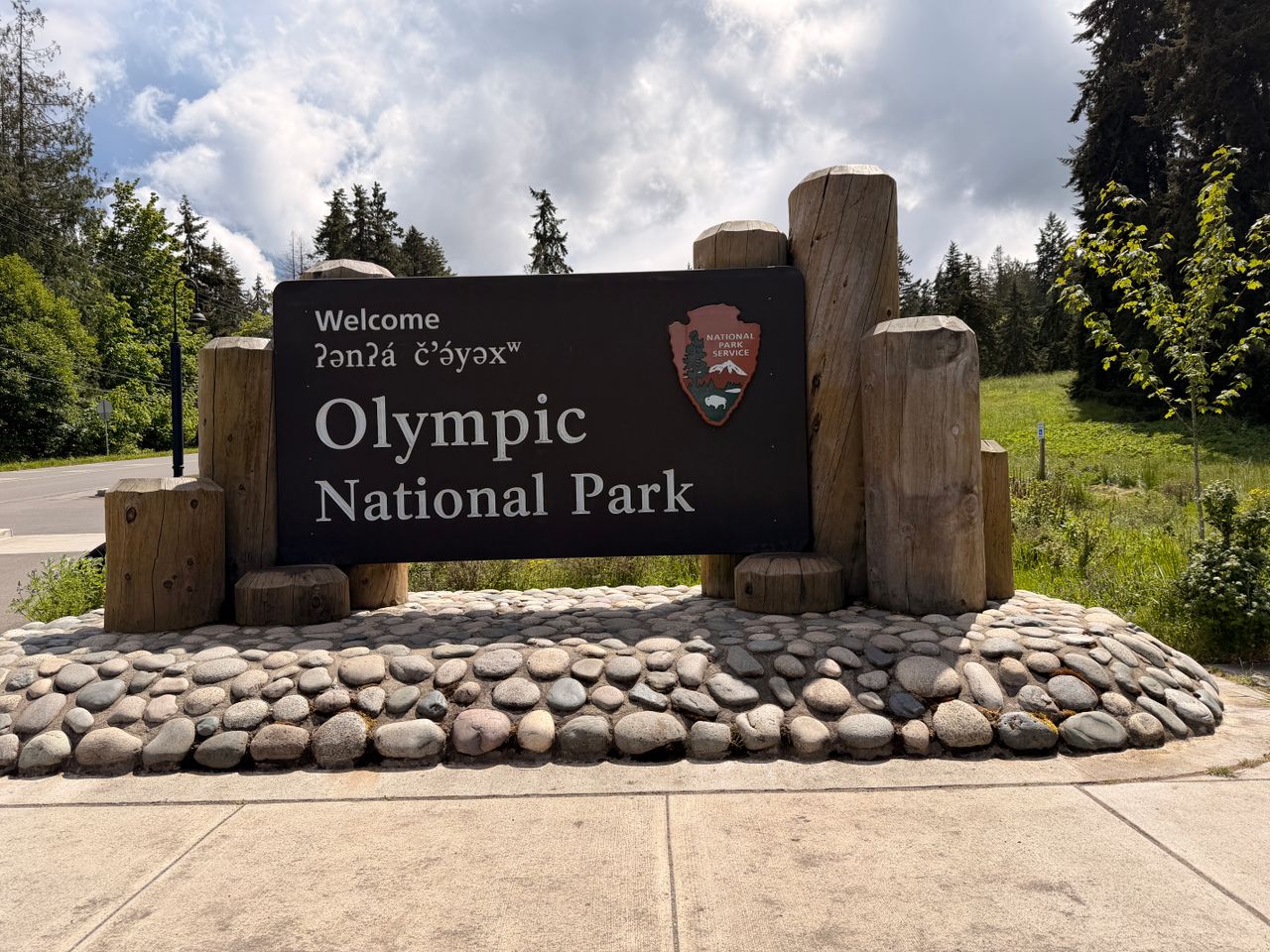
Few national parks pack as much genuine ecological range into one boundary as Olympic. Within a single 922,000-acre park, you can walk a temperate rainforest draped in moss and ferns that receives more rain in a year than most of the country sees in five, stand on a wild, driftwood-strewn Pacific beach hunting for tide pools among sea stacks, and climb into alpine terrain with panoramic views stretching to Vancouver Island — all without leaving the same park. No single road crosses Olympic’s interior; instead, a ring of spur roads branches off Highway 101, each leading into one distinct section of the park, which means most visitors plan around picking two or three areas to explore rather than trying to see everything on one trip.
This guide covers the best hikes across Olympic’s three defining ecosystems — coast, rainforest, and alpine — using current 2026 fee and road status information, since several of this park’s most popular access roads are genuinely weather-dependent in ways that catch first-time visitors off guard.
For gear appropriate to Olympic’s genuinely varied terrain and near-constant moisture, our best hiking boots for men and best hiking boots for women guides cover waterproof options suited to rainforest mud and beach sand alike.
Before You Go — Essential 2026 Planning Information
Entrance fees. A standard 7-day vehicle pass costs $35, with individual passes for hikers, cyclists, or pedestrians without a vehicle priced lower. The America the Beautiful Annual Pass at $80 covers entry for 12 months and is accepted at the fee station on Hurricane Ridge Road specifically, alongside all standard entrance stations.
No international surcharge. Unlike Yellowstone, Zion, Bryce Canyon, and several other high-traffic parks, Olympic is not among the 11 parks subject to the new $100 non-U.S. resident surcharge — international visitors pay the same standard entrance fee as U.S. residents in 2026.
Hurricane Ridge Road is genuinely weather-dependent, and the visitor center hasn’t been fully rebuilt. The original Hurricane Ridge Visitor Center facilities burned in 2023 and, as of 2026, have not been fully replaced — expect a more limited facility experience than older trip reports describe. In winter, the road runs on a limited Friday-through-Sunday schedule (weather permitting) from roughly December through March, with chains sometimes required. Check the park’s current road status page before heading up at any time outside of peak summer, since a road that’s open one day can close by the next morning with little warning. The road also closes temporarily whenever the upper parking lot reaches capacity during busy summer days, reopening as space becomes available.
No road crosses the park’s interior. To reach the rainforest valleys, the Pacific coast, and the alpine Hurricane Ridge area, you drive around the park’s perimeter on Highway 101 and turn onto individual spur roads for each destination — Hoh Rainforest, Sol Duc, Hurricane Ridge, and the various coastal beach access points are not connected to each other by any direct route through the park.
Some coastal and reservation-adjacent trailheads require an additional permit. Trails on the Makah Indian Reservation, including the popular routes to Shi Shi Beach and Cape Flattery, require a separate Makah Recreation Pass purchased in Neah Bay before arriving — this is not covered by your standard Olympic National Park entrance fee.
Tides matter for coastal hiking, genuinely and specifically. Several coastal routes and tide pool areas are only safely accessible at low tide, and sections of beach can flood entirely at high tide. Check the park’s tide safety information before any coastal hike, and time tide-pooling specifically around low tide windows.
Coastal Hikes
Rialto Beach and Hole in the Wall — Best Tide Pooling Beach
Distance: Roughly 3 miles round trip to Hole in the Wall | Elevation gain: Minimal | Difficulty: Easy
Rialto Beach is widely regarded among experienced Olympic visitors as one of the best tide pooling beaches in the entire park, and the walk to Hole in the Wall — a natural sea arch roughly a mile and a half north of the parking area — delivers both dramatic coastal scenery and genuinely excellent tide pool exploration when timed around low tide. Sea stacks rise dramatically along the shoreline throughout the walk, and this stretch of coast is consistently cited as a family-favorite destination for the combination of an easy beach stroll and genuine wildlife discovery in the tide pools.
Access is via the Forks area of the park, driving toward the Mora Campground and continuing past it to the Rialto Beach parking area. Plan your visit around low tide specifically if tide pooling is the priority — the pools that make this beach special are considerably less accessible and less rewarding at high tide.
Ruby Beach — Most Photogenic Beach in the Park
Distance: Short walk from the parking area to the beach itself | Elevation gain: Minimal | Difficulty: Easy
Ruby Beach is consistently described as the most popular beach in Olympic National Park, and the reason is visual rather than purely recreational — striking sea stacks, abundant driftwood, and some of the best sunset photography opportunities on the entire coast. While tide pooling is possible here, experienced visitors consistently rank it below Rialto Beach and other coastal spots specifically for that activity — Ruby Beach’s real strength is photogenic scenery rather than tide pool density.
Access requires driving further south along Highway 101 to the Kalaloch area rather than the Forks-adjacent beaches like Rialto — Ruby Beach is the first beach you’ll reach coming from the north along this stretch, with clearly marked parking.
Rainforest Hikes
Hall of Mosses Trail — Best Old-Growth Rainforest Walk
Distance: Under 1 mile round trip | Elevation gain: Minimal | Difficulty: Easy
The Hall of Mosses is the signature short trail in the Hoh Rainforest, and it delivers exactly what the name promises — massive old-growth trees draped in thick, hanging moss, growing in one of the wettest environments in the continental United States. This trail is consistently described by experienced Olympic visitors as one of the most genuinely magical places in the entire park, and its short, easy distance makes it accessible to virtually any visitor regardless of fitness level.
The trail is located in the Hoh Rainforest area, reached via a spur road that dead-ends at the Hoh Visitor Center, where the trailhead begins. Several other short trails branch from the same visitor center area, making this a natural anchor point for a broader rainforest exploration if you have additional time.
Ancient Groves Trail (Sol Duc) — Best Uncrowded Old-Growth Loop
Distance: Roughly 0.6 miles (loop) | Elevation gain: 52 feet | Difficulty: Easy
Located in the Sol Duc Valley roughly 9 miles from the entrance station along Sol Duc Hot Springs Road, the Ancient Groves Trail is a self-guided nature loop through a grove of trees more than 750 years old — part of several pockets of old-growth forest scattered across the Olympic Peninsula. The small, easy-to-miss trailhead is a genuine advantage here rather than a drawback, since it keeps this trail meaningfully less crowded than the more famous Hall of Mosses despite comparably impressive scenery.
The trail passes through lush undergrowth with ferns and thick moss draped over trunks and limbs, and at the far end of the loop, it runs along the edge of a small canyon with glimpses of the Sol Duc River below and the Olympic Mountains beyond. Along the way, look for nurse logs — fallen trees with new, smaller trees growing directly along the top of the decaying trunk, a small but genuinely interesting detail of rainforest ecology visible throughout the walk. Two separate parking areas serve this trail with connector paths to the same loop, so if the first pullout is full, continue a short distance further along the road to the second one.
Sol Duc Falls — Best Waterfall Hike in the Park
Distance: 1.6 miles round trip | Elevation gain: 200 feet | Difficulty: Easy
Sol Duc Falls is frequently cited by experienced Olympic hikers — including former park rangers who’ve spent years exploring the park — as their single favorite hike in the entire park, and it’s consistently described as the most photographed waterfall in Olympic. Starting from the Sol Duc trailhead at the end of Sol Duc Road, the trail winds through old-growth forest, passing the historic Canyon Creek Shelter roughly half an hour in, before crossing a wide bridge over the Sol Duc River near the falls themselves.
What makes these falls visually distinctive is the river’s geometry — it makes a sharp 90-degree turn right at the falls and again shortly after, putting the falls at an unusual angle across the main flow rather than the straight drop most waterfalls present. Multiple viewing areas along the trail let you take in this unusual shape from different perspectives. The relatively flat, short distance makes this a genuinely strong family hike, and hikers who want more can continue from the falls onto Lover’s Lane, toward Deer Lake, or along the Sol Duc River Trail — all considerably longer options branching from the same destination.
Practical tip: Arrive early, particularly in summer, when this popular trailhead’s parking lot fills quickly. If it’s full, an alternative approach starting from Sol Duc Hot Springs or the Sol Duc Campground creates a longer roughly 6-mile loop that reaches the same falls via a different route through the campground and along the river.
Alpine Hikes
Hurricane Hill Trail — Best Alpine Views and Wildflowers
Distance: A little over 3 miles round trip | Elevation gain: Roughly 700 feet | Difficulty: Moderate
Hurricane Hill is consistently named a favorite trail in the Hurricane Ridge area — Olympic’s primary alpine access point near Port Angeles — and it delivers genuine mountaintop views along with excellent wildflower displays in summer and regular wildlife sightings, including deer. From the summit, the panorama extends across the full expanse of the Olympic mountain range, with Vancouver Island visible across the water on clear days — a genuinely striking payoff for a moderate 700 feet of elevation gain.
The trailhead sits at the very end of Hurricane Ridge Road, past the main visitor center parking area — meaning reaching the trail requires driving the full length of this weather-dependent road, so check current road status before planning a trip specifically around this hike, particularly outside of peak summer months.
Lake and Easy Access Hikes
Lake Crescent — Best Summer Swimming and Lake Recreation
Distance: Variable, depending on which section you explore | Elevation gain: Minimal | Difficulty: Easy
Lake Crescent isn’t primarily a hiking destination — it’s a genuine recreational lake experience, and it’s included here because it’s consistently described by repeat Olympic visitors as one of the best family destinations in the entire park. A historic lodge anchors the area, and the lake itself supports canoeing, kayaking, paddleboarding, and swimming (the water runs cold even in summer, but that doesn’t stop most visitors from jumping in anyway). A dedicated dock built specifically for jumping into the water is a genuine highlight for families visiting in warm weather.
Located roughly halfway between Forks and Port Angeles along Highway 101, Lake Crescent is easily reached from either direction, with several distinct access points — the Fairholme area, the Lake Crescent Lodge, and the Log Cabin Resort at East Beach — each offering a slightly different character and set of nearby trails for visitors who want to combine lake time with some hiking.
Madison Falls — Best Fully Accessible Waterfall
Distance: 0.1 miles | Elevation gain: Minimal | Difficulty: Easy, wheelchair accessible
Madison Falls stands out specifically for its accessibility — a flat, paved, 0.1-mile trail that’s wheelchair-friendly and dog-friendly, making it one of the few waterfall destinations in the park genuinely accessible to visitors of any mobility level. The waterfall itself is beautiful, and the trail runs alongside the Elwha River, which typically shows a striking turquoise-milky-blue color.
This area sees relatively few visitors compared to Olympic’s more famous destinations, making it a genuinely pleasant, low-effort stop for anyone in the Port Angeles area who wants a quick waterfall and river view without significant hiking effort. Located near Port Angeles in the Elwha area of the park, the access road here was affected by a major flood in past years and now ends where the Madison Falls Trail begins, which naturally limits how far you can continue past this point.
Building Your Olympic National Park Itinerary
One day: Given the park’s spread-out geography with no interior road connecting sections, a genuine one-day visit works best focused on a single area — Hurricane Ridge for alpine views and the Hurricane Hill Trail, or the Hoh Rainforest for Hall of Mosses combined with a nearby coastal beach if time allows.
Two to three days: Day one covers Hurricane Ridge and the Hurricane Hill Trail (weather and road status permitting). Day two covers the Hoh Rainforest’s Hall of Mosses, followed by Ruby Beach or Rialto Beach depending on whether photography or tide pooling is the priority. Day three covers the Sol Duc Valley — Sol Duc Falls and the Ancient Groves Trail — plus Lake Crescent for a relaxed afternoon.
Four or more days: Add Madison Falls as a low-effort stop near Port Angeles, and build in a genuine buffer day given how weather-dependent Hurricane Ridge Road can be — a clear morning forecast doesn’t guarantee the road stays open through the day, and having flexibility to shift your alpine day if conditions change meaningfully improves the odds of actually experiencing that section of the park.
Final Thoughts
Olympic rewards visitors who accept its fundamentally spread-out structure rather than trying to see all three ecosystems — coast, rainforest, and alpine — in a single rushed day. Each section requires its own dedicated drive time along the perimeter highway, and each delivers a genuinely different park experience worth its own focused visit. Start with whichever ecosystem draws you most — the alpine views at Hurricane Hill, the otherworldly moss-draped trees of Hall of Mosses, or the tide pools at Rialto Beach — and build outward from there rather than trying to cram all three into one exhausting day of driving.
Check Hurricane Ridge Road’s current status before any alpine-focused trip, plan coastal hikes around tide charts rather than convenience, and budget genuine driving time between the park’s disconnected sections — Olympic’s geography demands more advance planning than parks with a single connecting road, and that planning pays off considerably in what you’re able to actually experience.
For more national park hiking guides, check our best hikes in Glacier National Park and best hikes in Grand Teton National Park guides.