As an Amazon Associate I earn from qualifying purchases.
A headache that was not there at the trailhead, nausea on ground you could normally climb easily, and a night of broken sleep at camp are often the first signs that altitude, not fitness, is now running your hike. This guide works through the problem in the order you will meet it: how to spot the early signs, how to tell them apart from the serious forms, what to do first, how to prevent trouble with a sensible acclimatization plan, and how to make the turn-around call before a bad day becomes an emergency.
High Trails Reward the Hikers Who Respect the Altitude
Start with the park where altitude shapes almost every route, and plan your ascent around its elevations, not just its distances.
Key Takeaways
- Stop ascending the moment a new headache arrives with nausea, dizziness or unusual fatigue, and never sleep higher until those symptoms have fully cleared.
- Treat confusion, a stumbling walk or breathlessness at rest as an emergency: descend immediately, call for help, and do not wait to see if it passes.
- Descend first and deliberate later — dropping even a modest amount of elevation is the single most effective response to worsening altitude illness.
- Build acclimatization into the itinerary itself: gain sleeping elevation gradually, insert rest days, and keep the first days at altitude deliberately easy.
- Decide your turn-around triggers before you leave the trailhead, in writing, so a summit goal never gets to renegotiate them for you on the day.
Table of Contents
- What Altitude Does to Your Body
- Early Signs: Acute Mountain Sickness
- Serious Signs: When Mild Stops Being Mild
- HACE and HAPE: Two Different Emergencies
- Immediate Response, in the Right Order
- Prevention Starts With the Itinerary
- Acclimatization on the Trail, Day by Day
- Food, Fluids, Sleep and Pace
- Hiking With Dogs and Children at Altitude
- The Turn-Around Decision
- Our view
- FAQ
- Sources
- Recommended
What Altitude Does to Your Body
Less pressure means less oxygen in every breath. As elevation rises, air pressure falls, so each lungful delivers fewer oxygen molecules. The CDC Yellow Book explains that the biggest concern at altitude is hypoxia from that decreased partial pressure of oxygen, and that the stress depends on the altitude reached, the rate of ascent and how long you stay. Breathing faster and a raised heart rate are the normal response; illness begins when ascent outruns that adjustment.
Sleeping altitude matters more than the high point of your day. Oxygen levels dip further during sleep, so symptoms track where you spend the night. That is why the routes in our Rocky Mountain guide feel so different from a same-distance walk lower down, and why trail difficulty ratings without elevation tell only half the story.
| Picture | Typical signs | What it means | Action |
|---|---|---|---|
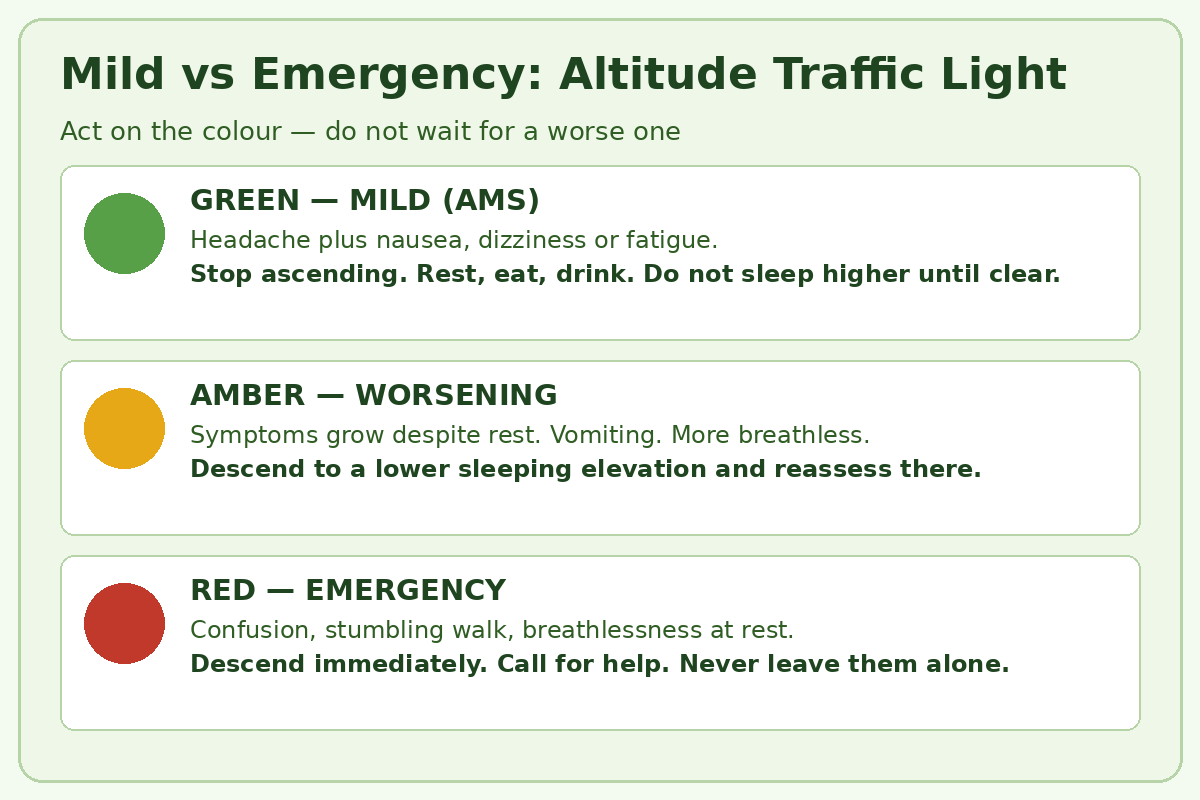
| Mild — acute mountain sickness | Headache plus nausea, dizziness, fatigue or poor sleep | Your body has not yet adjusted to this elevation | Stop ascending, rest, eat and drink; do not sleep higher until clear |
| Worsening at the same altitude | Symptoms grow despite rest; vomiting; increasing breathlessness on exertion | Rest alone is not working; the illness is progressing | Descend to a lower sleeping elevation and reassess there |
| Severe — brain signs (HACE) | Confusion, drowsiness, loss of coordination, cannot walk heel-to-toe in a straight line | Swelling affecting the brain; a life-threatening emergency | Descend immediately with help, seek emergency care, never leave the person alone |
| Severe — lung signs (HAPE) | Breathlessness at rest, persistent cough, chest tightness, extreme fatigue | Fluid building in the lungs; a life-threatening emergency | Descend immediately, minimise the person’s exertion, seek emergency care |
Why Fit Hikers Still Get Sick
Fitness does not protect you. Susceptibility varies between people and even between trips, as the guideline summary from the Wilderness Medical Society makes clear; a strong hiker can simply move faster into trouble. MedlinePlus lists having had the illness before, living near sea level, ascending quickly and failing to acclimatize among the main risk factors — so plan a repeat trip slower, not braver.
Early Signs: Acute Mountain Sickness
Headache is the cardinal early sign. Acute mountain sickness, or AMS, is the mild and most common form. The Cleveland Clinic describes headache as the most common and often the earliest symptom, typically joined by nausea, loss of appetite, dizziness, fatigue or difficulty sleeping. The combination matters: a new headache plus another symptom after gaining elevation should be treated as altitude illness until proven otherwise.
Timing is a diagnostic clue. Symptoms usually appear within hours of arriving higher, often during or after the first night, as the CDC Yellow Book sets out. Keep a simple log — elevation slept at, symptoms on waking — because patterns are easier to act on than impressions.
The Checks You Can Do on the Trail
Ask, look, and test balance. Ask directly how each person feels, because hikers minimise symptoms when a summit is in view, and look for someone falling behind their normal pace or skipping food. The REI altitude guidance describes a simple field check: ask the person to walk a straight line heel-to-toe. Stumbling on that test is a red flag, not a cue for encouragement.
A pulse oximeter is a supporting clue, never a verdict. Readings vary by altitude, device and person, and a reassuring number does not cancel real symptoms. Use one, if you carry it, to watch trends in the same person alongside how they feel and function — and let symptoms make the decision. Checking your day hiking essentials before the trip removes the mimics — too little water, food or sleep — that muddy this picture.

Zacurate Pro Series 500DL Fingertip Pulse Oximeter
- ACCURATE AND RELIABLE – Accurately determine your SpO2 (blood oxygen saturation levels), pulse rate and pulse strength in 10 seconds and display it conveniently on a large digital LED display.
- FULL SPO2 VALUE – The ONLY LED pulse oximeter that can read and display up to 100% for SpO2.
- SPORT/HEALTH ENTHUSIASTS – For sports enthusiasts like mountain climbers, skiers, bikers or anyone interested in measuring their SpO2 and pulse rate. SpO2 and Pulse Rate now faces instead of away from the user for an easy read.
Serious Signs: When Mild Stops Being Mild
Worsening despite rest is the dividing line. Mild AMS that is stable or improving at the same elevation can be managed with time. Symptoms that grow worse while resting are different: the CDC states that a person whose symptoms get worse while resting should travel to a lower elevation to avoid becoming seriously ill. Vomiting that stops the person drinking and breathlessness arriving with less and less exertion belong on the worsening side of the line.
Watch the night hours. Symptoms often intensify overnight, when breathing slows in sleep, so the evening check matters more than the lunchtime one. Guidance from Rocky Mountain National Park is blunt: if you begin to feel sick, descend to lower elevations. Build that into high camps on routes like those in our Grand Teton guide, where trailheads already start high.
Signs That Mean Emergency, Not Observation
Brain signs and lung signs are the two emergency patterns. Confusion, unusual drowsiness and loss of coordination point to the brain; breathlessness at rest, a persistent cough, chest tightness and extreme weakness point to the lungs. The Cleveland Clinic warns that the severe forms can become deadly quickly and that recognising trouble breathing at rest and clumsiness is crucial. Either pattern ends the upward plan on the spot.
HACE and HAPE: Two Different Emergencies
HACE is a brain problem; HAPE is a lung problem. High-altitude cerebral edema is swelling affecting the brain, generally regarded as the advanced end of the AMS spectrum. High-altitude pulmonary edema is fluid accumulating in the lungs. The Wilderness Medical Society guideline summary treats AMS, HACE and HAPE as related but distinct, and the distinction matters in the field: coordination and thinking fail in HACE; breathing fails in HAPE.
HACE announces itself through behaviour and balance. Expect a worsening headache followed by confusion, drowsiness, poor judgement and a stumbling gait. REI describes the clues as confusion and impaired balance — unable to walk heel-to-toe or balance on one foot — and stresses that a suspected case must be escorted lower immediately, with medical help sought at once. Never send that person down alone; their judgement and footing are what the illness has taken.
How HAPE Develops Differently
HAPE can arrive with or without a preceding headache. Its opening moves are a dry cough, unusual breathlessness on ground handled easily before, and a drop in exercise performance out of proportion to the day. MedlinePlus lists cough, chest tightness, shortness of breath at rest and inability to walk in a straight line among the signs of severe altitude illness. As fluid builds, breathlessness at rest is the sign to memorise.
Either emergency can deteriorate fast. A review in Mayo Clinic Proceedings describes HAPE as the most common cause of death among altitude-related illnesses and loss of coordination as the hallmark of HACE. That is why two equipment-free checks matter most: watch how the person walks, and listen to how they breathe at rest. Knowledge like that is part of the kit itself, which is how our first aid kit guide treats it.
Immediate Response, in the Right Order
First: stop ascending. Nobody with new altitude symptoms goes higher that day — not to the next camp, not to the viewpoint. The American Family Physician summary of the Wilderness Medical Society guidance puts stopping ascent and descent at the centre of treatment. Stopping buys the body time; continuing spends the margin you may need later.
Second: rest, warm, feed and hydrate where you are. Sit the person down, add a layer, give fluids and food if they can take them, and reassess over the next hour. The Denali mountaineering guidance follows the same pattern: discontinue ascent until symptoms resolve, maintaining hydration, nutrition and a sensible activity level while you wait.
Third: Descend When the Triggers Say So
Descend if symptoms worsen, fail to improve, or include any serious sign. The CDC Yellow Book notes that AMS often improves rapidly with a descent of a few hundred metres, especially with minimal exertion. Go to the last elevation where the person slept well, or lower. For HACE or HAPE signs, descent is urgent, the ill person exerts as little as possible, and companions carry their load.

SOL Escape Bivvy with Hood
- Outdoor Durability: Made with quiet and tear-resistant material, this survival bivvy withstands rugged use during hiking, winter camping, or as part of your essential emergency shelter setup
- Weather Protection: Proprietary, water-resistant ThermaShell fabric blocks rain, snow, and wind while reducing condensation to keep you warm, dry, and protectedWeather Protection: Proprietary, water-resistant ThermaShell fabric blocks rain, snow, and wind while reducing condensation to keep you warm, dry, and protected
- Warm Comfort & Breathability: Breathable material reflects 70% of body heat for all-season warmth, ensuring a dry and comfortable backcountry camping or hiking experience
Fourth: get help early, not eventually. Contact emergency services or rangers as soon as a serious pattern is suspected, while descent is organised — with your location, elevation, symptoms and how they have changed. If terrain or weather traps you, shelter and keep the person warm and still; on remote routes like those in our Glacier guide, an emergency bivy and a satellite messenger are what make a forced wait survivable.
A note on medicines, kept in its proper place. Prescription medicines are part of altitude medicine, but they are decisions for a doctor before the trip, based on your history and route, as MedlinePlus advises for planned fast or high ascents. No medicine converts a worsening patient into a safe one at altitude, and none replaces descent.
Prevention Starts With the Itinerary
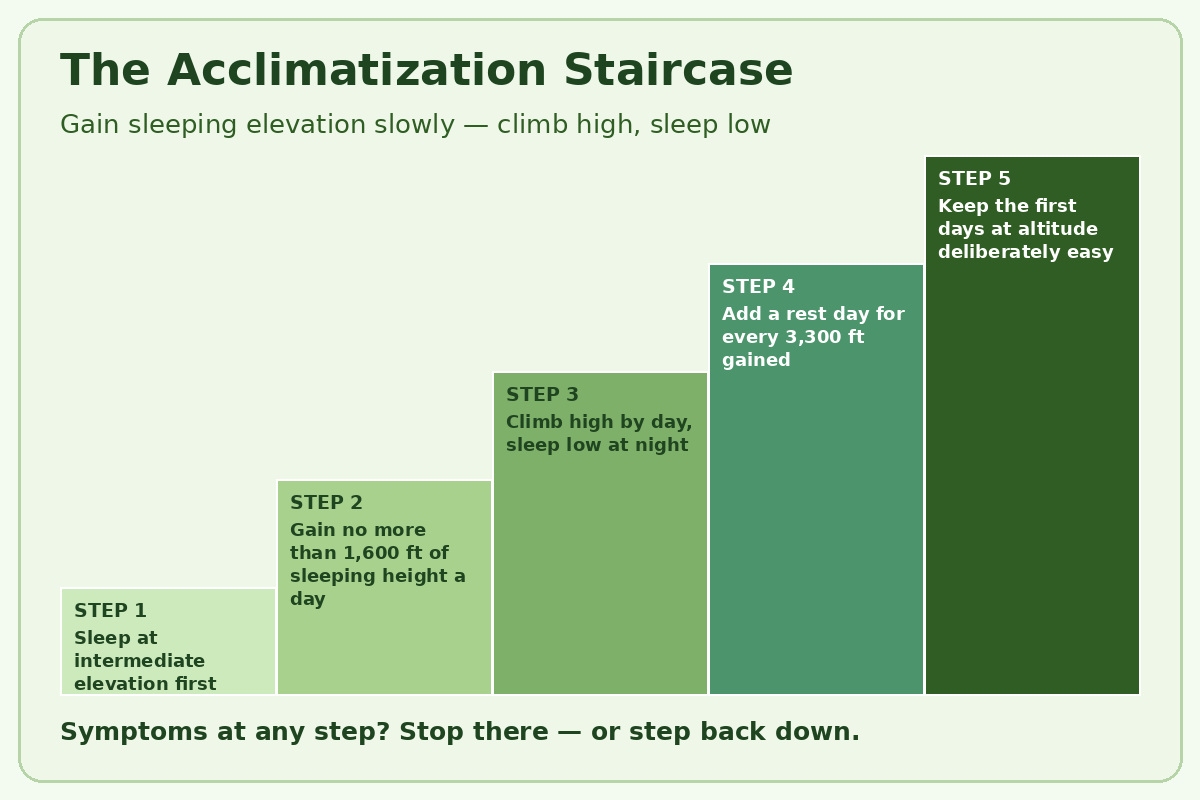
Gradual ascent is the single most effective prevention. The CDC advises avoiding travel from low elevation to sleeping above roughly 9,000 feet in one day where possible, spending a few days at intermediate elevation first, then increasing sleeping elevation by no more than about 1,600 feet per day, with an extra day for every further 3,300 feet gained. Figures vary slightly between sources — treat them as a planning framework, and go slower if your history says so.
Stage the trip before the trailhead. Sleep a night or two at moderate elevation on the way in, and make the first trail day short. A pack that carries comfortably at a deliberate pace helps — our pack size guide and the 50L roundup cover the overnight sizes these itineraries usually use.
Climb High, Sleep Low
Day height and sleeping height are separate tools. Hike higher by day and return to sleep lower where terrain allows. The National Park Service Denali guidance is built on gradual gains in sleeping altitude with regular rest days, and recreational hikers can borrow the structure at smaller scale. Where sleeping low is impossible, substitute smaller daily gains and a rest day that is genuinely restful.
Plan the descent before you need it. For every camp, know how a sick person gets down: which trail, which bail-out junction, where the first road or signal is. Leave No Trace puts “know before you go” first for a reason — preparation at home turns an emergency into a procedure. Write the bail-out on the route card, and make sure more than one person has seen it.
Acclimatization on the Trail, Day by Day
The first two days set the tone. Keep exertion deliberately light after a big jump in elevation. The CDC Yellow Book advises only mild exercise early at altitude and avoiding alcohol at first, because both interfere with the adjustment you are trying to buy. A rest day at the same sleeping elevation is the cheapest insurance in the plan — use it for easy movement, proper meals and sleep, not the hardest side trip.
Moderate elevation still counts. Guidance for the Grand Canyon rims notes elevations around 7,000 to 8,000 feet, a dry climate, and the standing advice to take your time. Altitude does not need to be extreme to deserve respect; it needs only to be new to you.
Track the Group, Not Just Yourself
The group moves at its slowest member’s adjustment. Check in at breakfast and dinner with direct questions. Poles and pacing keep effort even on long climbs — the technique in our trekking poles guide and a sensible pick from the hiking poles roundup reduce the exertion spikes that mask early symptoms. Broken sleep that worsens night after night at the same elevation, paired with daytime symptoms, is information: hold your elevation, and be ready to descend.
Food, Fluids, Sleep and Pace
Drink to thirst, regularly, and more than lowland habit suggests. Dry air, faster breathing and exertion increase fluid loss, and dehydration both mimics and compounds altitude symptoms. Rocky Mountain National Park advises drinking several quarts of water a day in its high country. Carrying capacity is the practical half — our hydration packs guide covers systems that make frequent small drinks easy.

Liquid I.V. Hydration Multiplier — Firecracker (16 Count)
- HYDRATION MIX: A great-tasting, non-GMO electrolyte drink mix that delivers hydration faster than water alone.
- GREAT TASTE: Firecracker flavor is a blend of citrusy lemon-lime, tart cherry, and true-to-fruit raspberry flavors.
- SCIENCE-BACKED FORMULA: Powered by LIV HYDRASCIENCE, Liquid I.V. is designed with an optimized ratio of electrolytes and clinically tested nutrients.
New starting from: 22.66 $
Go to AmazonEat even when appetite fades. Appetite suppression is itself a symptom, so eat regular, carbohydrate-rich meals and carry food you will actually consume when nothing appeals. The American Hiking Society essentials list pairs extra food with extra water for this reason: reserves let you stop and recover instead of pressing on empty. Electrolyte drinks can make fluids more palatable on long, dry climbs; they support hydration, but they do not prevent altitude illness.
What to Avoid at Altitude
Alcohol, sedatives and heroic first days. Alcohol early at altitude works against acclimatization and muddies assessment, since a hangover and AMS feel similar. The CDC Yellow Book advises avoiding alcohol during the early period and notes that regular caffeine users should keep their usual caffeine, so a withdrawal headache is not mistaken for an altitude headache. Sun and cold stack on top: the Forest Service guidance links altitude, hydration and acclimatization in one warning, because at elevation the small stresses add up.
Hiking With Dogs and Children at Altitude
Dogs cannot report a headache. Panting harder than the effort explains, lagging, refusing food or water, unusual tiredness and wobbliness are the signs available to you, and they deserve the same stop-and-assess response. Our guide to dogs for high-altitude trails covers breed and conditioning background, but no background overrides what the dog in front of you is showing on the day.
Children need a slower profile and closer watching. The CDC notes that young children with AMS may simply seem fussy — treat unexplained fussiness after ascent as a symptom, not a mood. Use smaller jumps in sleeping elevation, more nights, and named adults watching specific children. Anyone with heart or lung conditions should take the trip plan to a clinician first; that conversation is preparation, not overreaction.
The Turn-Around Decision
Make the decision at home; execute it on the trail. Write your triggers down: any serious sign means immediate descent; symptoms worsening at rest mean descent; mild symptoms not cleared by morning mean no higher sleeping elevation that day. The Wilderness Medical Society guideline summary supports this symptom-led structure — decisions keyed to what the person shows, not what the itinerary promised. Say the rules aloud at the trailhead, and give every member explicit permission to call a stop.
A summit is optional; the descent is not. The route will still be there next season. Our trail difficulty explainer helps grade how hard the descent itself is from each point — because a bail-out you cannot actually walk is not a bail-out.
After You Descend
Keep watching, and get checked when the story warrants it. MedlinePlus advises contacting a provider if you have had symptoms even if you felt better at lower altitude, and emergency care for altered alertness, coughing up blood or severe breathing problems. Record elevations, timing and symptoms while fresh — a turned-around trip is data, not failure.
Our view
My rule on high trails is simple: the plan serves the slowest-adjusting person in the group, and symptoms outrank summits every single time. Build your trip around the elevations in our Rocky Mountain National Park hikes, pack against the day hiking essentials checklist, and know the bail-out options on routes like the Glacier National Park hikes before you need them — and altitude becomes a factor you manage, not a surprise that manages you.
— Brian Ka
FAQ
How high does altitude sickness start?
There is no single safe line, but risk rises from around 8,000 feet of sleeping elevation. Susceptible people can develop symptoms lower, and sleeping altitude and ascent speed matter more than a briefly visited high point. If you live near sea level, treat any first night at high elevation as a test your body has not passed yet.
Can you get altitude sickness on a day hike if you sleep low?
It is less likely, but not impossible. Sleeping low is protective, which is why climb-high, sleep-low works. A very fast, hard ascent can still produce headache, nausea and fatigue during the day; the response is the same — stop ascending, rest, and descend if symptoms grow.
How long does mild altitude sickness last?
Usually a day or two at the same elevation, if you stop ascending. Mild symptoms typically settle as acclimatization catches up, provided you rest, eat and drink and do not sleep higher. Symptoms that worsen, or are no better after a full day of rest, are no longer a wait-and-see case: descend.
Does drinking more water prevent altitude sickness?
No — hydration helps, but ascent rate decides. Dehydration mimics and worsens symptoms, so drinking properly matters, but no amount of water substitutes for gradual ascent and rest days. Drink regularly, eat properly, and let the itinerary do the preventing.
Should I take medicine to prevent altitude sickness?
That is a pre-trip conversation with a clinician, not a trailhead decision. Preventive medicines exist and are recommended for some higher-risk itineraries, but suitability depends on your history, conditions and other medicines. Never start a prescription medicine at camp on a companion’s advice.
When is altitude sickness an emergency?
Immediately, when brain or lung signs appear. Confusion, loss of coordination, unusual drowsiness, breathlessness at rest, a worsening cough or chest tightness all mean urgent descent and emergency care. Do not wait for morning, and do not leave the person alone.
Questions About Altitude Sickness on the Trail?
Planning a high route and unsure how to build in acclimatization days, bail-out options or the right pack for a slower profile? Tell us the trail and the elevations you plan to sleep at.
Sources
- CDC Yellow Book — High-Altitude Travel and Altitude Illness
- CDC — Travel to High Altitudes
- Wilderness Medical Society Guidelines — Appraisal and Summary, PMC
- MedlinePlus — Acute Mountain Sickness
- Cleveland Clinic — Altitude Sickness
- REI — How to Prevent and Treat Altitude Sickness
- National Park Service — High Country Hazards, Rocky Mountain National Park
- National Park Service — Safety, Grand Canyon National Park
- National Park Service — Mountaineering Medical Issues, Denali National Park
- USDA Forest Service — Stay Safe, Lake Tahoe Basin
- American Hiking Society — The 10 Essentials of Hiking
- Leave No Trace — The Seven Principles
- American Family Physician — Acute Altitude Illness: Wilderness Medical Society Guidelines Summary
- Mayo Clinic Proceedings — Altitude-Related Illnesses