As an Amazon Associate I earn from qualifying purchases
Summer is the most popular season for hiking — and also the season where clothing mistakes cause the most problems. Underestimating afternoon thunderstorms, wearing cotton that stays wet for hours, skipping sun protection on an exposed ridgeline, or overdressing on a hot climb are all common errors that turn great trail days into uncomfortable or dangerous ones.
The good news is that dressing well for summer hiking isn’t complicated. A few material principles, a sensible layering approach, and the right footwear cover the vast majority of summer conditions. This guide breaks it all down from head to toe — what to wear, what to avoid, and why each choice matters on the trail.
The Most Important Rule: Avoid Cotton

Columbia Men's Tech Trail Utility Short Sleeve Crew, Collegiate Navy, Large Tall
- OMNI-SHADE: For mild to extreme sun exposure. Blocks harmful UVA and UVB rays that cause sunburns and long-term skin damage. Tight weave construction offers lasting sun protection with the Skin Cancer Foundation’s Seal of Recommendation.
- OMNI-WICK: Moisture-wicking technology for the outdoors. Omni-Wick pulls moisture from the skin into the fabric where it spreads across the surface to accelerate evaporation—for fast drying, enhanced next-to-skin comfort.
- MADE TO HIKE: This technical shirt is made from stretchy polyester that offers comfortable performance over a wide range of activities.
List Price :
Offer: 28.53 $
Go to AmazonBefore getting into specific clothing recommendations, this principle applies to everything: never hike in cotton. Not a cotton t-shirt, not cotton underwear, not cotton socks. Cotton absorbs moisture and holds it against your skin — which sounds cooling in theory but creates the conditions for blisters, chafing, skin rashes, and hypothermia risk when temperature drops unexpectedly.
Every piece of clothing in this guide uses either synthetic fabrics — polyester, nylon — or merino wool. Both wick moisture away from skin and dry fast. Merino wool has the additional advantage of not developing odor noticeably even after full days of sweating, which matters on longer trips. Synthetic fabrics are more durable and dry faster, making them slightly better for hot, humid conditions where you’re sweating heavily.
A $15 synthetic t-shirt from any outdoor retailer performs the core function just as well as a premium one. The material matters far more than the brand.
Base Layer — Tops

SHEEP RUN 100% Merino Wool Men's Lightweight Tactical Hiking Running Workout Breathable Short Sleeve T Shirt (Coyote Brown, Medium)
- 100% Superfine MERINO WOOL 180GSM. Available in Men’s Sizes: S to XXL; Machine washable and shrink resistant.
- Manage Moisture: Merino wool fibers is good at moving moisture away from the skin that even if the fabric is soaking wet surface area of your skin remains dry. Merino fibers can absorb up to 30% of their dry weight before feeling wet.
- Keep Fresh: Due to merino wool moisture management, our merino wool shirt will be very breathable and keep you sweat-free and very dry during hiking, running, cycling, etc…without having to worry about smelling.
New starting from: 44.99 $
Go to AmazonWhat to wear: A lightweight moisture-wicking t-shirt or tank top in synthetic or merino fabric. Loose-fitting construction promotes airflow and helps your body regulate temperature more efficiently than tight-fitting alternatives. Light colors reflect heat rather than absorbing it — meaningful on exposed ridgelines where direct sun hits you for hours.
The sun hoody option: A UPF-rated long-sleeve sun hoody is the most effective single piece of sun protection for summer hiking and genuinely useful beyond sunscreen on exposed terrain. The UPF fabric blocks UV radiation across your arms and shoulders — the body parts that get the most sustained sun exposure on trail and that sunscreen misses most frequently when it wears off. Sun hoodies look counterintuitive in summer heat, but the breathable mesh construction keeps them comfortable in warm conditions while providing full-coverage sun protection that no amount of reapplied sunscreen fully replicates.
What to avoid: Cotton t-shirts, compression-fit synthetic tops that trap heat, and dark colors on exposed summer trails. A black synthetic shirt wicks moisture just fine but absorbs significantly more solar radiation than a white or light gray alternative.
Base Layer — Bottoms

Rdruko Men's Quick Dry Hiking Shorts Lightweight Running Workout Gym Active Shorts with Zipper Pockets(Dark Grey, US L)
- Lightweight Running Shorts: Quick drying, moisture wicking and lightweight sports fabric wicks sweat from the skin to help you stay comfortable and dry.
- Three zipper pockets, athletic shorts with three deep zippered pockets for storage while exercising.
- Adjustable elatic waist , drawstring closure with elastic waistband for improved comfort and fit.
List Price :
Offer: 19.98 $
Go to AmazonHiking shorts: The most common and most comfortable summer hiking option for most hikers on established trails. Look for lightweight, quick-drying synthetic fabric with enough stretch to handle varied terrain and enough pocket space for a phone, snacks, and essentials. Built-in liner shorts eliminate the need for separate underwear on longer days. Length is personal preference — shorter is cooler, longer provides more protection from brush, sun, and insects.
Convertible pants: The most versatile summer option — lightweight hiking pants that zip off at the knee to become shorts when the temperature climbs. They start the morning as pants when trails are cooler and shadier, convert to shorts when the heat picks up mid-day, and zip back when afternoon thunderstorms roll in. The zip-off mechanism sounds gimmicky until the first hike where you use it five times in a single day.
Hiking pants: For tick-heavy environments, brushy terrain, or exposures where leg protection matters, lightweight hiking pants are the practical choice. The best summer hiking pants use a thin, breathable nylon or polyester fabric that doesn’t feel oppressive in warm conditions. Avoid anything with cotton content.
What to avoid: Jeans — heavy, restrictive, slow to dry, and dangerous when wet in cool conditions. Compression tights without a breathable outer layer in hot conditions. Cotton shorts that stay wet for hours after stream crossings or heavy sweating.
Underwear and Sports Bras

BAMBOO COOL Men's Underwear Breathable Boxer Briefs with Fly Moisture-Wicking Lightweight Underwear
- Our Underwear is crafted from natural fabrics that are soft and gentle on the skin. Perfect for those with sensitive skin, it provides a cozy and breathable fit, allowing you to feel your best at all times.
- Featuring a thoughtful 3D pouch design,these boxer briefs offer superior room and comfort, allowing you to move freely without any restrictions or discomfort.
- The elasticd waistband ensures a comfortable fit that won’t dig into your skin. Paired with precisely tailored leg length, it ensures the underwear stays in place, preventing annoying rides and roll-ups.
List Price :
Offer: 45.98 $
Go to AmazonThe same material principle applies here. Moisture-wicking synthetic or merino wool underwear prevents the chafing that cotton causes when wet — and on a long hot summer hike, cotton underwear will be wet within the first hour and stay wet for the rest of the day.
For women, underwire bras create pressure points that become painful over extended hiking with a loaded pack. A light to medium-impact sports bra without underwire handles the support needs of hiking without the discomfort of underwire digging in at the sternum or sides throughout a full day.
Merino wool is particularly useful here for its softness against sensitive skin and natural odor resistance on multi-day trips where washing isn’t an option.
Socks

Niorasen Merino Wool Hiking Crew Socks for Men & Women, Thick Cushioned Anti-Blister, Moisture-Wicking, Seamless, 3 Pairs
- Premium Merino Wool Blend + Breathable Design – All-Day Freshness: Crafted from 50% Merino wool mixed with tough nylon and polyamide, these hiking socks keep moisture under control and let your feet breathe easy. The breathable mesh helps you stay cool on spring hikes, summer camps, or any mild-weather adventure—no swampy, stuffy feet after hours on the trail
- OEKO-TEX Certified + Moisture-Wicking & Odor Control – Safe & Fresh: Certified OEKO-TEX for chemical safety, so they’re gentle on sensitive skin—great for men, women, and even teens. Merino fibers pull sweat away fast, and built-in ventilation channels boost airflow to stop odors. Perfect for long backpacking trips, 12-hour work shifts in boots, or intense gym sessions
- Full Cushion Comfort – Impact Protection & Blister Prevention: Terry cushioning runs the full length of these crew socks, easing pressure and absorbing impact on rocky trails. Whether you’re logging miles on a hike, trail running, or standing all day in work boots, you’ll stay comfy and blister-free
List Price :
Offer: 12.99 $
Go to AmazonThis is covered in depth in our best hiking socks guide, but the summer-specific guidance is worth noting here.
In summer conditions where heat is the primary concern, a lightweight merino wool or synthetic sock in a quarter-crew or micro-crew height is the right choice. The lighter knit breathes better than midweight or full-cushion alternatives, keeps feet cooler, and manages moisture on hot days without the additional warmth that heavier socks add.
Never hike in cotton socks regardless of the temperature. The moisture-management difference between a quality wool or synthetic hiking sock and a cotton athletic sock is so significant that it’s one of the highest-impact, lowest-cost gear upgrades any hiker can make.
If you’re hiking in tick-endemic areas — the Northeast, upper Midwest, Pacific Northwest — crew-height socks that tuck pants into provide a physical barrier against tick access at the ankle, which is the most common entry point.
For foot pain, arch issues, or blister problems that persist despite good socks, our best boot insoles for hiking and best insoles for flat feet hiking guides cover the footbed upgrades that address underlying fit and support issues.
Footwear

Columbia Mens Transverse Waterproof Hiking Boot, Cordovan/Golden Yellow, 12
- OMNI-TECH: For prolonged exposure to moderate rain and snow. Multilayered, waterproof, seam-sealed construction that allows the inside to breathe, keeping feet dry and comfortable no matter the conditions.
- TECHLITE: For lightweight impact absorption on varied surfaces. Long-lasting cushioning with high energy return.
- OMNI-GRIP: For multi-terrain traction on rock, dirt, and gravel, in wet/dry conditions. Specially formulated compounds and tread design for cross-terrain stability and grip with strategically blended lug patterns.
List Price :
Offer: 63.75 $
Go to AmazonTrail runners and low-cut hiking shoes: The right choice for the majority of summer day hiking on established trails in dry to lightly wet conditions. They’re lighter than boots, break in faster, and are more comfortable over long distances for most hikers. The lower weight reduces foot fatigue on long summer days in a way that becomes noticeably significant past mile six or seven.
One counterintuitive consideration: waterproof shoes in summer. Waterproof membranes like Gore-Tex prevent water from entering the shoe — but they also prevent moisture from escaping. In summer conditions where your feet are sweating heavily, a waterproof shoe traps that moisture inside, keeping feet wetter than a breathable non-waterproof shoe would on a dry trail day. Save the waterproof footwear for genuinely wet conditions — stream crossings, spring mud season, rainy Pacific Northwest hiking.
Hiking boots: The right call for rocky technical terrain, significant off-trail travel, heavy pack loads, or conditions where ankle support matters. In hot summer conditions on moderate established trails, boots are generally overkill — they add weight, retain more heat, and take longer to break in than trail runners.
Hiking sandals: A legitimate option for hot-weather hiking on moderate trails with frequent water crossings. Sandals designed for outdoor use — KEEN and Teva are the most common brands — handle trail use better than casual sandals and make creek crossings completely non-problematic. The trade-off is reduced foot protection on rocky terrain and exposure to insects and debris that enclosed shoes prevent.
For detailed recommendations by terrain, foot shape, and budget, our best hiking shoes for men, best hiking shoes for women, best hiking boots for men, and best hiking boots for women guides cover the top picks across different use cases.
Sun Protection Layer

Columbia Unisex Bora Bora Booney, Sage, One Size
- THE HAT YOU GRAB WHEN THE SUN WON’T QUIT: When you know you’ll be outside for hours, this is the hat you reach for. Omni‑Shade UPF 50 protection and an extra wide brim help keep you shaded whether you’re fishing, hiking, gardening, or at the beach.
- HELPS YOU STAY COOLER AS THE DAY GOES ON: On hot, sticky days, airflow makes a difference. Mesh venting helps heat escape while the Omni‑Wick sweatband pulls moisture away from your skin so sweat doesn’t build up over time.
- EASY TO WEAR FOR MOST OF THE DAY: The lightweight nylon fabric feels comfortable from the moment you put it on, making this a hat you can wear for hours without feeling weighed down or annoyed.
List Price :
Offer: 24.00 $
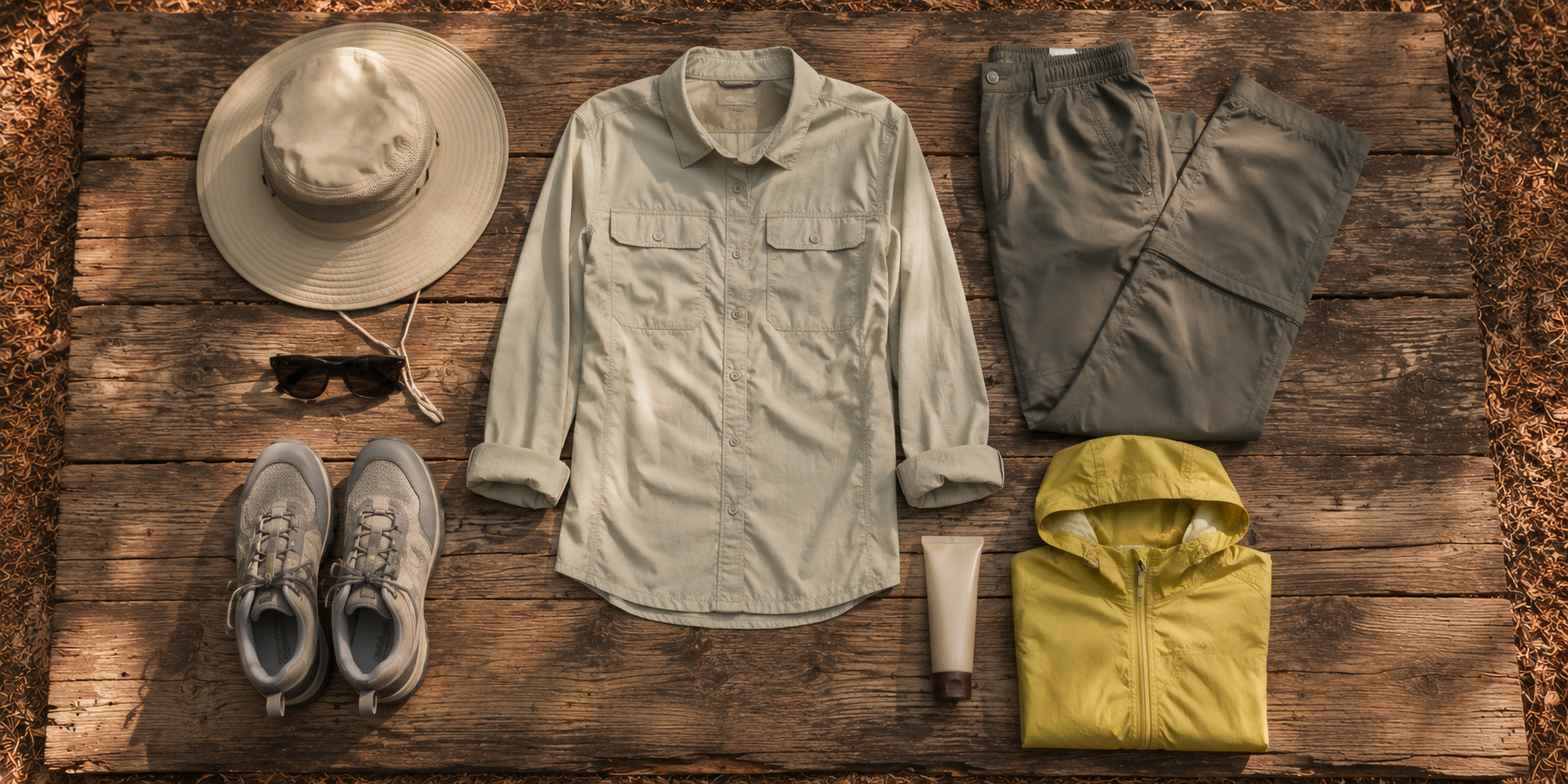
Go to AmazonWide-brim hat: The most underrated piece of summer hiking gear. A hat with at least a 3-inch brim shades your face, ears, and the back of your neck — the three areas most commonly missed by sunscreen and most frequently burned on exposed trails. Baseball caps protect the face but leave ears and neck exposed to hours of direct UV radiation.
Sunglasses: UV protection is the relevant specification — darkness alone doesn’t protect your eyes from UV radiation. Polarized lenses reduce glare on water, snow, and light-colored rock on exposed terrain, reducing eye fatigue over a full day. Wraparound styles prevent light from entering the sides on high-exposure ridgelines.
Sunscreen: Apply before leaving the car, not at the trailhead. SPF 30 minimum for most conditions; SPF 50 for high elevation, snow, or direct prolonged sun exposure. Reapply every 90 minutes on active hiking days — sweat degrades sunscreen faster than most hikers account for, and the reapplication that felt optional at mile two becomes clearly necessary by mile five.
Buff or neck gaiter: A lightweight synthetic or merino neck gaiter provides flexible sun and wind protection for the neck and lower face — pull it up on exposed sections and down around the neck when you’re in shade. Doubles as a sweat wipe, dust protection on dry trails, and a supplemental warmth layer at cool rest stops.
The Layers You Need Despite the Heat

Columbia Men's Watertight II Waterproof Rain Jacket, Black, Large
- ADVANCED TECHNOLOGY: Columbia Men’s Watertight II Jacket is crafted of a waterproof nylon shell durable enough to withstand anything from drizzle to downpour at a moment’s notice.
- HANDY FEATURES: This rain jacket features an abrasion resistant chin guard, two zippered side pockets, elastic cuffs, and an elastic hem.
- COMFORT & WARMTH: Crafted of a waterproof 100% nylon shell, this rain jacket is lightweight while remaining protective. It also packs into your hand pocket.
List Price :
Offer: 68.66 $
Go to AmazonThis is the most common mistake summer hikers make: leaving layers behind because the forecast is warm. The majority of wilderness rescues and emergency situations happen in summer, not winter — because summer hikers dress for the morning temperature and have nothing when afternoon weather deteriorates.
Rain jacket or windbreaker: Goes in your pack on every summer hike regardless of the forecast. Mountain weather changes in under an hour. A wet hiker in a t-shirt in a 55°F afternoon thunderstorm is a hypothermia candidate even in July. Packable rain jackets weigh 8–12 ounces and compress to the size of a large fist — there’s no rational argument for leaving one behind.
Lightweight insulating layer: A packable down or synthetic puffy jacket is the second non-negotiable layer. When you stop moving at a summit or rest stop, your body stops generating heat and ambient temperature starts to matter significantly. The puffy that was overkill on the uphill climb is genuinely welcome at the exposed summit where wind picks up and temperature drops 15 degrees from the trailhead.
The layering principle for summer hiking: wear light breathable layers while moving, add the rain jacket in wet conditions, and add the puffy at rest stops and summits where the combination of stopped movement and elevation creates cold exposure even on summer days.
Bug Protection

gumkeg Mosquito Suit, Bug Net Pants & Jacket with Hood, Full Body Bug Suit for Gardening & Outdoor Protection from Bugs, Flies, Gnats, No-See-Ums & Midges, Mosquito Clothing for Women & Men, XL Size
- Full Protection, Lightweight & Breathable: Gumkeg mosquito suit is made of premium No-See-Ums mesh fabric, providing full-body protection from bugs, flies, and other pests while remaining lightweight and breathable, perfect for extended outdoor activities.
- Convenient Design, Easy to Use: The mosquito jacket features a fully zippered head cover for quick access to meals or drinks, with elastic openings that snugly fit wrists, waist, and ankles, eliminating the need for constant adjustments.
- Eco-Friendly & Non-Toxic, Natural Protection: Crafted from chemical-free, eco-friendly materials, this bug suit is non-toxic and recyclable, offering natural protection without the need for harsh, smelly chemical sprays.
New starting from: 35.99 $
Go to AmazonFrom late spring through early fall across most of North America, insects are a genuine gear consideration rather than just an annoyance.
Permethrin-treated clothing: The most effective tick prevention available — applied to your clothing and socks before the hiking season, it kills ticks on contact and repels mosquitoes from treated fabric. Odorless once dry, lasting through six washes, and completely passive once applied. For hiking in tick-endemic regions, this is the most important single protective measure.
Insect repellent: Picaridin or DEET applied to exposed skin covers mosquitoes and the skin areas that treated clothing doesn’t reach. Picaridin is the most comfortable option — nearly as effective as DEET without the chemical smell or gear-damaging properties. Apply to ankles, lower legs, wrists, and neck — the areas where mosquitoes target most consistently.
Loose-fitting clothing: Mosquitoes bite through tight-fitting fabric more easily than loose fabrics with air space between the material and skin. Loose-fitting hiking shirts and pants provide a passive layer of additional protection beyond repellent.
For the full layered bug protection system, our best hiking bug repellent gear guide covers everything from clothing treatment to area repellers for rest stops.
What NOT to Wear Hiking in Summer
Cotton anything. T-shirts, underwear, socks — all of it. The performance difference between cotton and synthetic or wool is so significant that this is the single most impactful clothing decision any summer hiker can make.
All black. Dark colors absorb solar radiation significantly more than light colors. On an exposed ridgeline at elevation in full summer sun, the difference in perceived heat between a black shirt and a white shirt is meaningful over a full day.
New boots on a long hike. Break footwear in before committing to significant mileage. Unbroken boots in hot conditions create blisters faster than almost any other gear mistake.
Jeans. Heavy, restrictive, retain moisture, and take hours to dry. When wet jeans cool in late afternoon temperatures, the heat loss can be dangerous. Synthetic hiking pants perform better in every measurable way.
Flip-flops or casual sandals on rocky terrain. A reasonable choice for flat, established trails with water crossings. A genuinely dangerous choice on rocky or technical terrain where foot protection and ankle stability matter.
Overdressing. Heavier layers in hot conditions create heat stress, accelerate dehydration, and reduce the enjoyment of what should be an active outdoor day. Match your insulation level to the temperature and add layers when needed rather than starting overdressed.
Summer Hiking Clothing Checklist
Wearing:
- Moisture-wicking t-shirt, tank, or sun hoody (synthetic or merino)
- Hiking shorts, convertible pants, or lightweight hiking pants
- Moisture-wicking underwear (synthetic or merino)
- Lightweight hiking socks (wool or synthetic)
- Trail runners, hiking shoes, or boots appropriate for terrain
In your pack:
- Packable rain jacket or windbreaker
- Lightweight puffy jacket or fleece
- Wide-brim sun hat
- Sunglasses with UV protection
- Sunscreen (SPF 30–50)
- Buff or neck gaiter
- Bug repellent (seasonal)
- Extra pair of socks for longer trips
For everything you need to carry these layers on the trail, our best hiking daypacks guide covers the best packs for carrying a complete summer day hiking kit. For a full overview of what else to bring beyond clothing, our day hiking essentials checklist covers every gear category from water to navigation.
Final Thoughts
Dressing well for summer hiking comes down to three principles: avoid cotton entirely, always carry a rain layer regardless of the forecast, and protect yourself from the sun more aggressively than you think you need to. Everything else is preference and personal adjustment to the specific conditions you’re hiking in.
The summer hiker who shows up with lightweight synthetic layers, a rain jacket stuffed in the pack, a wide-brim hat, and proper footwear is prepared for the vast majority of conditions the trail can produce. The hiker in a cotton t-shirt and jeans with nothing extra is one afternoon thunderstorm away from a miserable experience.
Dress for the hike you’re doing and the realistic worst case for that specific trail and day — and enjoy the rest.