As an Amazon Associate I earn from qualifying purchases.
Want a daypack that disappears on your back, keeps your water handy, and swallows layers without the dreaded shoulder pinch? You’re in the right place. Below are the 10 best hiking daypacks you can buy on Amazon right now—a balanced mix of ultralight rockets, all-day comfort haulers, hydration-ready options, and women-specific fits. I’ll break down who each pack is for, key specs, fit and sizing tips, and real-world use cases (hot, dusty switchbacks vs. damp evergreen forests), so you can pick confidently and get out the door.
Quick Summary (Who Should Buy What)
- Want a do-everything daypack under 2 lbs? Osprey Talon 22 (men) / Tempest 20 (women): breathable, stable, and dialed for moving fast.
- Prioritize weather protection + simple organization? Osprey Hikelite 26 with included rain cover.
- Minimalists who still want some structure? Deuter Speed Lite 21.
- Technical day hikes with scrambling or via ferrata? Deuter Trail 22 grips your back and carries dense loads cleanly.
- Athletic fit with generous capacity? Gregory Miwok 24 (men) / Maya 22 (women): body-hugging BioSync suspension.
- Hydration-first hikers on warm trails? CamelBak Rim Runner 22 (reservoir included on most listings).
- Budget hydration option for entry-level hikers? TETON Sports Oasis 18L (excellent value).
What to Look For in a Hiking Daypack (Before You Buy)
Capacity:
- 16–20L: Fast and light days with minimal layers and small water capacity.
- 20–24L: The “sweet spot” for most hikers—room for water, layers, lunch, first-aid, camera, and odds/ends.
- 25–30L: Shoulder season, unstable weather, extra insulation, or group gear.
Frame & Suspension:
- Frameless/UL: Lightest, moves well, less comfy with dense/heavy loads.
- Framesheet or Light Perimeter Frame: Adds stability and weight transfer to the hips—better for longer days and varied terrain.
- Trampoline Mesh (Airspeed-style): Airy back panel with excellent ventilation; slightly moves the load away from your spine.
Fit & Sizing:
Brands vary. Many offer S/M/L or unisex one-size. Measure your torso (C7 vertebra to top of iliac crest) and check each brand’s size chart. Women-specific models (e.g., Tempest, Maya) have narrower shoulder straps, shaped harnesses, and female-specific hipbelts.
Hydration:
If you hike in the heat, a pack with reservoir included (CamelBak Rim Runner, TETON Oasis) is plug-and-play. Otherwise, verify the sleeve and routing work with your preferred bladder brand.
Pockets & Access:
External stretch pockets save time (rain jacket, filter, lens cloth). Hipbelt pockets are clutch for snacks and a phone. A top pocket keeps keys/sunscreen reachable.
Weight:
A good rule: under ~2 lbs for 20–26L packs is excellent. Don’t chase grams at the expense of comfort and durability if you carry heavier water loads.
Durability:
Look for nylon with decent deniers (e.g., 210D–420D in stress zones), bartacked lash points, and quality zips (YKK).
The Top 10 Hiking Daypacks
Below, you’ll find deep dives for each pack: who it fits best, core features, pros/cons, and practical buying/fit advice. Every one of these models is available on Amazon at the time of writing.
1) Osprey Talon 22 (Men)

Osprey Talon 22L Men's Hiking Backpack with Hipbelt, Stealth Black, S/M
- Dual-zippered access to main compartment
- External hydration sleeve accommodates up to a 3L reservoir (sold separately)
- Adjustable shoulder harness to dial in perfect fit
List Price :
Offer: 135.49
Go to AmazonWhy it’s great: The Talon 22 is the “daily driver” many hikers keep grabbing even when they own bigger, fancier packs. It’s light, stable, and breathes well, yet still carries a surprisingly full payload—two liters of water, midlayer, shell, lunch, microspikes, first-aid, and a small camera—without hot spots. The AirScape back panel flexes with you on scrambles but subtly anchors the load. If you move fast on rolling terrain, this harness feels like it’s calibrated for your stride.
Best for: Day hikers who want one pack to handle speedy local loops, moderate mountain days, and travel carry-on duty.
Capacity & Weight: ~22L; ~1.7–1.9 lb depending on size/year.
Fit notes: Offered in multiple torso sizes; dial your size from Osprey’s chart.
Hydration: Sleeve + ports; reservoir not included on most listings.
Organization highlights: Large stretch front shove-it pocket, side stretch pockets, top zip pocket, two hipbelt pockets; helmet/cycling light attachment; trekking-pole carry.
Pros
- Excellent balance of stability, airflow, and weight
- Intuitive pocket layout that actually gets used
- Carries like a smaller pack but swallows more
Cons
- Not as ventilated as full trampoline mesh designs
- No rain cover included (check listing variants)
Real-world tip: If you often carry a DSLR or rocks tend to “follow” you home, consider using a lightweight camera insert; the Talon’s rectangular-ish cavity fits many small cubes.
2) Osprey Tempest 20 (Women)

Osprey Tempest 20L Women's Hiking Backpack with Hipbelt, Jasper Green, WXS/S, Extended Fit
- + Designed to fit up to 70-inch hips + Extended hipbelt and shoulder straps + Repositioned pockets + Longer sternum strap
- An injection-molded, die-cut foam AirScape back-panel creates a breathable, close-to-body fit. A flexible BioStretch harness and hipbelt, with a continuous lumbar-to-hipbelt wrap, allow for dynamic movement.
- An advanced pack series designed with optimal stability for dynamic movement even on the most technical terrain.
List Price :
Offer: 119.95 $
Go to AmazonWhy it’s great: The women-specific sibling to the Talon, the Tempest 20 is a masterclass in fit. Narrower straps, tailored harness, and a curved hipbelt hug the body without hot spots, especially on steep grades where shoulder-to-hip transfer matters. For women who run warm, the AirScape back panel and the open foam harness keep things drier on humid climbs.
Best for: Women who prioritize fit and balance on all-day hikes, fast ridgeline travel, or bike-to-trail days.
Capacity & Weight: ~20L; ~1.5–1.8 lb depending on size/year.
Hydration: Sleeve + ports (reservoir typically not included).
Organization highlights: Stretch front pocket, side stretch pockets, top zip pocket, two hipbelt pockets, pole attachments.
Pros
- Women’s-specific fit that feels “set and forget”
- Light, stable, and secure on uneven terrain
- Thoughtful pocketing for small items/sun layer
Cons
- 20L can be tight in shoulder season
- Rain cover not included on many listings
Fit tip: If you carry denser gear (camera, full first-aid), don’t be afraid to size up in volume (e.g., Tempest 24) while keeping women-specific fit.
3) Osprey Hikelite 26 (Unisex)
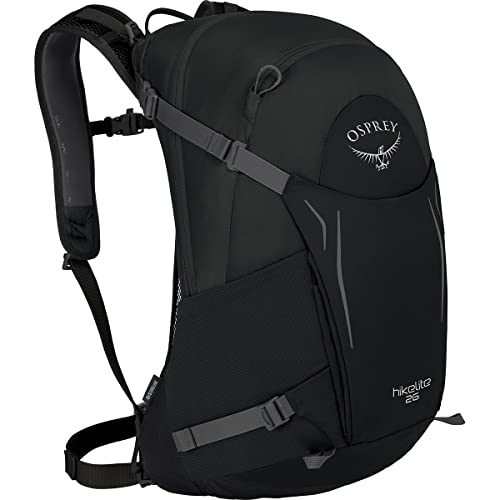
Osprey Hikelite 26L Unisex Hiking Backpack, Black
- Ventilated AirSpeed Mesh backpanel with side vents maintain a comfortable fit and keep your back cool
- Integrated raincover keeps your pack and gear dry in inclement weather
- Internal hydration sleeve accommodates up to a 3L reservoir (sold separately)
New starting from: 119.00
Go to AmazonWhy it’s great: For hikers who want simplicity, ventilation, and weather insurance, the Hikelite 26 is the sleeper hit. The trampoline-style Airspeed mesh back panel creates airflow that’s a serious relief on hot, sun-baked trails. And the pack often includes a rain cover tucked in a dedicated pocket—perfect for shoulder-season squalls and misty evergreen hikes.
Best for: Hot-weather hikers, casual to intermediate day hikers who love a clean layout, and anyone who appreciates “open the box and go” rain coverage.
Capacity & Weight: ~26L; around 1.7–2.0 lb.
Hydration: Sleeve + routing; reservoir sold separately.
Organization highlights: Stretch front shove-it pocket, side stretch pockets, top zip pocket, minimal internal division for easy packing.
Pros
- Outstanding ventilation
- Rain cover included on most listings
- Simple, beginner-friendly organization
Cons
- Minimal hipbelt pockets on some versions
- Not the most body-hugging choice for aggressive scrambling
Use case tip: If you hike in the desert Southwest or SoCal chaparral, the Hikelite’s airflow can feel like a superpower. Just pack heavier items close to your spine to maintain balance.
4) Deuter Speed Lite 21 (Unisex)
Why it’s great: The Speed Lite line is Deuter’s answer to fast-and-light without sacrificing the brand’s reputation for carry comfort. At ~21L, it balances weight and structure so you can move quickly without your pack feeling sloppy when you pick up the pace. The V-shaped design improves shoulder mobility (nice for scrambling moves or planting poles).
Best for: Minimalists who still want a real harness and a touch of frame for better load control than a frameless sack can provide.
Capacity & Weight: ~21L; commonly around 1.2–1.5 lb.
Hydration: Reservoir compatible.
Organization highlights: Clean main compartment, stretch front pocket, side stretch pockets, small top pocket; gear loops for poles/axes.
Pros
- Light but not “flimsy”
- Carries water weight better than ultralight sacks
- Streamlined but functional pocketing
Cons
- Minimal padding compared with cushy “comfort first” packs
- Hipbelt pockets vary by model year/variant
Fit tip: If you’re between torso sizes or have broad shoulders, try loosening the shoulder stabilizers a touch; the pack “disappears” when dialed.
5) Deuter Trail 22 (Unisex)
Why it’s great: If your hikes include rocky gullies, short scrambles, or via ferrata, the Trail 22 shines. It’s compact, close-to-the-body, and built to keep the center of gravity tight. The frame and load lifters help transfer weight to the hips, so water plus hard goods (like a compact via ferrata kit or microspikes) stay manageable all day.
Best for: Hikers who want a more technical fit for uneven terrain, shoulder-season gear, or short climbing approaches.
Capacity & Weight: ~22L; roughly 2–2.4 lb depending on version.
Hydration: Sleeve + routing; reservoir usually not included.
Organization highlights: Stashable pole/ice axe carry, front access options on some variants, durable fabrics, robust hipbelt (varies by year).
Pros
- Great load control for a 22L pack
- Durable fabrics and Deuter build quality
- Close fit helps you feel precise on sketchy steps
Cons
- Heavier than minimalists want
- Ventilation is good, not class-leading
Terrain tip: If your local “day hike” involves hands-on rock or ladders, this is the one you want over floaty, trampoline-mesh styles.
6) Gregory Miwok 24 (Men)
Why it’s great: The Miwok 24 is athletic, body-contouring, and sneaky spacious. Gregory’s BioSync suspension flexes as you move, so the pack stays glued without feeling constrictive. It’s a favorite for hikers who also bike, travel, and want a single daypack that looks clean off-trail but crushes mileage in the hills.
Best for: Men who prefer a stretchy, form-fitting carry with enough volume for shoulder-season layers or photo gear.
Capacity & Weight: ~24L; roughly 1.7–2.0 lb.
Hydration: Sleeve + ports; reservoir usually separate.
Organization highlights: Generous stretch front pocket, dual side stretch pockets, top zip pocket, hipbelt pockets, internal sleeves/organizers (varies by year).
Pros
- Body-hugging fit that moves naturally
- Easy, practical pocketing layout
- Just enough structure for “real” loads
Cons
- Warmer than a full trampoline mesh back panel
- Some users prefer a stiffer hipbelt for heavier loads
Fit tip: Use the hipbelt actively. The pack rides best when you let the hips carry water weight and ease shoulder pressure.
7) Gregory Maya 22 (Women)
Why it’s great: The Maya 22 translates the Miwok’s dynamic feel into a women-specific chassis. The harness and hipbelt contour properly, reducing shoulder pinch and sternum strap fussing. It’s a terrific “one bag” for women who hike a lot but also want something that isn’t out of place on flights or around town.
Best for: Women who want an athletic, adaptable fit with enough volume for extra layers, snacks, and a camera or small binoculars.
Capacity & Weight: ~22L; around 1.7–2.0 lb.
Hydration: Sleeve + ports.
Organization highlights: Similar to Miwok—front stretch pocket, side stretch pockets, top pocket, hipbelt pockets, internal organization.
Pros
- Women’s-specific fit that feels secure without hot spots
- Practical, forgiving 22L volume
- Clean look works beyond the trail
Cons
- Not the most ventilated back panel
- If you habitually overpack heavy gear, you might want a stiffer frame
Sizing tip: If you’re between sizes in torso length or prefer higher chest strap placement, check Gregory’s chart carefully—women’s models often hit the sweet spot for narrower frames.
8) CamelBak Rim Runner 22 (Typically Includes Reservoir)
Why it’s great: Some hikers don’t want to think about hydration compatibility—they want a ready-to-go system. The Rim Runner 22 usually ships with a CamelBak Crux reservoir, routing is perfectly integrated, and bite valve access is brain-off easy. The pack itself balances ventilation and support, with enough organization to keep small items from vanishing into the abyss.
Best for: Warm-weather hikers and anyone who wants a complete pack + reservoir bundle right out of the box.
Capacity & Weight: ~22L + 2–3L reservoir (check listing); pack weight typically ~1.6–2.0 lb without water.
Hydration: Included reservoir on many Amazon listings; confirm contents.
Organization highlights: Hydration sleeve, front stretch pocket, side pockets, hipbelt pockets, small admin panel.
Pros
- Ships as a complete hydration solution
- Hydration tube routing and valve placement are excellent
- Balanced carry for the size
Cons
- Reservoir adds cost vs. buying a pack alone
- Not as airy as a dedicated trampoline mesh back
Maintenance tip: After each hike, drain and hang the reservoir open to dry. A simple cleaning kit (brushes + drying frame) is a worthwhile add-on for summer.
9) TETON Sports Oasis 18L Hydration Pack (Budget Pick)
Why it’s great: If you want an affordable, functional hydration daypack for shorter hikes, the Oasis 18L is hard to beat for the price. It typically comes with a reservoir and basic but useful pocketing. While it won’t match the premium feel of higher-end brands, it’s an excellent entry point for new hikers or occasional users.
Best for: Budget-minded beginners, casual day hikes under 10 miles, warm-weather trails where staying hydrated matters more than having cutting-edge suspension.
Capacity & Weight: ~18L; weight varies (~2 lb with reservoir).
Hydration: Reservoir included on most Amazon listings (verify).
Organization highlights: Hydration sleeve, front pocket(s), side mesh, simple hipbelt (pockets vary by version).
Pros
- Excellent value with included reservoir
- Enough room for basics (water, shell, snacks, first-aid)
- Simple, approachable layout
Cons
- Less durable fabrics/hardware than premium packs
- Hipbelt and harness comfort are basic; not ideal for heavy loads
Use tip: Keep total carry reasonable (water, light layers, essentials). For shoulder-season gear or long days, step up to one of the 20–26L premium options.
10) The North Face Borealis (Crossover Favorite)
Why it’s great: The Borealis is a crossover icon—tough, organized, and at home from campus to trailhead. For straightforward day hikes (especially in regions with stable weather), its supportive shoulder straps and padded back panel feel great, and the bungee front adds quick stash space for a light shell. It’s not as “technical” as others here, but the real-world versatility is hard to ignore.
Best for: Hikers who want a pack that does daily life + occasional hikes without buying two different bags.
Capacity & Weight: ~28L; ~2+ lb.
Hydration: Check listing—some versions include a hydration sleeve but are more laptop-oriented; hydration compatibility varies by iteration.
Organization highlights: Two large compartments, front bungee, side water pockets, great admin panel, comfortable straps.
Pros
- Extremely versatile (work/travel/hike)
- Robust fabric and zippers
- Organization champs love the admin layout
Cons
- Heavier; not as hiking-specific in suspension/ventilation
- Laptop sleeve eats into packing space if you try to dual-purpose on-trail
Trail tip: Use a soft bottle in one side pocket and a compact umbrella or trekking poles in the other to keep the main cavity open for layers and lunch.
How to Choose the Right Daypack for Your Hikes
Picking a “best” pack doesn’t matter if it’s not best for you. Filter with these lenses:
1) Trail Climate & Season
- Hot & Dry: Prioritize ventilation (Osprey Hikelite 26; Talon/Tempest are decent too).
- Cool & Variable: Slightly larger volume (22–26L) for layers + rain cover; Hikelite 26’s included cover is a win.
- Scrambly/Technical: Close-fit frames with better load control (Deuter Trail 22).
2) Water Strategy
- Reservoir-First: CamelBak Rim Runner 22 or TETON Oasis for a value bundle.
- Bottle-First: Choose packs with reliable side stretch pockets that hold a 1L bottle securely (Talon/Tempest, Miwok/Maya, Hikelite, Deuter).
3) Organization Style
- Minimalist: Deuter Speed Lite 21.
- Moderate Pockets: Talon/Tempest, Miwok/Maya.
- Compartment Lovers: Borealis (crossover), CamelBak Rim Runner (hydration + admin pockets).
4) Fit & Body Geometry
- Women’s-Specific: Osprey Tempest 20, Gregory Maya 22.
- Men/Athletic build: Osprey Talon 22, Gregory Miwok 24.
- Between sizes? Brands differ—peek at size charts and reviews. An adjustable harness (on some variants) can be a nice safety net.
5) Load Reality Check
Be honest about what you carry. If your essentials + camera/lenses push 10–15 lb, pick a pack with a real hipbelt and light frame (Trail 22, Talon/Tempest, Miwok/Maya, Hikelite). If you mostly carry water, snacks, and a wind shell, Speed Lite 21 or Oasis 18L are perfect.
Sizing & Fit: Do This Before You Order
- Measure your torso length. From C7 vertebra (prominent bone at base of neck) to the iliac crest line (top of hips).
- Check the brand’s chart for the specific model/size on Amazon—don’t assume your size across brands.
- Think layers. If you hike mostly in a T-shirt, a closer fit is good. If you hike in a puffy + shell often, you might appreciate a bit more harness room or a slightly larger volume.
- Dial strap setup on hike #1:
- Lightly snug hipbelt first (if present), so it sits on your iliac crest.
- Then snug shoulder straps until the pack kisses your shoulders without crushing them.
- Set the sternum strap to open your chest and keep straps from splaying.
- Use load lifters (if present) to bring the pack’s mass closer to your spine.
Packing the Perfect Hiking Daypack (Template)
- Water: 2–3L total capacity in hot conditions (reservoir + bottle, or two bottles).
- Insulation: Light fleece or synthetic puffy, depending on forecast.
- Shell: Breathable rain jacket (even “0% chance” days change).
- Food: ~200–300 kcal per hour plus a spare.
- Sun/Heat: Hat, SPF 30–50, lip balm, sunglasses.
- Nav/Comms: Map or offline app, charged phone + mini battery.
- Safety: First-aid kit, blister care, whistle; emergency tarp/blanket.
- Lighting: Headlamp (always).
- Tools: Multitool or small knife; repair tape.
- Extras: Insect repellent, water filter, TP + trowel where required.
- Winter add-ons: Microspikes, warm gloves/hat, thermos.
Pack heavy/dense items close to your spine, mid-height. Keep quick-grab items in hipbelt pockets/top pocket (snacks, sunscreen, phone).
Care & Maintenance (Make Your Pack Last)
- After dusty hikes: Shake out grit and brush zippers gently; dust kills zips.
- Spot clean: Mild soap + sponge. Avoid harsh detergents and machine drying.
- Reservoir care: Rinse, hang fully open to dry; occasional deep clean with tablets/brush.
- Sun: Don’t bake your pack on a car seat—UV degrades fabrics over time.
- Storage: Dry, cool, partial-shade closet. Loosen straps to relax foams.
Frequently Asked Questions
Q: Is 20L enough for a day hike?
A: For warm-weather hikes with modest elevation, yes—water, shell, lunch, small kit fit fine. If you carry camera gear or shoulder-season insulation, 22–26L gives breathing room.
Q: Do I need a hydration reservoir?
A: Not strictly. Many hikers prefer 1L bottles (easy to track intake, simpler to clean). In hot climates or if you sip constantly while moving, reservoirs are unbeatable.
Q: Women’s pack vs. unisex—does it matter?
A: If you’re a woman with narrower shoulders or a shorter torso, a women-specific pack (Tempest, Maya) often fits more comfortably and reduces hot spots.
Q: Can these packs handle carry-on travel?
A: Most of the 20–26L models do fine as personal item/carry-on (check airline rules). The Borealis and Daylite-adjacent designs excel at travel-to-trail.
Q: Rain cover: must-have or nice-to-have?
A: Nice-to-have, unless your climate changes quickly. The Hikelite 26 includes one on most listings. Otherwise, pack a lightweight liner or dry bag for critical items.
Which One Should You Get?
- All-around best for most hikers (men): Osprey Talon 22. It nails the sweet spot—comfort, organization, and stability without overcomplicating things.
- All-around best for most hikers (women): Osprey Tempest 20. The fit is the star, especially when the trail steepens.
- Best for hot climates or sweaty backs: Osprey Hikelite 26 (ventilation + rain cover).
- Best minimalist/fast-and-light: Deuter Speed Lite 21 (light, trim, capable).
- Best for technical day hikes/scrambling: Deuter Trail 22 (close carry + control).
- Best athletic, body-hugging feel: Gregory Miwok 24 / Maya 22.
- Best hydration-bundle: CamelBak Rim Runner 22.
- Best budget hydration pick: TETON Sports Oasis 18L.
- Best crossover (work/school/trail): The North Face Borealis.
You can’t go too wrong with any pack on this list; they’re here because they carry comfortably, organize intuitively, and hold up. Start with your climate and water strategy, pick your preferred fit style, and let capacity follow your gear list. If you hike in heat, go ventilated. If you carry camera glass or denser loads, choose a frame with a real hipbelt. And if you want plug-and-play water, buy the hydration bundle and never look back.
Product-by-Product Cheat Sheet (Amazon)
- Osprey Talon 22 (Men) – Light, stable, everyday dayhike ace.
- Osprey Tempest 20 (Women) – Women’s fit + fast-moving comfort.
- Osprey Hikelite 26 (Unisex) – Airy back panel + included rain cover.
- Deuter Speed Lite 21 (Unisex) – Minimalist but capable.
- Deuter Trail 22 (Unisex) – Technical trails, better load control.
- Gregory Miwok 24 (Men) – Athletic BioSync fit, sneaky roomy.
- Gregory Maya 22 (Women) – Women’s BioSync, trail-friendly volume.
- CamelBak Rim Runner 22 – Hydration reservoir included on most listings.
- TETON Sports Oasis 18L – Budget hydration starter.
- The North Face Borealis – Crossover champ for trail + town.
Final Trail Notes
If you’re in baking heat six months a year, the Hikelite 26 will feel like an upgrade every mile. If your hikes bounce between city foothills and higher, rockier summits, the Talon 22 / Tempest 20 are the safest bets: versatile, breathable, well organized. Technical terrain or shoulder-season loads? The Deuter Trail 22 rides closer and plants your center of gravity. Want a modern, athletic hug with bigger lungs? Miwok 24 / Maya 22. Want hydration solved in one click? Rim Runner 22. Watching your budget while you figure out your hiking rhythm? TETON Oasis 18L gets you on the trail now.
Whichever you choose, set it up at home—load it with water, jacket, snacks—then walk a mile around the neighborhood to dial the straps and lifters. Your first climb will feel smoother, your shoulders will thank you at hour three, and—importantly—you’ll actually remember where you put the gummies.
Happy hiking. 🌄