
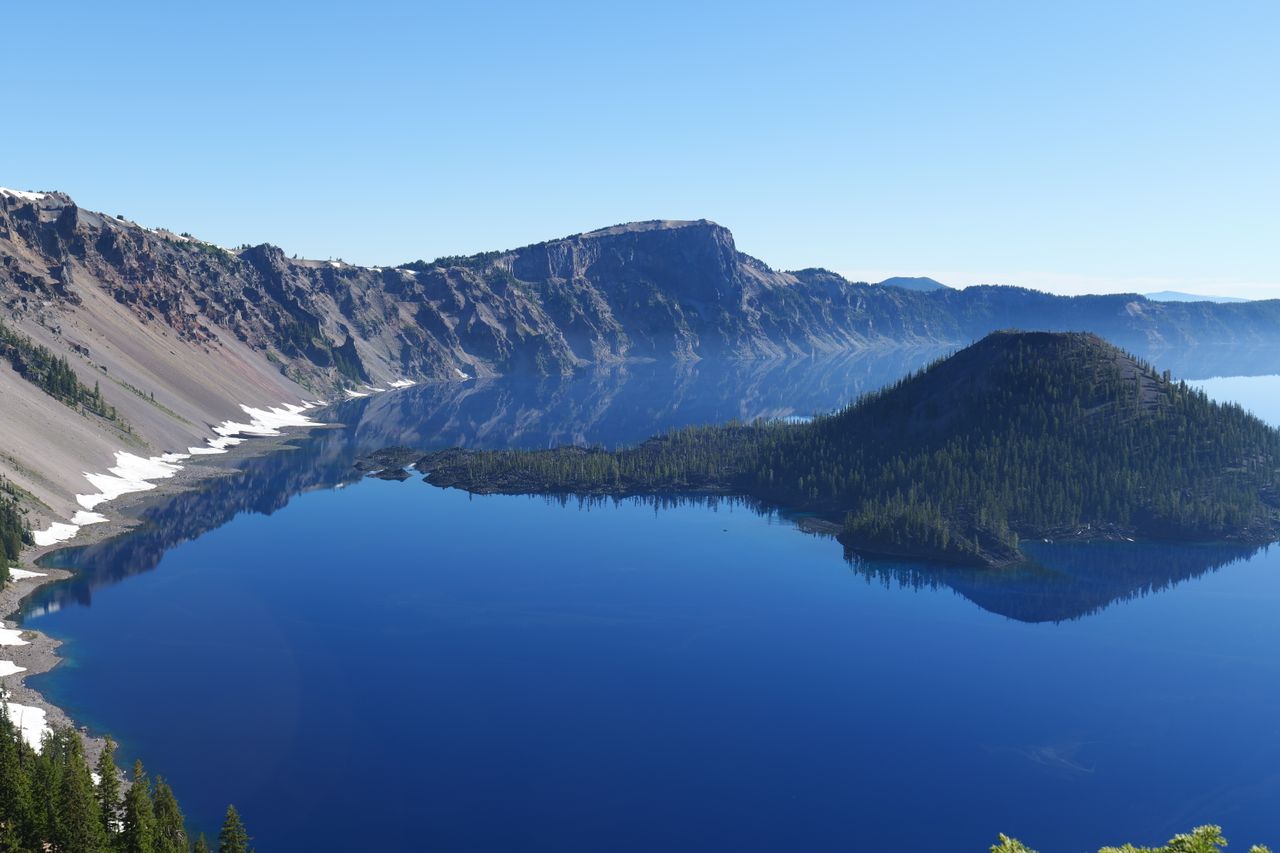
Crater Lake is genuinely unlike any other national park in the country — the deepest lake in the United States, formed when Mount Mazama collapsed into itself roughly 7,700 years ago, filled with water so clear and blue it looks almost artificial the first time you see it framed by sheer cliffs rising straight from the shore. No photograph fully prepares you for standing at the rim in person; the color and the scale both genuinely exceed what pictures convey.
This guide covers the best hikes in Crater Lake, from easy rim walks through the park’s signature summit climbs — with critical 2026 access information, since the trail providing the only legal access to the lakeshore is now closed for a multi-year rehabilitation project that genuinely reshapes what a Crater Lake visit looks like this year.
For gear appropriate to Crater Lake’s high elevation and genuinely intense sun exposure, our what to wear hiking in summer guide covers layering for conditions at 7,000-plus feet, and our best hiking poles guide covers options for the steep switchback descents and climbs several trails on this list demand.
Before You Go — Essential 2026 Planning Information
Cleetwood Cove Trail and all lakeshore access are closed for 2026, 2027, and 2028. This is the single most important planning fact for any 2026 visit. Cleetwood Cove is the only legal path down to the lake’s shoreline, and it’s undergoing a major rehabilitation project with trail closures required through the 2027 and 2028 seasons due to rockfall hazards during construction — the National Park Service states the trail is expected to reopen in summer 2029. This means no boat tours, no Wizard Island landings, no swimming, and no lakeshore access of any kind during this period. Park scientists are the only people permitted to approach the water directly.
Everything else remains fully open. The full Rim Drive, all rim-level hiking trails, Crater Lake Lodge, both visitor centers, Mazama Village campground, and ranger programs are unaffected. The genuinely iconic views that define this park have always come primarily from the rim rather than the water’s edge, and that experience is completely intact.
Entrance fees. $30 per vehicle for 7 days during the main season (roughly May 22 through October 31), dropping to $20 per vehicle in winter.
Rim Drive opens in stages depending on snowpack. The full 33-mile loop typically opens in late June or early July. The west side (Rim Village to Discovery Point) opens earlier; the east side often has segments closed into May or June. In 2026 specifically, sections around Crater Peak, Sun Notch, and Vidae Falls have additional construction-related access limits from an East Rim Drive rehabilitation project — check the NPS conditions page before driving the east rim.
Crater Lake averages roughly 43 feet of snowfall a year, making it one of the snowiest places in the country, and the North Entrance Road closes for winter, typically reopening late June or early July.
Cell phone reception is genuinely unreliable throughout the park. Outside the lodge and the restaurant area just below it, don’t count on having signal anywhere else — download offline maps before you arrive.
Parking at Rim Village fills by around 10am on peak summer days. Arrive early or return closer to 5pm to avoid the worst congestion.
Easy Hikes
Rim Promenade and Discovery Point — Best Easy Introduction
Distance: Roughly 2.2 miles round trip (Rim Village to Discovery Point and back) | Elevation gain: Minimal | Difficulty: Easy
Walking the Rim Promenade Trail from Crater Lake Lodge to the visitor center and onward to Discovery Point is genuinely the easiest and most accessible way to take in the lake’s color and scale without any real climbing. Along the way, the Senate Memorial Overlook — named for a US Congressman who was a major supporter of the park’s creation in 1931 — delivers one of the best and most easily accessed photography spots in the park, with a stone structure providing a safe vantage point over the steep drop to the water.
Continuing to Discovery Point brings you to the site where the lake was first documented by European settlers in 1853 (following its long prior discovery and significance to Native American tribes in the region) — a genuinely reflective stop with historical markers alongside the same impossibly blue water that first captivated those early visitors.
Plaikni Falls Trail — Best Easy Waterfall Hike
Distance: Roughly 2.2 miles round trip | Elevation gain: Minimal | Difficulty: Easy
Plaikni Falls is a genuinely accessible, family-friendly trail leading through diverse forest terrain — wildflowers and towering pines reflecting the area’s real biodiversity — to a rewarding waterfall payoff at the end. The terrain here is easy to navigate, making it a strong choice for beginners or hikers who want something more leisurely than the park’s summit trails.
Worth knowing before you go: the trail can genuinely get wet given its proximity to the waterfall and the area’s general climate, so sturdy, water-resistant footwear makes for a considerably more comfortable hike than standard trail shoes.
Moderate Hikes
Watchman Peak Trail — Best Sunset Hike
Distance: Roughly 1.6 to 2.5 miles round trip depending on the specific route | Elevation gain: Roughly 420 feet | Difficulty: Moderate
The Watchman Trail is widely considered the single best sunset hike in the park, combining genuinely spectacular views with a historic fire lookout tower at the summit that adds real character beyond just the scenery. This is consistently cited as one of the most popular trails in Crater Lake, and for good reason — the payoff-to-effort ratio here is genuinely excellent.
If you’re planning to stay for sunset specifically, bring a flashlight or headlamp for the descent — the trail after dark is considerably harder to navigate without one, and it’s a real safety consideration rather than an optional nicety. Check the weather before committing to a sunset attempt as well, since Crater Lake’s high-elevation conditions can shift unpredictably.
Strenuous Hikes
Garfield Peak Trail — Best Overall Hike in the Park
Distance: Roughly 3.5 miles round trip | Elevation gain: Roughly 1,000 feet | Difficulty: Moderate to Strenuous
Garfield Peak is one of the most popular trails in the park specifically because of its location directly behind Crater Lake Lodge, making it an easy, obvious first hike for lodge guests and day visitors alike. The trail switches back up the mountain’s rear side initially, meaning you’re hiking in shade during the early morning — a genuine advantage at this elevation, where direct sun can turn brutal quickly once it clears the ridge.
The early sections offer only occasional views as the trail hugs the back of the mountain, but the payoff builds steadily and dramatically as you climb — by the time the trail emerges onto the exposed ledge walking literally along the crater’s edge, the views become genuinely spectacular, and you’ll be able to spot the distinctive Phantom Ship rock formation directly below in the lake. Take real care here regardless of your comfort with heights: the drop-offs are steep and largely unguarded, and this is a genuinely treacherous trail for children or anyone who wanders too close to the edge — there’s nothing stopping a slide all the way down to the water.
From the ledge, a final push of roughly 300 more feet of elevation gain leads to the summit, where you can see essentially every major point of interest in the park simultaneously — Wizard Island, Phantom Ship, Mount Scott, and on clear days, distant boat tour activity (though not during the current 2026-2028 closure). Switchbacks do get noticeably steeper near the end, and most hikers complete the full route in roughly 2 to 2.5 hours. If you go early in the morning specifically, don’t be surprised to find yourself genuinely alone at the summit even in peak season — several experienced visitors report having the entire summit to themselves well into late August simply by starting before the crowds arrive.
For a reflection-focused visit specifically, hiking early in the morning when the water is calm delivers a genuinely striking mirror image of the surrounding cliffs on the lake’s surface.
Mount Scott — Best Panoramic Summit Views
Distance: Just over 4 miles round trip | Elevation gain: Substantial, reaching the park’s highest point | Difficulty: Strenuous
Mount Scott is the highest point in Crater Lake National Park, and it’s the only hike in the park that delivers a genuine full 360-degree view encompassing the entire lake simultaneously — every other overlook and summit in this guide shows you a substantial portion of the caldera, but Mount Scott is the single spot where you can see all of it at once. For hikers specifically seeking the most complete, comprehensive view available anywhere in the park, this is the trail worth prioritizing above every other option here.
Multiple experienced repeat visitors specifically recommend building a two-day itinerary around combining Mount Scott with Garfield Peak — the two trails deliver genuinely complementary perspectives on the same landscape, one from the immediate rim and one from a genuine outside vantage point looking back at the entire caldera.
Best Two-Day Itinerary
Day one: Start with Garfield Peak Trail in the early morning specifically — hiking the shaded back side of the mountain before the sun clears the ridge, and aiming for a weekday or early-season visit if you want a genuine chance at summit solitude. Grab lunch at the lodge or Rim Village Cafe afterward, then spend the afternoon walking the Rim Promenade to Discovery Point and the Senate Memorial Overlook, taking in the West Rim Drive’s various pullouts along the way.
Day two: Tackle Mount Scott for the park’s single best comprehensive view, ideally in the morning before afternoon thunderstorm risk builds at this elevation. If energy allows, add Plaikni Falls or the Watchman Trail later in the day — Watchman specifically if you’re staying for sunset, given the genuinely spectacular color show the setting sun creates over the caldera.
Given the current Cleetwood Cove closure, two days is genuinely a sufficient and complete way to experience this park’s rim-based hiking — the lakeshore access that used to be part of a typical visit simply isn’t available right now, but the trails covered in this guide represent the vast majority of what makes Crater Lake worth visiting regardless.
Final Thoughts
Crater Lake rewards visitors who understand that its defining experience has always come from above rather than from the water — the rim views, the hiking, the lodge, and that impossibly saturated blue are all completely unaffected by the current Cleetwood Cove closure, and in some ways, fewer overall visitors during this construction period may actually make for a quieter, more contemplative trip than in typical years. Start with Garfield Peak in the early morning to understand why it’s considered the best overall hike in the park, add Mount Scott for the single most complete view of the caldera available anywhere, and close out a longer visit with Watchman Peak at sunset if weather and timing allow.
Check current Rim Drive and trail status before your trip given the ongoing construction on both Cleetwood Cove and sections of the East Rim, bring real layers and sun protection for the genuinely intense conditions at 7,000-plus feet, and don’t let the boat tour closure discourage a visit — the overwhelming majority of what makes this park extraordinary remains completely open.
For more national park hiking guides, check our best hikes in Olympic National Park and best hikes in Glacier National Park guides for more of the Pacific Northwest’s finest hiking destinations.