
As an Amazon Associate I earn from qualifying purchases.
Legs that ache after a hike are rarely one problem. They are usually a short stack of causes in a predictable order, and treating them out of order is why the ache keeps coming back hike after hike. This guide works the stack the way you should check it: downhill muscle soreness first, then training load, load sharing, fuel and cramps, and the strain that is not soreness at all, finishing with the recovery routine that shortens the ache and the warning signs that end the self-help and start a clinician visit.
When the Ache Sits in Your Knees, Start There
Leg muscle ache and knee joint pain are different problems with different checklists, and our downhill knee guide works the joint version in its own order.
Read the Downhill Knee GuideKey Takeaways
- Check downhill soreness first, because braking with your quads and calves is the most common reason legs ache a day after hiking.
- Fix the load before the legs, because distance, descent and pack weight that jump too fast will outrun any recovery trick.
- Share the braking work, because poles and a properly fitted hip belt take load your leg muscles otherwise absorb alone.
- Eat and drink on schedule, because tired legs that cramp are often under-fuelled legs, not weak legs.
- Treat one-sided swelling, severe tight pain or dark urine as a same-day medical problem, never as soreness to walk off.
Table of Contents
- Read the Ache First: Where and When It Hurts Points to Why
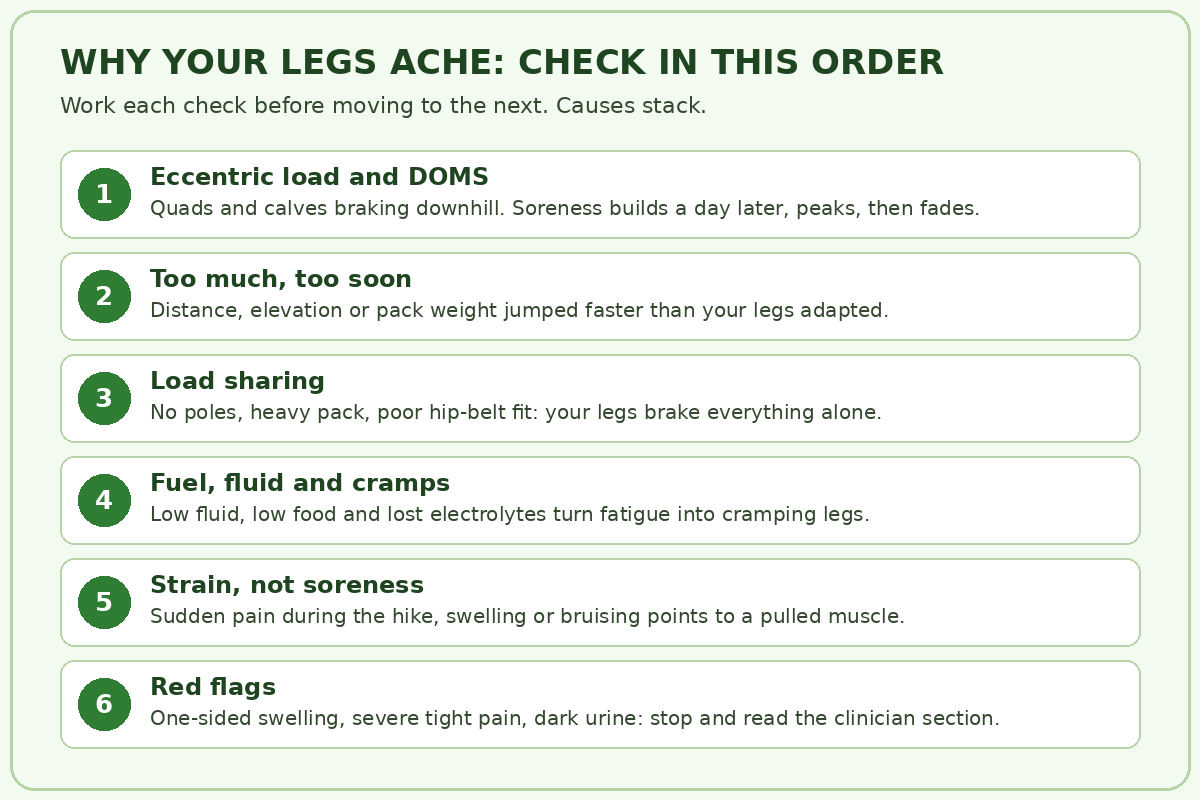
- Check One: Eccentric Load, the Downhill Tax
- Check Two: Too Much, Too Soon
- Check Three: Load Sharing, Poles and Pack
- Check Four: Fuel, Fluid and Cramps
- Check Five: A Strain Is Not Soreness
- The Recovery Routine That Actually Shortens the Ache
- Red Flags: When Leg Ache Needs a Clinician Fast
- Our view
- FAQ
- Sources
- Recommended
Read the Ache First: Where and When It Hurts Points to Why
Before you change any training or buy any recovery tool, read the ache itself, because timing and location are the fastest diagnostic you own. Ache that arrives a day later across both thighs is a different conversation from pain that struck mid-hike in one calf, and both differ from a cramp that locked a muscle on the trail. The Cleveland Clinic delayed onset muscle soreness guidance sets the normal pattern: soreness that builds over hours, appears one to three days after hard or unfamiliar exercise, sits in the exact muscles you worked, and fades within a few days. The Mayo Clinic muscle pain overview draws the wider boundary around it: pain from overuse and minor strain usually responds to home care, while pain with severe weakness, swelling or a major injury behind it belongs in medical hands. Use the table to aim your first check, then still work the checks in order, because causes stack.
| What the ache looks like | Most likely cause to check first | First fix to try |
|---|---|---|
| Both thighs or calves ache a day later, worst on stairs, easing daily | Delayed onset muscle soreness from downhill braking | Recovery routine, then smaller descents while you rebuild |
| Legs feel heavy and dead late in the hike itself | Plain fatigue, often with low fuel or low fluid | Eat and drink now; fix the fuel schedule next hike |
| A muscle suddenly grabs and will not let go on the trail | Cramp in a fatigued, under-fuelled muscle | Stretch and massage the muscle; fluids and food at the stop |
| Sharp pain in one spot during the hike, with swelling or bruising | Muscle strain, a pulled muscle, not soreness | Stop loading it; protect, rest, ice, compress, elevate |
| Pain sits in the foot, arch or heel instead of the leg | A foot problem with its own causes and fixes | Work the separate foot checks, not this list |
| One calf or thigh swells, feels tight, or urine turns dark | A red-flag condition, not a training problem | Skip to the red flags section and act the same day |
Muscle, Joint or Foot: Three Different Checklists
Keep the territories separate, because each one misleads the others. This post owns the leg muscles: thighs, calves, shins and glutes. Pain centred in the joint itself belongs to our knee pain on descents guide, and pain in the toes, arch or heel belongs to our feet hurt after hiking guide. A hiker can have two of the three at once, which is why the order matters: name which tissue is complaining before you treat anything.
Check One: Eccentric Load, the Downhill Tax
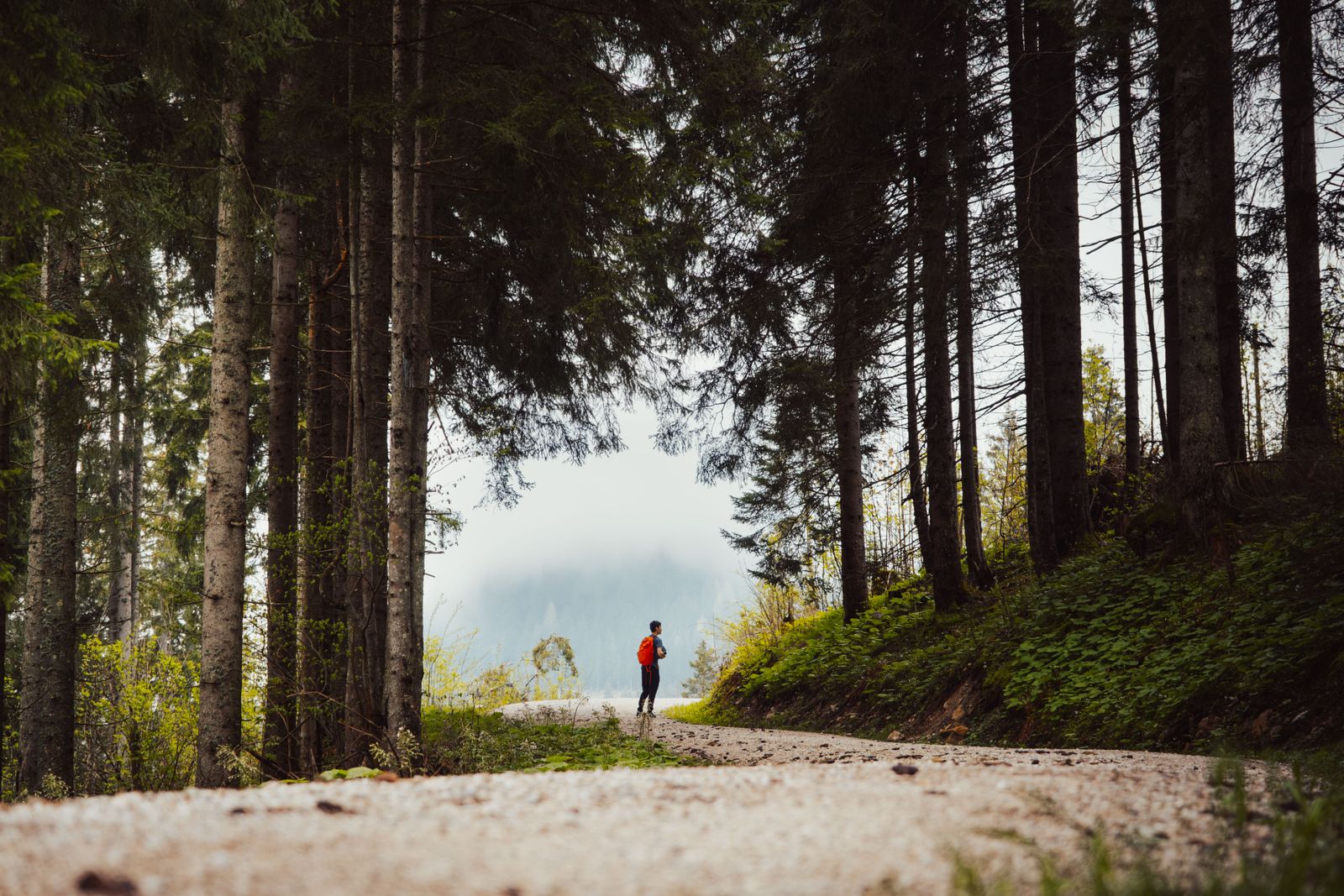
Eccentric load is check one because descending is the single most soreness-producing thing legs do on a trail. Eccentric means a muscle producing force while it lengthens, and that is what your quadriceps do on every downhill step: they lower your body weight, plus your pack, under control, thousands of times. Your calves do the same work on steep pitches and steps. Climbing feels harder while you do it, but climbing is mostly shortening work, and it is the lengthening work on the way down that leaves legs aching for days.
The timing is the signature, and the mechanism explains it. The review by Mizumura of delayed onset muscle soreness research describes the classic shape: soreness appears after a pain-free interval of roughly half a day to a day, peaks across the following one to three days, and is gone within about a week, with tenderness and pain on movement rather than pain at rest. The same review is honest about mechanism: simple muscle damage and inflammation do not fully explain it, and nerve-related pathways in the worked muscle appear to carry much of the tenderness. For a hiker the translation is short. The ache is a normal response to unaccustomed braking work, not a measure of how good the hike was, and it fades on its own schedule.
Why the Second Day Is the Worst
Soreness that peaks late tricks hikers into a bad experiment: feeling fine the morning after, hiking hard again, and then being unable to use stairs by evening. The delay is built into the process, so judge a big descent two mornings later, not one. Grade, surface and step height decide how much braking each step costs, which is why our trail difficulty ratings guide treats a long descent as difficulty in its own right, not as the easy half of the day.
Check Two: Too Much, Too Soon
Training load is check two because the same legs that handled last month’s hikes comfortably will ache for days after a jump they were never prepared for. The pattern is familiar: a quiet few weeks, then a long, steep weekend hike, often with a heavier pack. Nothing broke. The dose simply doubled, and soreness is the receipt. Distance is only one dial. Descent total, pack weight, heat and back-to-back days all turn the same dial, and turning two at once is how a fit hiker ends up sorer than a beginner on an easy trail.
Muscles complain loudest about novelty and sudden load, not about work itself. The Hospital for Special Surgery muscle strain guidance makes the adaptation point from the injury side: strains happen more readily when a muscle is not adequately adapted to the demands placed on it, as when starting a new activity or significantly increasing exercise load, and fatigue itself sets a muscle up to fail. Soreness and strain sit on the same road, at different distances along it, which is why the load check comes before any talk of products. Build one dial at a time, and keep a lighter day after a hard one.
Check Three: Load Sharing, Poles and Pack
Load sharing is check three because your leg muscles should not be the only brakes on the mountain. Every downhill step is a controlled fall arrested by muscle. Anything that shares that work, or reduces the weight being arrested, reduces the ache that follows.
Poles are the first lever, used as brakes rather than as walking sticks. Planted ahead of your feet on a descent and loaded through the strap, poles let your arms absorb part of each step-down before your quads and calves take the rest. The REI Expert Advice guide to using trekking poles describes the same division of labour: poles enhance stability and can reduce force on the knees while hiking and backpacking, and they relieve stress on the back, core and legs by harnessing upper-body strength. Our best hiking poles overview compares the main designs, and our pole choosing guide covers length, locks and grips, because a pole at the wrong length shares almost nothing.
The Pack Is the Second and Third Lever
Weight is the second lever: your legs brake your body plus everything on your back, and the pack is the part of that sum you control. Weigh the packed bag honestly against what the route demands. Our backpack weight audit works through where the spare pounds hide. Fit is the third lever. A hip belt in the wrong place dumps the load onto your shoulders and shifts your balance, changing how each leg lands and brakes. Our pack fitting guide sets belt position and torso length in order. Cut weight first, fit second, retest on the same descent.
Check Four: Fuel, Fluid and Cramps
Fuel and fluid are check four because legs that run empty ache differently from legs that are merely sore, and the fix is a schedule, not a supplement. The late-hike version is unmistakable: legs feel heavy and hollow, pace falls apart, and a calf or thigh may grab in a cramp on a steep step. Under-eating is the quiet half of it: a long hike burns far more than most hikers pack, and a muscle in a deep energy hole fatigues early and complains loudly. Eat before you are hungry, in small amounts, all day.
The fluid half is about balance, not just volume. The Cleveland Clinic electrolyte guidance explains why the minerals matter: electrolytes support nerve and muscle function and balance body fluids, and losing them through heavy sweating without replacement is one route to an imbalance whose symptoms include muscle cramps, spasms and weakness. The companion Cleveland Clinic heat cramps guidance describes the trail version directly: painful spasms during intense activity in the heat, driven by rising body temperature plus salt and electrolyte loss in sweat, eased by cooling down and replacing carbohydrates and electrolytes rather than by water alone in large, fast volumes. On long, hot hikes, carry an electrolyte drink for at least part of your fluid, and keep drinking after the hike until urine runs pale again. Carrying that fluid comfortably is its own problem, solved in our hydration packs roundup.

Liquid I.V. Hydration Multiplier
- HYDRATION MIX: A great-tasting, non-GMO electrolyte drink mix that delivers hydration faster than water alone.
- GREAT TASTE: Lemon Lime flavor is zesty and bright, with a punch of citrus tang and a perfectly balanced, light acidity.
- SCIENCE-BACKED FORMULA: Powered by LIV HYDRASCIENCE, Liquid I.V. is designed with an optimized ratio of electrolytes and clinically tested nutrients.
List Price :
Offer: 19.98 $
Go to AmazonWhen a Cramp Grabs, Work the Muscle, Not the Panic
A cramp is a muscle that has contracted and will not release, and the immediate treatment is mechanical. The NHS leg cramps guidance gives the standard response: stretch and massage the affected muscle, stand and put weight through the leg, and expect the muscle to feel sore for some hours afterwards. For a calf cramp, straighten the leg and pull the toes gently toward you. For a thigh cramp, bend the knee and draw the foot toward your buttock. Then walk gently, eat and drink at the next stop, and treat a cramp that keeps returning on the same leg as information: that leg is being loaded or fuelled past its current capacity. Heat and thin air make all of this worse, and our altitude sickness guide covers the high version of the same fluid problem.
Check Five: A Strain Is Not Soreness
The last check separates the ache you recover from at home from the injury you recover from on a programme. Soreness is diffuse, symmetrical, delayed and easing. A strain is none of those: it starts during the hike, often with one memorable step, a slip arrested by one leg, and it sits in one specific place in one muscle. Hamstrings on a steep scramble and calves on a sudden push-off are the usual hiking strains. Swelling, bruising and weakness in that muscle point the same way.
Treat a suspected strain as an injury from the first hour, because the early handling decides the timeline. The NHS sprains and strains guidance sets out the PRICE sequence for the first two to three days: protect the injury, rest it, apply ice wrapped in a damp towel for short sessions, compress with a bandage that is snug but not tight, and elevate the leg on a pillow. Avoid strenuous exercise on it while it heals, and rebuild gradually. A strain is not a reason to stretch aggressively through pain. If you cannot bear weight, if bruising spreads, or if strength does not return, it becomes a clinician visit.
Soreness in the Shins Deserves Its Own Sentence
Aching along the front of the shin after hiking sits between categories. It often follows a sudden increase in downhill walking on hard surfaces, when the muscles that lift the front of the foot work eccentrically on every step down, and it usually settles with the same load reduction as any other soreness. What it must never be confused with is the severe, tight, bursting shin pain in the red flags section, which builds during activity and does not settle with rest. Ordinary shin ache fades. That pain escalates.
The Recovery Routine That Actually Shortens the Ache
Recovery does not remove soreness, but it decides whether you spend two days stiff or four. Work it in this order. First, keep moving gently: an easy walk the day after a hard hike does more for stiff legs than a day on the couch. Second, eat a real meal with protein and carbohydrate, and drink to thirst and a little beyond it. Third, stretch the worked muscles gently, quads, calves, hamstrings and glutes, holding each stretch comfortably. Fourth, put your legs up for a while in the evening. Fifth, sleep properly, because the repair work happens disproportionately at night.
Rolling earns a careful, honest place in that routine. The systematic review indexed at PubMed on vibration foam rolling found beneficial effects on delayed onset muscle soreness, pressure pain and subjective fatigue across the studies it pooled, while noting findings were not consistent on every measure. Read that as written: rolling sore quads and calves gently can make legs feel and move better, the effect is modest, and it is comfort, not repair. Roll slowly, and never hard enough to bruise.

TriggerPoint GRID Foam Roller
- Patented Foam Roller Design Offers A Superior, Multi-Density Exterior Constructed Over A Rigid, Hollow Core
- Constructed From Quality Materials That Won’T Break Down Or Lose Shape From Repeated Use
- Includes Access To Free Online Instructional Video Library On Foam Rolling Best Practices From The Experts At Triggerpoint
List Price :
Offer: 27.52 $
Go to Amazon
Compression and the Morning-After Test
Compression socks are the other comfort tool with a sensible, limited claim. Worn after the hike, during the drive home and the evening, graduated compression can leave tired calves feeling less heavy and swollen. Treat them like rolling: comfort that helps you move gently, not a treatment for a cause.
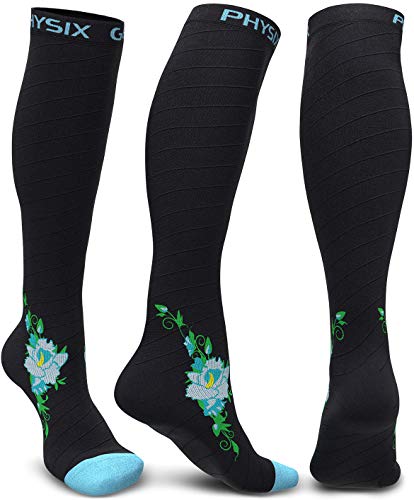
Physix Gear Compression Socks 20-30 mmHg
- 20-30 MMHG GRADUATED COMPRESSION: Firm 20-30 mmHg pressure is strongest at the ankle and eases off up the calf, giving your legs steady support through long shifts, long runs and long flights
- FOR WOMEN AND MEN: Available in S/M, L/XL and XXL. Choose your size by shoe size and calf width so you get a snug, comfortable fit the first time
- BUILT FOR LONG DAYS ON YOUR FEET: Nurses, teachers, retail, warehouse and hospitality staff wear them on 12 hour shifts to help reduce leg fatigue and the heavy leg feeling at the end of the day
List Price :
Offer: 17.8 $
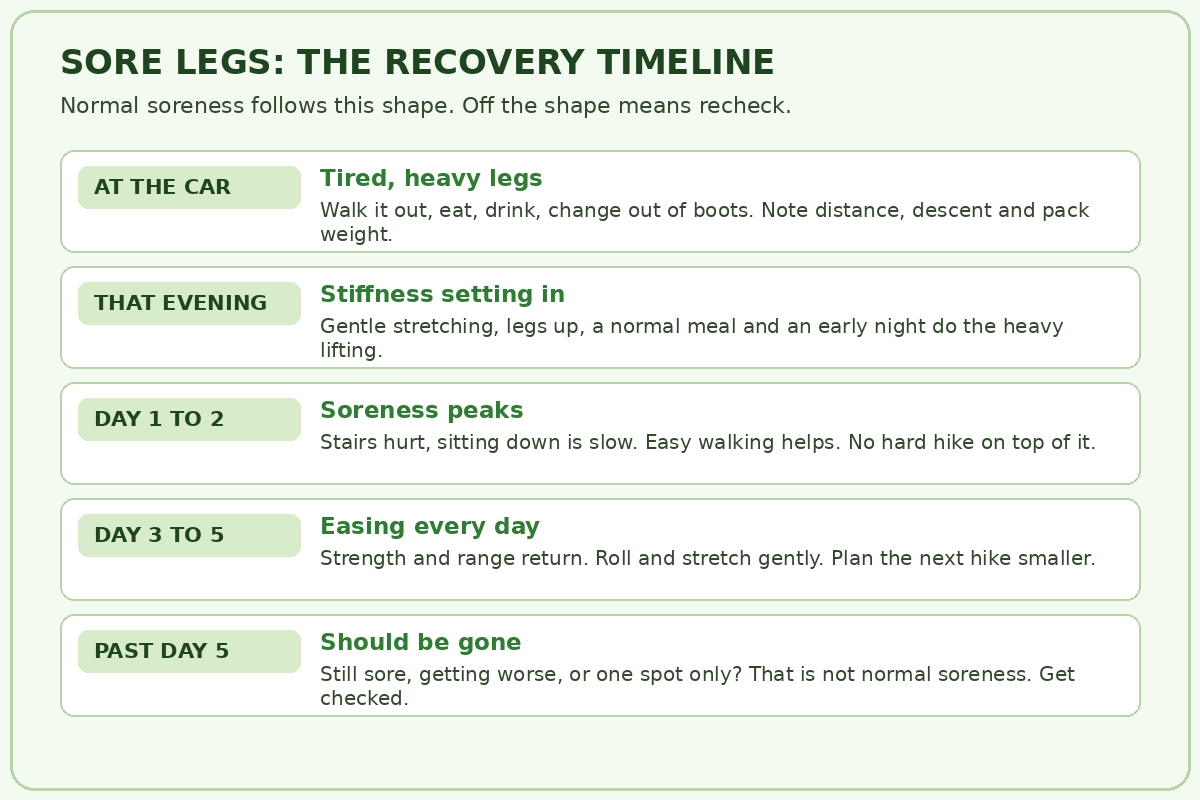
Go to AmazonJudge the hike by the second morning, and keep score. Back to normal within a few days, easing every day, means the dose was within your current capacity. Still worsening on day three, or sore past day five, means it was not. Write down distance, descent, pack weight and next-days soreness for a few hikes. That record separates a training problem from a medical one better than memory, and it is exactly what a clinician will ask for.
Red Flags: When Leg Ache Needs a Clinician Fast
Everything above assumes ordinary soreness. This section is the exception list, and it outranks every check before it. Three rare conditions hide inside the words leg ache after hiking, and all three are time-sensitive. Learn their shapes now, while you do not have them.
A blood clot in a deep vein is the first shape. The NHS deep vein thrombosis guidance lists its leg symptoms plainly: throbbing pain in one leg, usually the calf or thigh, swelling in that one leg, skin that is red, darkened or warm around the painful area, and swollen veins. One-sided is the word to hold on to: soreness is symmetrical, a clot usually is not. Pain and swelling in one leg together with breathlessness or chest pain is an emergency call, because a clot that travels to the lungs is life-threatening.
Compartment Syndrome and Rhabdomyolysis
Compartment syndrome is the second shape: pressure building inside a tight muscle compartment until it strangles its own blood supply. The MedlinePlus compartment syndrome entry describes pain far higher than the injury or effort explains, severe pain that does not ease with pain medicine or with raising the leg, numbness, tingling, weakness and swelling. The exertional version can follow repetitive hard activity such as a long run or hike. A lower leg that feels bursting tight, hurts severely when the muscle is stretched, and is getting worse rather than better needs emergency care the same day. Waiting is how this condition costs muscle.
Rhabdomyolysis is the third shape: muscle breaking down fast enough to threaten the kidneys. The Cleveland Clinic rhabdomyolysis guidance lists weak, stiff, tender and swollen muscles together with urine that turns dark, brown, red or tea-coloured, and it treats extremely sore or weak muscles a few days after exercise, with dark urine, as a reason to be seen right away. The CDC rhabdomyolysis guidance adds the point hikers most need: the symptoms can begin hours or days after the muscle injury, muscle pain, dark urine and weakness are the cluster to act on, and only a blood test confirms it. Extreme, unaccustomed exertion, especially in heat and with dehydration, is the hiking route into it. Severe soreness plus dark urine is never a hydration problem to solve alone at home. It is an emergency department, the same day.
Our view
I treat aching legs as a checklist, not a character test, because the cause is almost always one of the first three checks and almost never a mystery. Share the braking with the poles in our best hiking poles overview, respect the joint version of the problem in our downhill knee guide, and keep the territories straight with our feet hurt guide when the pain sits lower, and if your legs are still not right a week later, believe them and get checked, because legs that keep aching are telling you something training cannot fix.
— Brian Ka
FAQ
Why do my legs ache after hiking but not after walking?
Because hiking loads leg muscles in ways flat walking does not. Descents force your quads and calves to brake your body weight while lengthening, climbs demand sustained force, uneven ground works stabilising muscles continuously, and a pack adds load to every step. The downhill braking is what produces soreness a day or two later.
How long should leg soreness after hiking last?
Ordinary soreness builds over the first day, peaks across roughly the next one to two days, and fades within a few days, rarely beyond about five. It should ease a little every day. Soreness that is still worsening after day three, or still present and unchanged past about day five, is off the normal pattern and deserves a recheck against the strain and red-flag sections above.
Is it safe to hike again while my legs are still sore?
Easy walking on sore legs is fine and usually helps; a hard hike on top of peak soreness is not. Light movement eases stiffness, but loading muscles hard before they have recovered shifts stress onto joints and raises the risk of a strain. Wait until soreness is clearly easing and strength feels normal, then rebuild with a smaller descent than the one that caused it.
Do compression socks and foam rollers actually help sore legs?
They help comfort, modestly, and that is the honest claim. Rolling can reduce how sore muscles feel and how fatigued they seem, and compression worn after the hike can leave calves feeling less heavy. Neither fixes the cause. If the same legs ache after every hike, the answer sits in the checks: load, load sharing, fuel, in that order.
When is leg pain after hiking serious?
Leg pain is serious when it is in one leg with swelling, redness or warmth, when a muscle feels bursting tight with pain out of proportion that keeps worsening, when urine turns dark or cola-coloured alongside severe soreness or weakness, or when you cannot bear weight. Those patterns mean a clot, compartment syndrome, rhabdomyolysis or a significant injury until a clinician proves otherwise, and they are same-day problems.
Questions About Leg Ache and Recovery?
Tell us where the ache sits, when it starts after a hike, and what distance, descent and pack weight produced it, and we will help you work the checks in order.
Contact UsSources
- Cleveland Clinic — Delayed Onset Muscle Soreness (DOMS)
- Mayo Clinic — Muscle Pain: Causes
- Mizumura — Delayed Onset Muscle Soreness: Involvement of Neurotrophic Factors
- Hospital for Special Surgery — Muscle Strain: What You Need to Know About Pulled Muscles
- REI Expert Advice — How to Use Trekking Poles
- Cleveland Clinic — Electrolyte Imbalance
- Cleveland Clinic — Heat Cramps
- NHS — Leg Cramps
- NHS — Sprains and Strains
- PubMed — Effects of Vibration Foam Rolling on Pain, Fatigue, and Range of Motion
- NHS — DVT (Deep Vein Thrombosis)
- MedlinePlus — Compartment Syndrome
- Cleveland Clinic — Rhabdomyolysis
- CDC — Signs and Symptoms of Rhabdomyolysis