
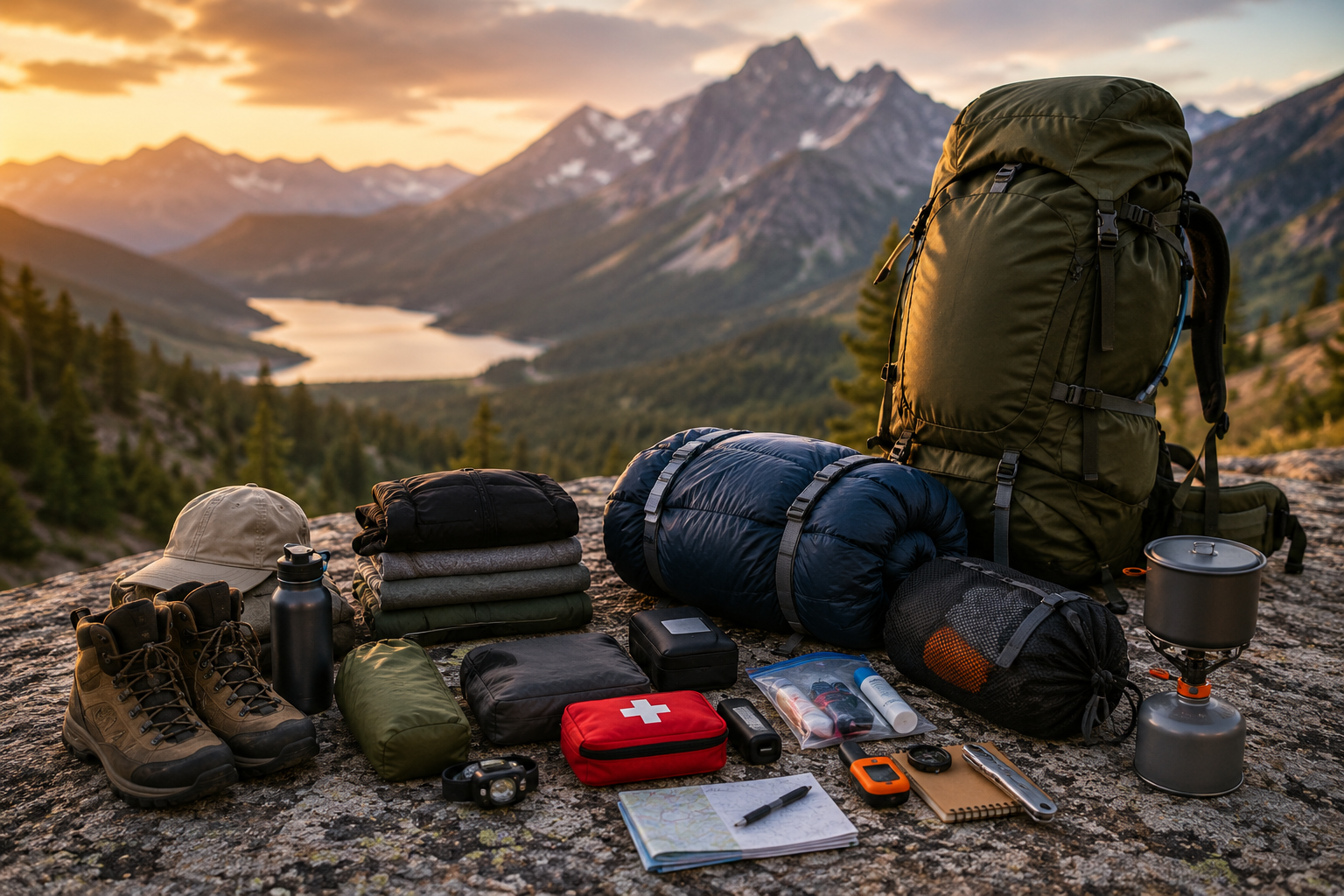
The gap between a day hike and a multi-day backpacking trip isn’t just distance — it’s self-sufficiency. On a day hike, a gear mistake means discomfort you can tolerate until you’re back at the car in a few hours. On a multi-day trip, the same mistake follows you for two, three, or seven nights, and the consequences compound in ways that make careful packing genuinely matter more than it does for shorter outings. Forgetting a rain jacket on a day hike means a wet walk back. Forgetting one on a three-day trip means potentially sleeping in wet gear through a genuinely dangerous night.
The good news is that a complete multi-day backpacking kit is built around a manageable number of core systems, not an endless list of individual items to memorize. Once you understand the systems — shelter, sleep, water, food, navigation, and safety — the specific gear choices within each become much easier to reason through, and the checklist stops feeling overwhelming. This guide covers exactly what belongs in a multi-day backpacking kit, organized by system, with guidance on what’s genuinely essential versus what’s comfort and preference.
For the pack that holds all of this, our how to pack a backpack for hiking guide covers loading strategy once you’ve gathered your gear, and our best backpacking sleeping pads guide covers one of the most consequential individual gear decisions on this entire list.
Understanding Base Weight Before You Start
Before diving into the checklist itself, it’s worth understanding a concept that shapes nearly every gear decision on a multi-day trip: base weight. This is the total weight of everything in your pack excluding consumables — food, water, and stove fuel — because those items get used up and their weight changes daily, while your base weight stays constant across every mile of the trip regardless of how many days you’re out.
The backpacking community generally recognizes a rough spectrum here. A beginner-friendly setup, prioritizing comfort and budget-friendly gear over minimizing weight, often lands around 20 pounds of base weight or more. A more dialed-in “lightweight” setup, where you’ve made some deliberate choices to trim weight without sacrificing genuine safety or comfort, often lands in the 12 to 20 pound range. True “ultralight” setups, which require premium materials and a willingness to accept some real tradeoffs in comfort and durability, can push base weight down toward 10 to 12 pounds or below. None of these tiers is inherently correct — they represent different points on a genuine tradeoff between cost, comfort, and carried weight, and most backpackers migrate toward lighter setups gradually as they gain experience and identify what they can comfortably do without.
Shelter System
Your shelter is the first line of defense against weather, and it’s one of the “big” gear decisions — along with your sleep system and pack — that most heavily influences both your comfort and your total carried weight.
A tent appropriate to your group size and season is the core of this system. Match the tent’s capacity honestly to how many people will actually use it — a “2-person” tent rated for exactly two adults with gear tends to feel genuinely cramped in practice, and many experienced backpackers size up by one person for real comfort. Confirm the tent’s season rating matches your trip — a three-season tent handles spring through fall conditions well but isn’t built for genuine winter snow loads or sustained high winds.
Stakes and guylines matter more than their small size suggests. Bring enough stakes to secure the tent fully rather than relying on rocks or improvised anchors, and don’t skip the guylines even on a calm-looking forecast — mountain weather changes fast, and a tent that isn’t properly guyed out can genuinely struggle in a sudden wind event.
A ground tarp or footprint, sized to fit under your tent floor, protects against abrasion and moisture from the ground below, extending your tent’s usable life meaningfully over repeated trips.
Sleep System
Your sleep system is arguably the single most consequential set of gear decisions for how well you actually rest on a multi-day trip — and rest quality genuinely affects how you perform and how much you enjoy each subsequent day on trail.
A sleeping bag rated appropriately for your trip’s coldest expected night, with a genuine safety margin built in. Understanding temperature ratings — specifically the difference between a bag’s Comfort rating and its Limit rating — matters considerably here, since the two numbers represent very different sleep experiences.
A sleeping pad with sufficient insulation (R-value) for your season, not just physical cushioning. This is one of the most commonly underestimated pieces of the entire sleep system — a genuinely warm sleeping bag paired with an inadequately insulated pad can still leave you cold overnight, since a significant amount of heat loss happens directly through contact with the ground beneath you.
A pillow, or a pillow substitute. A dedicated inflatable or compressible camp pillow adds real comfort for relatively little weight, though many experienced backpackers simply stuff a spare piece of clothing into their sleeping bag’s stuff sack as a lighter, no-additional-weight alternative.
Water System
Reliable access to clean water is a genuine safety essential, not just a convenience, and this system deserves real attention regardless of how confident you are in the availability of natural water sources along your route.
A primary water treatment method — most commonly a hollow-fiber filter like a Sawyer Squeeze or Katadyn BeFree — handles the bulk of your water treatment needs across a multi-day trip. Confirm the specific filter’s effective range against the pathogens present in your hiking region before relying on it exclusively.
A chemical backup, such as water purification tablets, is worth carrying even alongside a primary filter. Filters fail — clogging, freezing, physical damage — and a lightweight chemical backup means a filter failure doesn’t become a genuine water crisis mid-trip.
Water storage capacity appropriate to your route’s water availability. On routes with frequent, reliable water sources, carrying less capacity and refilling often keeps pack weight down. On routes with long dry stretches, you’ll need genuine carrying capacity to bridge the gaps — research your specific route’s water availability before finalizing this decision rather than guessing.
Kitchen and Food
Multi-day trips require genuine meal planning, not just packing whatever’s convenient, since you’re managing caloric needs across multiple consecutive days of real physical exertion.
A backpacking stove and fuel appropriate to your trip’s length and your cooking style. Canister stoves are simple and reliable for most three-season trips; integrated systems like the Jetboil line prioritize fast boil times and fuel efficiency for hikers whose cooking mostly means boiling water for dehydrated meals.
Cookware sized to your actual group and cooking needs, rather than a larger set than you’ll use. A single pot handles boiling water and simple one-pot meals for most solo and duo backpackers; larger groups or more ambitious camp cooking justify additional cookware pieces.
A long-handled spoon or spork, and a lighter or two. Always carry a backup fire-starting method — a second lighter, waterproof matches, or a ferro rod — since a failed lighter with no backup at camp in cold or wet conditions is a genuinely miserable and preventable situation.
Food calculated for the actual number of days and calories your trip requires, generally planned around 1.5 to 2.5 pounds of food per person per day depending on your caloric needs and the trip’s physical demands. Repackage food out of bulky original packaging into resealable bags before you leave, both to save weight and volume and to reduce trailside trash.
A bear canister or approved food-hanging system, where required by the land you’re hiking through. Many popular backcountry areas now mandate bear canisters specifically rather than accepting a hang system as sufficient — check current regulations for your specific route before assuming either option is acceptable.
Clothing System
Multi-day clothing planning is fundamentally different from day-hike clothing planning, because you’re managing multiple consecutive days of wear, sweat, and variable weather rather than a single outing you can plan precisely around a known forecast.
A base, mid, and shell layering system appropriate to your season and expected conditions, built around genuine moisture-wicking materials rather than cotton in any layer that sits against skin. Resist the urge to overpack clothing — three to four full days’ worth of clothing changes is consistently flagged by experienced backpackers as one of the most common overpacking mistakes, since a merino or synthetic base layer can be worn multiple consecutive days without becoming a genuine problem.
Extra socks specifically, since foot care matters disproportionately on multi-day trips where blisters or wet feet compound day over day rather than resolving overnight the way they might after a single day hike. A dedicated pair of dry camp socks, kept strictly separate from your hiking socks, is worth the minimal added weight.
Rain protection, packed regardless of the forecast’s confidence, since mountain weather shifts faster and more unpredictably than most forecasts capture reliably.
Navigation and Communication
Multi-day trips often take you further from cell service and rescue access than day hikes, making genuine navigation and communication capability more consequential.
A physical map and compass, even if you’re primarily navigating with a phone or GPS device. Batteries die and electronics fail; a map and compass, along with the basic skill to use them, function as a genuinely reliable backup that doesn’t depend on power.
A GPS device, offline map app, or satellite communicator, depending on how remote your route is. For genuinely remote multi-day routes without reliable cell coverage, a satellite communicator with SOS capability is increasingly considered close to essential rather than optional gear, given how meaningfully it changes emergency response time in a genuine backcountry crisis.
First Aid and Emergency Gear
A first aid kit built around genuine trail-relevant scenarios — blister care, wound cleaning and closure, pain relief, and any personal medications — rather than an oversized generic kit padded with items you’re unlikely to use. Building your own kit from trail-specific components, rather than buying a large pre-assembled kit designed for general use, tends to produce a more genuinely useful and appropriately weighted result.
An emergency shelter, such as a lightweight bivy sack or emergency blanket, packed separately from your main tent as a genuine worst-case backup if you’re forced to spend an unplanned night away from your intended camp.
A repair kit covering the gear most likely to fail mid-trip — duct tape wrapped around a trekking pole or water bottle, a small tent pole splint, and adhesive gear repair patches. Keep this genuinely accessible rather than buried at the bottom of your pack, since a mid-trip gear failure is exactly the situation where digging through your entire pack to find a repair kit becomes its own frustration.
Hygiene and Leave No Trace
This category deserves more deliberate attention than most beginner checklists give it, both for your own comfort and because proper waste disposal in the backcountry is a genuine environmental and, in many areas, legal responsibility rather than an optional add-on.
A backcountry trowel for digging proper catholes, kept lightweight — purpose-built ultralight trowels weighing under an ounce handle this task efficiently without adding meaningful pack weight.
Waste disposal bags for packing out toilet paper and hygiene waste in areas where burying it isn’t sufficient or permitted, along with hand sanitizer for basic hygiene between water sources.
Basic personal hygiene items — toothbrush and toothpaste, a small pack towel, and any personal care items you genuinely can’t do without for multiple consecutive days.
Electronics
A headlamp with spare batteries is genuinely essential rather than optional — hikes run long, camp tasks happen after dark, and an unexpected extended day without reliable lighting is a real safety concern, not just an inconvenience.
A portable power bank, sized to your trip’s length and your device usage, if you’re relying on a phone for navigation, photos, or emergency communication across multiple days without charging access.
Resist excessive electronics. A single set of spare batteries is usually sufficient for most trips; books, tablets, and other dedicated entertainment devices add real weight for a function your phone likely already serves adequately on shorter multi-day trips.
Adjusting the Checklist for Trip Length
A three-day trip and a full week-long trip share the same core systems, but the specific quantities within each system scale meaningfully with duration. Food is the most obvious scaling factor — plan roughly 1.5 to 2.5 pounds per person per day and multiply directly by your trip length. Fuel scales similarly, though less than linearly, since the fixed cost of boiling water for the first meal doesn’t change much with trip length while the cumulative fuel use does grow with additional days.
Clothing generally doesn’t scale linearly with trip length the way food and fuel do — a well-planned clothing system for three days often works nearly unchanged for seven days, since the plan already assumes wearing the same base layers multiple consecutive days rather than a fresh set for every single day. Hygiene and first aid supplies scale modestly with trip length but not dramatically, since most individual first aid needs don’t correlate directly with the number of nights on trail.
What to Leave Behind
Overpacking is a genuinely common mistake, and it’s worth naming a few specific items that experienced backpackers consistently flag as unnecessary weight for most trips. Multiple days of full clothing changes beyond what a proper layering and rotation system requires. A heavy multi-tool when a small, purpose-appropriate knife handles the vast majority of actual trail needs. Excessive spare batteries beyond a single reasonable backup set. Dedicated entertainment devices like books or tablets that duplicate functions your phone already serves. And an oversized, generically assembled first aid kit rather than a genuinely trail-relevant one built around your actual likely needs.
The general principle worth internalizing: every item beyond the genuine core systems covered above is comfort and convenience, not safety. That’s not a reason to skip comfort items entirely — a few genuinely improve trip enjoyment meaningfully for their weight cost — but it’s worth being honest about which category each item in your pack actually falls into before committing to carrying it for multiple consecutive days.
Final Thoughts
A multi-day backpacking kit is genuinely manageable once you think in terms of systems rather than an undifferentiated list of individual items — shelter, sleep, water, food, navigation, safety, hygiene, and electronics, each with a small number of genuinely essential pieces and a longer list of optional comfort additions layered on top. Start with the essentials-only version of each system for your first multi-day trip, note what you actually used and what stayed in your pack the entire time, and refine your kit gradually from real trail experience rather than trying to anticipate every scenario before you’ve ever spent a night out.
For the pack that carries all of this, our how to pack a backpack for hiking guide covers the loading strategy that keeps a multi-day load organized and properly weighted on your back, and our best hiking cookware guide covers kitchen setup options across different group sizes and cooking styles.