
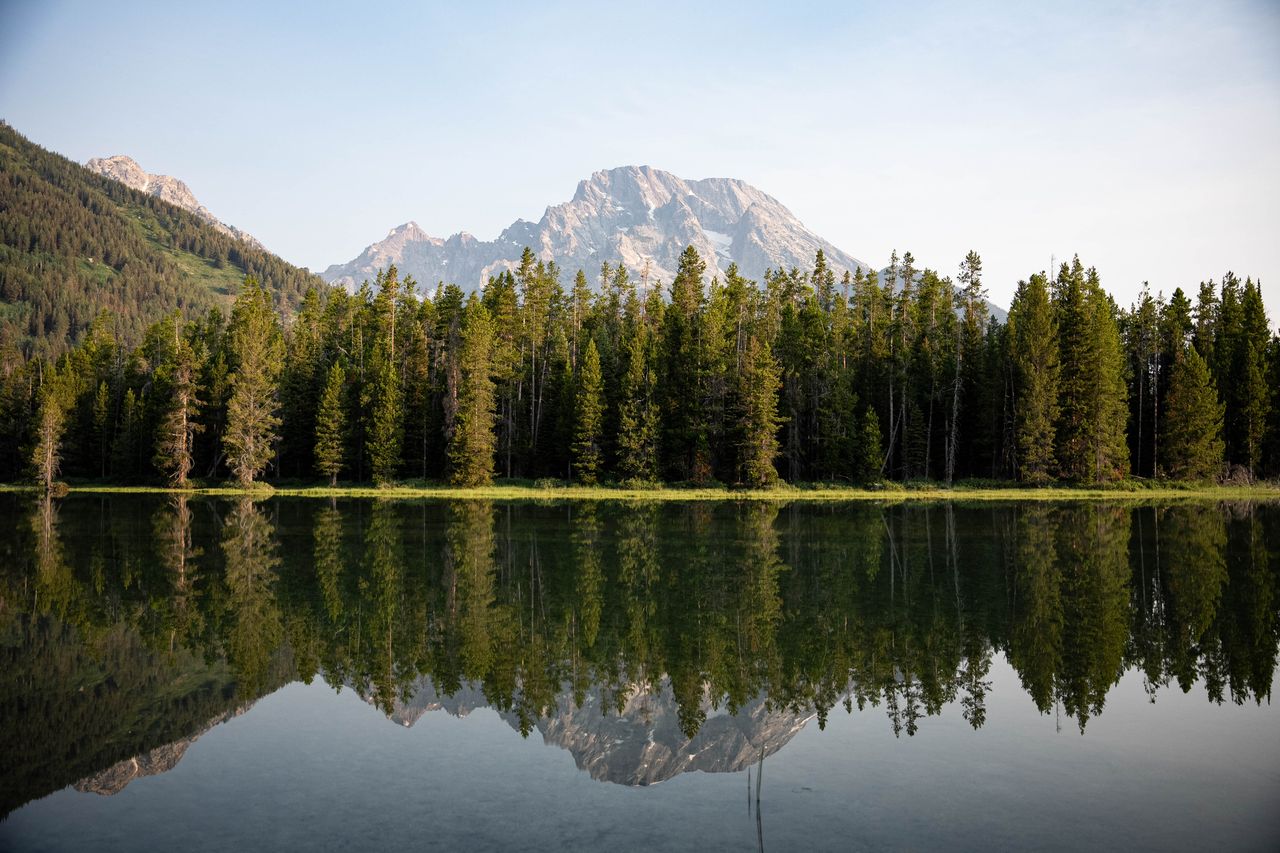
There’s a reason Ansel Adams pointed his camera at these mountains in 1942 and produced one of the most reproduced landscape photographs in American history — the Tetons rise directly out of the valley floor with no foothills to soften the transition, creating a mountain skyline unlike anywhere else in the Lower 48. That dramatic rise is also what makes Grand Teton such a rewarding hiking destination: glacier-fed alpine lakes sit remarkably close to trailheads, wildlife sightings — moose, black bears, grizzlies, bighorn sheep — are a near-daily occurrence, and the hiking here spans everything from a flat mile around a swimming lake to an unofficial boulder-field scramble that takes three attempts to actually get lucky with clear weather.
This guide covers the ten best hikes in Grand Teton, organized from easy family-friendly walks to genuinely demanding full-day treks — with current park logistics, boat shuttle details, and the practical planning that makes the difference between seeing these mountains clearly and getting rained, snowed, or smoked out like more than one experienced visitor has.
For gear to prepare for any of these hikes, our day hiking essentials checklist covers the basics, and our best hiking boots for men and best hiking boots for women guides cover footwear for the mix of maintained trail and rugged, unofficial terrain covered here.
Before You Go — Essential Planning Information
Timing matters more here than almost any other national park. Grand Teton’s main park road closes from November through late April, and even late May and early June visits regularly get snowed or rained out — multiple experienced visitors report losing days of mountain visibility to spring storms, including a freak June blizzard. Late June through August offers the most reliable weather window, though wildfire smoke — a real risk from mid-summer through fall, particularly in years with active fire seasons elsewhere in the West — can obscure views just as thoroughly as snow.
Entry fees: $35 per private vehicle, covering 7 consecutive days. Starting January 1, 2026, non-U.S. residents aged 16 and older pay an additional $100 per person on top of the standard entrance fee. The America the Beautiful Annual Pass ($80 for U.S. residents) covers entry to all national parks for 12 months.
The Jenny Lake shuttle boat is the single most useful logistics tool in the park. Round-trip tickets cost $18 for adults, $15 for seniors 62 and older, and $10 for children, with one-way tickets available at $10 for adults and $8 for children (free under 2 and over 80). The boat runs continuously every 10-15 minutes with no reservation needed — just show up at the East Boat Dock and pay at the counter. It eliminates roughly 2 miles of flat lakeside walking each way to reach the Cascade Canyon trailhead, meaning the difference between taking the boat and walking around is about 4 total miles — worth the fare for most visitors who want to preserve energy for the actual climbing.
Parking at South Jenny Lake and other major trailheads fills early and consistently in peak season. Arrive before 9am, or plan for after 4pm, for any realistic chance at a spot near Jenny Lake, Taggart Lake, or the Lupine Meadows trailhead used for Delta Lake and Amphitheater Lake.
Bear spray is essential on every hike on this list, no exceptions. This park hosts both black bears and grizzlies, and multiple experienced hikers report seeing bears — sometimes multiple bears in a single outing — on nearly every trail covered here. Wildlife viewing distance guidance: 25 yards minimum for non-predator wildlife like moose and elk, 100 yards minimum for anything that could be dangerous, including bears and bison.
Easy Hikes — Family-Friendly, Big Payoff, Minimal Effort
String Lake — Best Easy Swimming Lake Hike
Distance: Under 2 miles for a short loop, longer options available | Elevation gain: Minimal | Difficulty: Easy | Time: 1-2 hours
Multiple experienced Teton hikers name String Lake as their favorite easy destination in the park, and it’s easy to see why — a shallow, warm-for-alpine-standards lake at the base of the mountains that’s genuinely excellent for swimming, canoeing, kayaking, and paddleboarding, with the Tetons reflecting directly off the water on calm mornings. This is less a hike than a genuinely pleasant walk with a destination built for lingering rather than moving through quickly.
A picnic area sits at the lake, and several trail options branch from here — a loop around the lake itself, or a connection to the Lee Lake trail for hikers wanting slightly more distance and significantly more solitude. If you bring your own canoe or paddleboard, note that a free permit from the visitor center is required before launching.
Taggart Lake (and Bradley Lake) — Best Family Hike With Mountain Reflections
Distance: ~3 miles round trip to Taggart alone, ~5-7 miles combining both lakes | Elevation gain: Modest, crossing a glacial moraine | Difficulty: Easy | Time: 1.5-3.5 hours
Consistently ranked among the most-loved easy hikes in the park across multiple experienced visitors, Taggart Lake delivers genuine mountain-reflected-in-water scenery for minimal physical investment. The trail climbs gently over a glacial moraine before reaching the lake, where clear conditions produce a mirror image of the Grand Teton and surrounding peaks that rivals views requiring far more effort elsewhere in the park.
Extending over a second moraine reaches Bradley Lake, a quieter, more forest-tucked companion lake beneath Garnet Canyon’s dramatic cliffs — adding roughly 2 miles to the round trip. Adding the Beaver Creek Trail creates a loop connecting both lakes at roughly 7 miles total. This trailhead stays accessible essentially year-round and is popular for cross-country skiing in winter. Expect real crowds regardless of season — this is one of the most consistently busy trails in the park, and it’s genuinely worth braving them.
Hidden Falls and Inspiration Point — Best Introduction to the Park
Distance: ~1-2 miles round trip from the boat dock | Elevation gain: ~400 feet to Inspiration Point | Difficulty: Easy to Moderate | Time: 1-2 hours
This is the single hike that experienced Teton visitors most consistently recommend as the essential first-timer experience — take the Jenny Lake shuttle boat across the water, then hike a short half-mile to Hidden Falls, a genuine 70-foot waterfall and one of the few easily accessible falls in the range. Continuing another half mile with roughly 400 feet of additional climbing reaches Inspiration Point, delivering a sweeping view over the entirety of Jenny Lake with the Jackson Hole valley spread out behind you.
The climb to Inspiration Point is where the trail earns its “moderate” difficulty tag — real elevation gain on some exposed sections, though multiple parents report hiking this comfortably with young children while keeping a close eye on footing. Skipping the boat and walking the full Jenny Lake loop instead adds roughly 4 additional miles each way — worth doing only if you specifically want the extra distance or the boat line is genuinely prohibitive.
Phelps Lake via Lake Creek Trail — Best Quiet Alpine Lake
Distance: ~3 miles round trip for the loop, up to 7 miles for the full lake loop | Elevation gain: Modest | Difficulty: Easy | Time: 1.5-4 hours
Starting from the Laurence S. Rockefeller Preserve — a slightly more remote area of the park with a genuinely different, more meditative character than the busier Jenny Lake corridor — this trail leads through aspen groves and wildflower meadows to the shore of Phelps Lake, with views into Death Canyon along the way. Multiple hikers cite the roughly 20-foot jumping rock near the lake’s edge as a genuine highlight, delivering a legitimate adventure payoff on an otherwise easy, family-appropriate trail.
Two trail options exist from the same trailhead — the Lake Creek Trail and the Woodland Trail — and combining both into a loop is a popular approach. One important access note: vehicles longer than 23 feet cannot use the Moose-Wilson Road leading to the preserve, and the small parking lot is actively monitored by rangers, so arrive early or be prepared to wait for a space.
Moderate Hikes
Cascade Canyon — Best Wildlife-Viewing Hike in the Park
Distance: Flexible, 2.5+ miles one-way from the boat dock, up to several miles further into the canyon | Elevation gain: ~400-1,000 feet depending on how far into the canyon you go | Difficulty: Moderate | Time: 3-5 hours
Named a personal favorite by multiple experienced Teton hikers specifically for its wildlife density, Cascade Canyon extends beyond Inspiration Point into a genuinely dramatic glacially-carved canyon with sheer cliff walls, cascading water, and consistent moose, bear, and mountain goat sightings the deeper you go. The elevation gain is front-loaded in the climb to Inspiration Point — once past that section, the canyon itself is comparatively flat and easy walking, making it accessible to hike as far as your time and energy allow before turning back.
Multiple hikers specifically recommend asking other hikers on the trail whether they’ve spotted wildlife recently — a genuinely effective way to gather real-time information and build anticipation, since sightings here are common enough that someone on the trail has usually seen something within the last hour. Weather in this canyon can shift with real speed; more than one hiking group has been caught in sudden thunderstorms here, a reminder to check forecasts and carry a rain layer regardless of how clear the morning looks.
Paintbrush Canyon (Partial) — Best Terrain Variety on a Moderate Day
Distance: Flexible, up to 20 miles for the full loop through Cascade and over Paintbrush Divide | Elevation gain: Substantial for the full route, moderate for a partial hike | Difficulty: Moderate to Strenuous depending on distance | Time: Flexible, from a few hours to a full day
Cited by an experienced local hiker as one of the most dramatic longer routes in the park, Paintbrush Canyon delivers constantly changing terrain even on a partial hike — forest, waterfalls, wildflower meadows, and, at higher elevations, snowfields and genuine alpine views with real odds of spotting mountain goats. The full loop connecting Paintbrush and Cascade Canyons over Paintbrush Divide is a serious full-day undertaking at roughly 20 miles, but hiking just the first few miles delivers a meaningful sample of the terrain variety without the full commitment.
Granite Canyon — Best Hidden Gem With a Gondola Shortcut
Distance: Variable, a long hike or loop depending on access point | Elevation gain: Substantial if hiking the full route | Difficulty: Moderate to Strenuous | Time: Half day to full day
Consistently described as quieter and more rugged than the more famous Cascade or Amphitheater trails, Granite Canyon winds through aspen groves, open meadows, and deep forest — with fall foliage color cited by one experienced local as some of the best in the entire park during that specific season. Access options include hiking up from the bottom of the canyon or down from the top via the Jackson Hole Mountain Resort tram, a route one hiker specifically recommends for avoiding the knee strain of a long downhill hike — ride the resort gondola to the top, hike down through the canyon, and take the tram back up rather than completing a full round-trip on foot.
Strenuous Hikes — Full-Day Commitments and Alpine Scrambles
Amphitheater Lake — Classic Elevation Gain to a Glacial Lake
Distance: ~10 miles round trip | Elevation gain: Significant, exceeding 3,000 feet | Difficulty: Strenuous | Time: Full day (6-8 hours)
Starting at the Lupine Meadows trailhead, this route climbs a moraine before ascending a genuinely relentless series of switchbacks up the eastern face of the Tetons — delivering progressively better views of the valley floor, with Taggart and Bradley Lakes visible below as you gain elevation. Surprise Lake arrives first as a smaller glacial lake and natural rest point before the final quarter-mile push to Amphitheater Lake itself, where Disappointment Peak towers directly above and the Grand Teton rises just behind it.
For hikers who want more, two extension options exist near the top: continuing toward Garnet Canyon delivers a genuinely rocky, above-treeline landscape with the highest Teton peaks visible directly overhead, or branching toward the unofficial Delta Lake trail (covered below) adds an entirely different, more demanding destination to the same day.
Delta Lake — The Park’s Most Iconic Unofficial Trail
Distance: ~7.5-9 miles round trip | Elevation gain: ~2,000-2,300 feet | Difficulty: Strenuous, with genuine off-trail navigation | Time: 5-6+ hours
Once a genuinely obscure local secret, Delta Lake has become one of the most popular hikes in the park despite being entirely unofficial and unmaintained by the Park Service — no trail signage exists for the final approach, and multiple experienced hikers stress downloading an offline trail map (AllTrails works well) before attempting it, since real off-trail navigation and route-finding is required.
Starting from the Lupine Meadows trailhead on the same route toward Amphitheater and Surprise Lakes, hikers turn off after roughly six switchbacks to leave the maintained trail entirely. What follows is a genuinely demanding scramble across one and then a second, sketchier boulder field, with loose rock requiring careful footing throughout. Trekking poles are strongly recommended, and in May or early June, expect significant snow and ice on the final approach — crampons become a near-necessity in early season conditions, with the lake itself often still partially frozen.
The reward is a striking turquoise-blue lake fed directly by glacial runoff, with Disappointment Peak and the Grand Teton itself visible behind it. Swimming is technically possible but genuinely cold given the glacial feed — most hikers don’t stay in long. Multiple experienced hikers report the actual distance and time varying significantly hiker to hiker given the off-trail navigation involved; budget a full, unhurried day and don’t attempt this hike without a downloaded map and realistic expectations about the difficulty.
Lake of the Crags — Best Hidden Alpine Challenge (Experts Only)
Distance: ~4 miles round trip | Elevation gain: ~3,000+ feet | Difficulty: Very Strenuous, poorly marked, technical | Time: Full day
Named by one experienced local hiker as their personal favorite trail in the entire park — specifically because of how few people attempt it — Lake of the Crags sits high above Jenny Lake and delivers roughly 3,000 feet of elevation gain over just 2 miles each way, a genuinely steep and sustained climb comparable in intensity to Delta Lake but with a fraction of the foot traffic and correspondingly more solitude. The trail is poorly marked and requires real route-finding competence.
The reward, according to the hiker who ranks this as their favorite in the park, is a crystal-clear alpine lake surrounded by cliffs rising directly from the water, with a sense of genuine discovery that more heavily trafficked destinations like Delta Lake no longer offer. This hike is appropriate only for experienced, well-conditioned hikers comfortable with technical, unmarked terrain and a full day of exposure to sun and elements.
Outside the Park — Worth Adding to Your Itinerary
Snow King (Jackson): Technically outside park boundaries but directly in downtown Jackson, this steep, direct climb delivers panoramic views of the town, the Tetons, and the Snake River — a good training hike or a quick sunset summit option when time is limited. A gondola is available for the descent if your legs are done after the climb up.
Jackson’s Ridge: Another local, outside-the-park favorite — short, steep, and ideal for a quick 45-minute to 2-hour outing when you want unique views of town and the range without committing to a full park visit. Multiple locals cite the wildflower displays here as a genuine highlight in season.
Building Your Grand Teton Itinerary
One day: Take the early Jenny Lake boat shuttle to Hidden Falls and Inspiration Point, then Taggart Lake or String Lake in the afternoon for an easier, swimmable finish.
Two to three days: Day one covers Jenny Lake — the boat, Hidden Falls, Inspiration Point, and a partial hike into Cascade Canyon. Day two tackles Amphitheater or Delta Lake as your full-day strenuous objective (weather and conditions permitting). Day three covers the easier lakes — String Lake for swimming, Taggart and Bradley for reflections, and Phelps Lake if you have time.
Four or more days: Add Paintbrush or Granite Canyon for terrain variety, and build in a buffer day given how frequently weather and smoke can obscure the mountains — multiple experienced visitors report needing more than one trip to actually see clear Teton views.
Final Thoughts
Grand Teton rewards hikers who plan around its specific personality — genuinely accessible glacial lakes close to trailheads, world-class wildlife density, and mountain weather that can turn a clear morning into a socked-in afternoon with little warning. Start with Hidden Falls and Inspiration Point to understand why this park draws the crowds it does. Add Taggart Lake and String Lake for easier, equally rewarding days. And if you’re ready for a genuine physical challenge and don’t mind off-trail navigation, Delta Lake delivers one of the most photographed and most earned views in the entire park.
Carry bear spray on every hike on this list, check the forecast obsessively given how quickly Teton weather changes, and don’t be discouraged if your first visit gets snowed, rained, or smoked out — as multiple experienced visitors to this park can attest, it sometimes takes more than one trip to actually see these mountains clearly, and every one of those trips is still worth it.
For more national park hiking guides, check our best hikes in Rocky Mountain National Park and best hikes in Glacier National Park guides.