
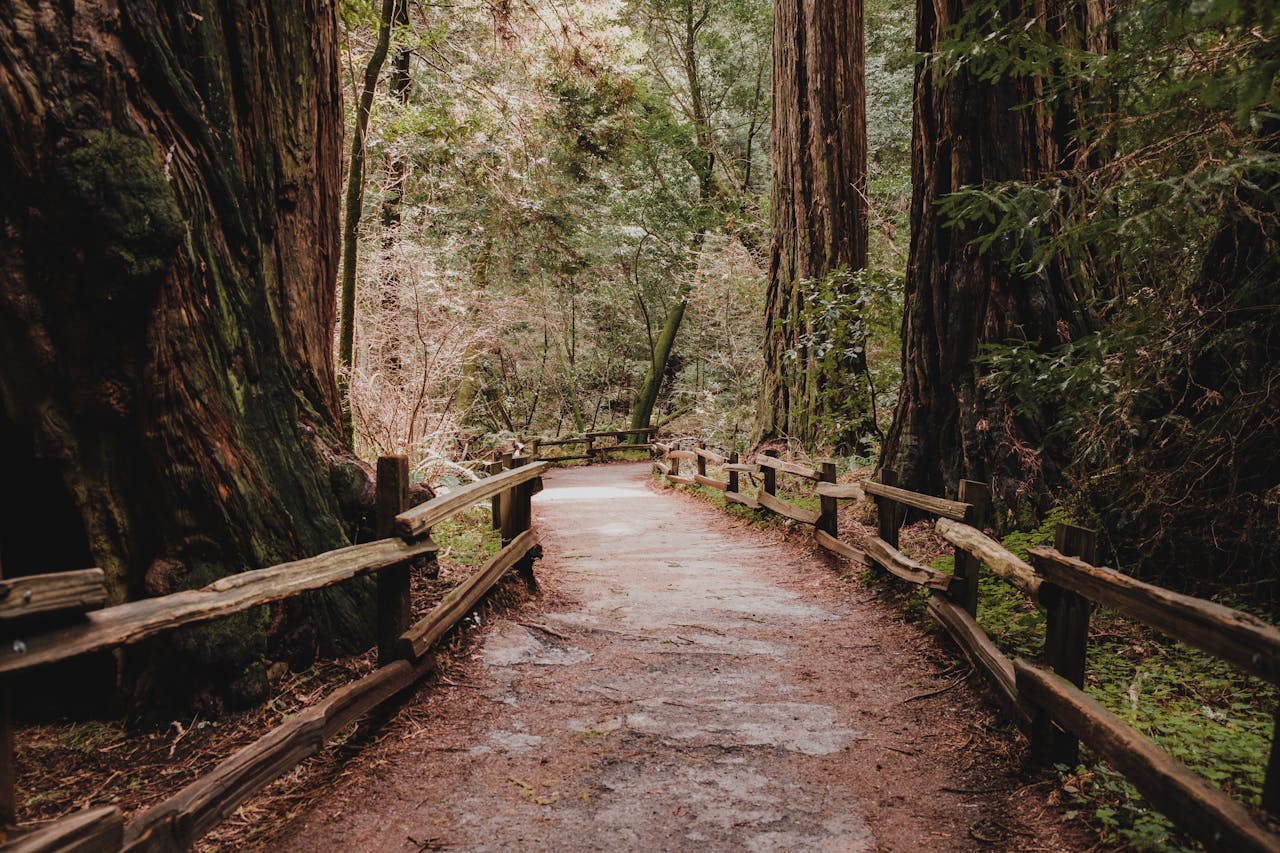
Redwood National and State Parks is one of the most undervisited major national parks in the United States — and that’s one of the best things about it. Located in the remote northwestern corner of California between Eureka and Crescent City, it sits well outside the well-worn California tourism circuit. Most visitors driving Highway 101 see the trees from the window and keep moving. The ones who stop discover something genuinely extraordinary.
The park protects over 45% of the remaining old-growth coastal redwood forest on earth — trees that can live 2,000 years, grow to 380 feet tall, and create a forest environment so quiet and cathedral-like that the experience of walking through it is difficult to describe to someone who hasn’t done it. This guide covers everything you need to plan a meaningful visit — from the logistics of permits and access to the specific experiences worth prioritizing across one, two, and three-day itineraries.
Before You Go: Essential Planning Information
Entry fees: Redwood National Park itself has no entrance fee. The state parks within the system — Prairie Creek Redwoods, Del Norte Coast Redwoods, and Jedediah Smith Redwoods — charge a day-use fee for some areas. The America the Beautiful Annual Pass at $80 covers day-use fees at all federal and state park areas in the system for 12 months. If you’re visiting multiple national parks in a year, the annual pass is the smartest purchase you’ll make before any trip.
Park structure: Redwood National and State Parks is not a single contained park — it’s a collection of connected federal and state lands spread across roughly 60 miles of the Northern California coast. The Thomas H. Kuchel Visitor Center near Orick on the southern end is the best starting point for trip planning. The park runs from there north to Jedediah Smith Redwoods near Crescent City. Understanding this geography before arrival prevents the disorientation that catches many first-time visitors off guard.
Getting there: The closest airport is in Eureka, roughly an hour south of the main park area. San Francisco is approximately five and a half hours by car — a common base for visitors combining Redwood with the Northern California coast. A rental car is essentially mandatory — there’s no meaningful public transit to or within the park.
Where to stay: Inside the park, camping is available at several campgrounds including Elk Prairie Campground in Prairie Creek Redwoods State Park and Jedediah Smith Campground in the northern section — both excellent options that put you inside the forest for morning and evening light. For hotel accommodation, Eureka to the south and Crescent City to the north are the two practical bases. Klamath, a small town near the center of the park system, has limited accommodation but cuts driving time between northern and southern sections.
Best time to visit: May through September offers the most reliable weather and full access to all roads and trails. Summer brings coastal fog most mornings — which creates an ethereal atmosphere in the redwood groves that many photographers prefer to full sun. The fog typically burns off by late morning. Fall is an excellent shoulder-season option with fewer visitors and clear skies. Winter brings significant rain and some road closures but also the quietest forest experience of any season.
Wildlife: Roosevelt elk are the park’s most visible wildlife and practically guaranteed to be seen on any visit — large herds graze in the meadows along the Newton B. Drury Scenic Parkway and near the Elk Prairie area. Slow down on park roads in early morning and evening when elk are most active. Black bears, mountain lions, and a remarkable variety of bird species also inhabit the park, though bear and lion encounters are rare compared to elk sightings.
What to bring: A rain jacket is non-negotiable regardless of the forecast — coastal fog and occasional rain are part of the Redwood experience year-round. Layers for temperature variation between coastal areas and inland forest are useful throughout the year. Good hiking footwear matters on the longer trails — our best hiking shoes for men and best hiking shoes for women guides cover appropriate options for the trail surfaces you’ll encounter. For a complete gear checklist, our day hiking essentials checklist covers everything worth packing.
The Permit System — What You Need to Know
Two areas in the park require advance permits and planning:
Tall Trees Grove: Only 50 permits are issued per day — you can get them at the visitor centers or apply for one online. The permit comes with a code that opens the gate on the 6.5-mile dirt road leading to the trailhead. Getting the permit requires stopping at the Thomas H. Kuchel Visitor Center as one of your first moves — rangers issue them on a first-come basis and they go quickly, particularly on summer weekends. Plan to be at the visitor center when it opens if Tall Trees Grove is a priority.
Fern Canyon: A reservation is required from May 15 through September 15. Outside those dates, access is first-come. The road to the Fern Canyon trailhead requires navigating a beach and a water crossing that is not recommended for standard two-wheel drive vehicles — a high-clearance vehicle improves the experience significantly. An $8 day-use fee applies.
Best Hikes in Redwood National Park
Tall Trees Grove Trail — Best Hike in the Park
4 miles round trip | 800 feet elevation | 2-3 hours | Moderate | Permit Required
The Tall Trees Grove Trail will have you walking through Tall Trees Grove — home of the Libbey Tree, once thought to be the tallest tree in the world. The grove contains a collection of trees that rival anything else in the park for sheer size and forest density, and because the permit system limits daily visitors to 50, the solitude here is dramatically different from the more accessible areas of the park.
The trail is a reverse hike — you descend 800 feet to the grove on the way in, which means the return trip climbs back to the trailhead. The descent takes you through progressively more impressive redwood forest as you drop into the Redwood Creek alluvial flat where the biggest trees grow. The one-mile loop at the bottom of the trail passes through the heart of the grove, with trees so large that standing at their base and looking up creates genuine disorientation about scale.
The dirt road to the trailhead is passable by standard two-wheel drive vehicles in dry conditions — drive slowly and check road conditions after rain before attempting it. Budget 45 minutes of driving time each way from the visitor center to the trailhead. Despite the logistics, this is the single best thing you can do in Redwood National Park.
Practical tip: Get to the Kuchel Visitor Center the moment it opens. Permits go quickly on summer weekends. If Tall Trees Grove is your priority, build your entire day around securing the permit first and planning everything else around it.
Fern Canyon Trail — Most Visually Striking Trail
1.5 miles round trip | Minimal elevation | 1 hour | Easy | Fee and Reservation Required in Season
Fern Canyon is the park experience that most consistently produces the reaction of disbelief that a place this extraordinary actually exists. The canyon walls — up to 50 feet high — are covered from bottom to top in five-fingered ferns, sword ferns, and other moisture-loving plants that create a continuous green tapestry broken only by the small stream running along the canyon floor. Walking through it feels like stepping into a prehistoric world.
The trail follows the James Irvine Trail through fern-walled gulch to the Pacific strand at Gold Bluffs Beach — combining statuesque redwoods, an ethereal fern-walled gulch, and ocean surf all in one package. The canyon section itself is roughly a half mile of the most visually dramatic trail in California. When the water level is low, the best way to experience it is walking directly through the stream — bring waterproof footwear or be prepared for wet feet.
For hikers who want more than the short canyon loop, the James Irvine Trail extends from the Prairie Creek Visitor Center through old-growth redwoods to Fern Canyon and out to Gold Bluffs Beach — a 12-mile round trip that takes you through a variety of landscapes including old-growth redwoods, fern-lined canyon, spruce forest, and the rugged Pacific Coastline.
Practical tip: The access road requires navigating through a beach and a seasonal water crossing. A high-clearance vehicle handles this comfortably. Standard sedans have made the crossing but it’s not recommended. Check current road conditions at the visitor center before committing.
Lady Bird Johnson Grove — Best Easy Loop for Families
1.3 miles round trip | Minimal elevation | 45 minutes | Easy | No permit required
Lady Bird Johnson Grove is the park’s most accessible quality experience — a flat, paved loop through old-growth redwoods with an interpretive guide available for purchase that explains the grove’s ecology, conservation history, and individual trees along the route. The grove was dedicated to Lady Bird Johnson in 1969 in recognition of her environmental conservation work, and it covers over 300 acres of protected old-growth forest.
For families with young children, hikers with limited mobility, or visitors who want impressive redwood forest without the logistics of Tall Trees Grove or the vehicle requirements of Fern Canyon, Lady Bird Johnson Grove delivers a genuinely beautiful experience in under an hour. The parking area is easier to navigate than most popular trailheads in the park.
The interpretive guide turns a pleasant walk into an educational experience — redwoods can grow up to 360 feet tall, gaining most of their height in the first century of growth. They’re among the most fire-resistant trees on earth. The information available on this trail provides context that deepens the experience of every other grove you visit afterward.
Practical tip: Combine with the nearby Redwood Creek Overlook — a short drive from the Lady Bird Johnson trailhead with sweeping views over the Redwood Creek watershed that provides geographic context for the park’s scale.
Boy Scout Tree Trail — Best Hike for Solitude
5.6 miles round trip | 1,100 feet elevation | 3 hours | Moderate | No permit required
The Boy Scout Tree Trail is one of the park’s best-kept secrets — consistently ranked among the finest hikes in the system by rangers and repeat visitors, but missed by most first-timers who focus on the better-known attractions. The trail traverses old-growth redwood forest in Jedediah Smith Redwoods State Park in the park’s northern section, passing the Boy Scout Tree itself — a massive double-trunked redwood — and ending at a small but beautiful waterfall called Fern Falls.
The trail runs along an unpaved road through forest so thick that canopy coverage is nearly complete — creating a green tunnel effect that’s particularly beautiful on overcast days when filtered light eliminates harsh shadows. Roosevelt elk regularly use this area and encounter probability is high in early morning.
The Jedediah Smith section of the park feels more remote and less visited than the southern areas — which is exactly the appeal. If you’re spending more than two days in the park, a morning on the Boy Scout Tree Trail provides a quality of solitude that the more accessible southern trails can’t match.
Practical tip: The trailhead is on Howland Hill Road, an unpaved road through old-growth forest that is itself one of the most beautiful drives in the park. Drive the full road regardless of whether you’re hiking — the trees visible from the road rival anything accessible on foot.
Trillium Falls Trail — Best Short Hike Near Elk Prairie
2.5 miles round trip | 180 feet elevation | 1-1.5 hours | Easy
Trillium Falls is the park’s most beautiful short waterfall hike — a 2.5-mile loop through old-growth redwood forest that passes the falls at roughly the halfway point. The forest quality along this trail is exceptional for its accessibility — massive redwoods immediately visible from the trailhead with the trail running through continuously impressive old-growth throughout.
The falls themselves are a modest cascade rather than a dramatic plunge — the visual appeal is the combination of the waterfall with the surrounding forest rather than the fall height alone. In spring when water volume is highest, the falls are at their most impressive. The surrounding fern-covered forest floor and moss-draped branches create a lush, verdant setting that’s particularly beautiful in the overcast coastal light that characterizes Redwood mornings.
The Elk Prairie Campground is directly adjacent to this trailhead — making it the most convenient hike for visitors staying at the campground, and a natural morning or evening walk alongside camping in the area.
Practical tip: Elk are frequently visible in Elk Prairie, which borders the trailhead area. Come prepared with patience for wildlife watching in the meadow before and after the hike — early morning is prime viewing time.
Miners Ridge and James Irvine Loop — Best Full-Day Hike
12 miles | Varied elevation | 5-6 hours | Strenuous
This loop combines the full trails of Miners Ridge, James Irvine, and Fern Canyon Loop trails and a portion of the California Coastal Trail — taking you through a variety of landscapes including old-growth redwoods, a fern-lined canyon, a spruce forest, and the rugged Pacific Coastline.
This is the park’s definitive full-day hiking experience — a route that covers more terrain variety and more visual drama per mile than any other trail on this list. Starting from the Prairie Creek Visitor Center, the trail passes through the full range of ecosystems that make Redwood exceptional: old-growth forest, the fern canyon, coastal scrub, and ocean-facing bluffs before returning through inland old-growth. The 12-mile loop allows hikers to experience Fern Canyon as part of a longer route rather than just the short out-and-back that most visitors do.
Starting at the Prairie Creek Visitor Center, the Karl Knapp Trail leads through stunning redwood forest with the hiker’s bridge over Prairie Creek often yielding glimpses of spawning coho salmon in the fall.
Start no later than 8am to complete the loop comfortably before afternoon. Carry at least 2 liters of water and enough food for a full day — services are limited inside the park and there’s no reliable resupply on the route.
Practical tip: This trail is at its best in fall when coho salmon are spawning in Prairie Creek and Roosevelt elk are in peak activity before winter. The combination of wildlife, fall light, and reduced crowds makes October one of the best months in the park.
Scenic Drives Worth Your Time
Newton B. Drury Scenic Parkway — Best Drive in the Park
This 10-mile scenic alternative to Highway 101 runs through Prairie Creek Redwoods State Park and is the single best thing you can do in Redwood National Park without getting out of the car. The two-lane road passes through continuous old-growth redwood forest with trees immediately beside the road throughout — a perspective on redwood scale that trail hiking doesn’t provide.
Multiple pull-offs along the route include the Big Tree Wayside, where a 10-minute walk on a paved path reaches a tree 74 feet in circumference and 268 feet tall. Roosevelt elk are frequently visible in the meadows along the parkway — slow down and watch for movement in the grass at the forest edges in early morning and evening.
Even if you don’t plan to hike, driving the Newton B. Drury Scenic Parkway is a non-negotiable part of any Redwood visit. The 10-mile round trip takes 20-30 minutes without stops and significantly longer with the wildlife watching that the road reliably produces.
Howland Hill Road — Best Old-Growth Drive
This unpaved road through Jedediah Smith Redwoods State Park in the park’s northern section provides access through some of the densest old-growth forest visible from a vehicle anywhere in the park system. The road is narrow and unpaved — appropriate for standard vehicles in dry conditions — and winds through a cathedral of ancient trees that rival the most impressive grove hikes in terms of visual impact.
The Boy Scout Tree trailhead is accessible from Howland Hill Road, making the drive a natural combination with that hike. Even without stopping to hike, the drive itself through the Jedediah Smith old-growth is one of the park’s most distinctive experiences.
Best Viewpoints
Klamath River Overlook
One of the park’s most dramatic coastal viewpoints, the Klamath River Overlook sits at the junction of the Klamath River and the Pacific Ocean — a meeting of fresh and salt water in a landscape of dramatic coastal bluffs, river mouth sandbars, and open ocean extending to the horizon. The overlook requires minimal walking from the parking area and provides sweeping views in both directions along the coast.
Trails descend from the overlook to the beach below — worth exploring for hikers who want to experience the coastal environment at water level alongside the forest experiences that most of the park provides.
Redwood Creek Overlook
A quick pull-off near the Thomas H. Kuchel Visitor Center with views over the Redwood Creek watershed — the river drainage that contains Tall Trees Grove and provides geographic context for understanding the park’s layout. Best visited on the drive to or from the Tall Trees Grove permit stop at the visitor center.
Gold Bluffs Beach — Best Beach in the Park
Gold Bluffs Beach is one of the least-visited beaches on the Northern California coast and one of the most beautiful. Accessible from the same access road as Fern Canyon, the beach stretches for miles beneath bluffs that give it its name — dramatic erosion faces above a wide, sandy strand that’s almost always empty even in peak summer season.
The combination of Fern Canyon and Gold Bluffs Beach in a single half-day itinerary is the park’s best two-for-one experience — the canyon provides the forest drama and the beach provides the coastal counterpoint that makes Redwood uniquely diverse among California’s parks. Camping is available at Gold Bluffs Beach Campground directly behind the beach for visitors who want to spend more time in this section of the park.
Stout Grove — Most Photogenic Grove
0.5 miles | Minimal elevation | 20 minutes | Easy
Stout Grove in Jedediah Smith Redwoods State Park is the park’s most photographed grove — and for good reason. The combination of massive trees, a flat, open forest floor, and the Smith River running nearby creates a visual composition that consistently produces the best redwood photographs of any accessible location in the park.
The grove is accessible via a one-lane road that requires careful navigation but rewards visitors with immediate access to trees up to 300 feet tall in a setting that feels genuinely remote despite being a short drive from Highway 101. The half-mile round trip is appropriate for virtually all visitors including families with young children.
Evening light filtering through the canopy in late afternoon is particularly beautiful here — the low-angle light creates shafts of illumination through the forest that the midday overhead light doesn’t produce. If visiting Jedediah Smith, plan Stout Grove for late afternoon.
Suggested Itineraries
One Day
Start at the Thomas H. Kuchel Visitor Center the moment it opens to secure a Tall Trees Grove permit. Drive the 45-minute access road and complete the 4-mile hike — budget 3-4 hours total including driving. On the return, stop at the Redwood Creek Overlook. In the afternoon, drive the Newton B. Drury Scenic Parkway — stopping at Big Tree Wayside — and end the day at Lady Bird Johnson Grove. One day gives you the park’s signature experience alongside a family-accessible forest walk.
Two Days
Day 1 (Southern park): Tall Trees Grove permit → Redwood Creek Overlook → Lady Bird Johnson Grove → Newton B. Drury Scenic Parkway → Elk Prairie elk watching at dusk.
Day 2 (Prairie Creek and Coast): Fern Canyon early morning → Gold Bluffs Beach → Klamath River Overlook → Trillium Falls afternoon hike.
Day 1 in the southern parks: Start at the Thomas H. Kuchel Visitor Center to get oriented. Hike Tall Trees Grove in the morning (permit required), then stop at Lady Bird Johnson Grove and Redwood Creek Overlook. In the afternoon head to Fern Canyon and spend time on Gold Bluffs Beach afterward.
Three Days or More
Add a full day in the Jedediah Smith section of the park — Boy Scout Tree Trail in the morning, Howland Hill Road drive, and Stout Grove in late afternoon. Three days allows meaningful time in all three distinct sections of the park and the full range of experiences from easy grove walks to strenuous full-day hikes.
Practical Tips for a Better Visit
Arrive early at popular trailheads. The permit system controls Tall Trees Grove, but no permit controls Lady Bird Johnson or the Newton B. Drury Scenic Parkway — which means summer weekend mornings see genuine crowds. Before 9am at these locations is a reliably different experience from midday.
Watch for elk on roads. Roosevelt elk are large — a bull can weigh 700 pounds — and completely unintimidated by vehicles. Slow down when you see elk near the road. Approaching on foot for photography is not recommended; give them at minimum 50 feet of space and more if behavior suggests agitation.
Dress in layers. Coastal fog can make 65°F feel like 50°F in shade — and most redwood hiking is in shade. A rain jacket as described in our what to wear hiking in summer guide is the most important single clothing item regardless of forecast.
The fog is a feature, not a problem. Many visitors arrive hoping for sun and are disappointed by the coastal fog that characterizes Redwood mornings. The fog creates an atmosphere in the groves — diffused light, quiet, moisture on the ferns — that direct sunlight doesn’t produce. Embrace it.
Combine with Highway 101 coastal driving. The Northern California coast between San Francisco and Redwood is one of the most beautiful drives in the country. The Avenue of the Giants in Humboldt Redwoods State Park, roughly two hours south of the main park, is a worthwhile stop on the drive north — a 32-mile scenic road through old-growth redwoods that provides a preview of what awaits in the national park.
Final Thoughts
Redwood National and State Parks rewards visitors who invest the planning effort it requires — securing permits in advance, understanding the park’s spread-out geography, and building itineraries that account for driving time between sections. The visitors who arrive without permits, try to see everything in an afternoon, and stay on the main highway see a fraction of what the park offers.
The visitors who spend two or three days, secure the Tall Trees permit, walk through Fern Canyon, drive Howland Hill Road at dusk with elk visible in the meadows beside the car, and wake up at dawn inside the Elk Prairie Campground with fog in the trees — those visitors understand what makes this place worth the five-hour drive from San Francisco.
For gear to make the most of every trail, check out our guides to the best hiking backpacks with a water bladder and best hiking headlamps for early morning starts in one of America’s most extraordinary forests.