
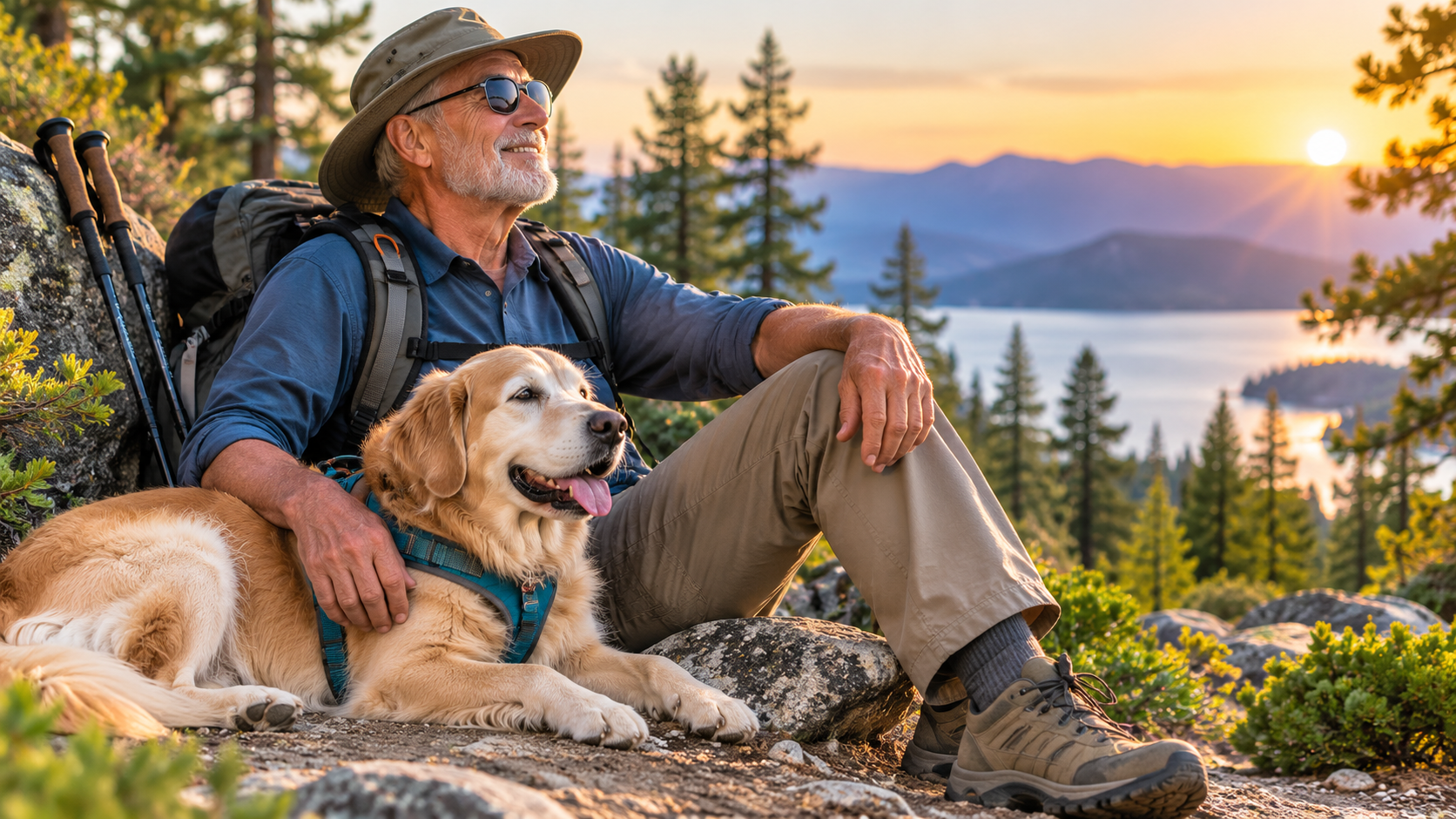
Best Hiking Dogs for Seniors (Calm, Low-Energy Trail Companions)
Hiking as a senior looks different than hiking at 25, and the right dog for that stage of life looks different too. The breeds that dominate most “best hiking dog” lists — Border Collies, Vizslas, German Shorthaired Pointers — are bred for sustained high output and demand a level of daily exercise and mental engagement that can turn ownership into a genuine burden rather than a source of joy for an owner whose own pace, joints, and daily rhythm have shifted. That doesn’t mean hiking with a dog stops being a wonderful part of later life — it means the breed selection criteria change.
The right hiking dog for a senior owner is calm rather than frantic, physically capable of moderate trail distances without demanding marathon mileage to stay balanced, genuinely easy to handle on leash without requiring significant physical strength, and emotionally suited to a quieter daily rhythm punctuated by hikes rather than constant high-intensity activity. This guide covers the best hiking dog breeds specifically for senior owners — breeds that deliver genuine trail companionship without the exercise demands, training intensity, or handling difficulty that make some popular hiking breeds a poor match for this stage of life.
For the full range of hiking dog breeds across all experience and activity levels, our best hiking dog breeds guide covers more athletically demanding options. For gear once you’ve chosen your trail partner, our best hiking snacks for dogs and best small dog backpacks for hiking guides cover the essentials.
What Makes a Hiking Dog Genuinely Right for a Senior Owner
Before the breed list, it’s worth being specific about what matters here, because it’s a different calculation than choosing a hiking dog for a 30-year-old marathon runner.
Moderate, sustainable exercise needs rather than extreme daily demands. A dog that requires two hours of vigorous exercise every single day to stay behaviorally balanced becomes a source of guilt and stress on days when a senior owner’s body or schedule genuinely can’t deliver that — the breeds on this list thrive on regular moderate activity without punishing an owner for an occasional lighter day.
Manageable size and leash strength for physical safety. A large, powerful dog that lunges hard at wildlife or another dog can genuinely pull an owner with less core strength or balance off their feet — a real fall risk that matters more with age. Breeds and sizes that are physically easier to control on leash reduce this risk meaningfully.
Calm temperament that doesn’t require advanced handling skill. Breeds prone to reactivity, intense prey drive, or high-arousal behavior around trail distractions demand handling expertise and physical quickness to manage safely — qualities that may not match every senior owner’s current capability, regardless of how sharp their handling instincts remain.
Genuine companionship value beyond just trail athleticism. For many senior owners, a hiking dog is also a daily companion through retirement, an empty nest, or a quieter life stage — temperament suited to calm indoor companionship matters as much as trail capability.
Reasonable grooming and care demands. A breed requiring extensive daily grooming, specialized diet management, or frequent professional care adds a maintenance burden worth weighing honestly against a senior owner’s actual capacity and preference.
Best Hiking Dog Breeds for Senior Owners
Labrador Retriever (Standard or Adult Rescue) — Best Overall Companion for Senior Hikers
Labradors remain an outstanding choice for senior hikers for many of the same reasons they top general hiking dog lists — genuinely stable, friendly temperament and strong trainability — but the specific advantage for a senior owner is how well Labs settle once past their notably energetic adolescent phase. An adult Lab, particularly one adopted at 2-3 years old rather than raised from a demanding puppyhood, delivers steady, moderate-energy companionship that’s genuinely easier to live with than the breed’s reputation as an all-around athlete might suggest.
Labs handle moderate day hikes comfortably without requiring the extreme daily mileage that some sporting breeds need to stay balanced, and their food motivation makes basic training and management genuinely approachable regardless of an owner’s prior dog-handling experience. Their friendly, low-reactivity temperament around other trail users and dogs reduces the leash-management challenge that more high-drive breeds create.
Consideration for senior owners: A full-sized adult Lab (55-80 lbs) has real pulling strength if not well leash-trained — adopting an already leash-trained adult, or investing in early training with a professional, meaningfully reduces the physical safety concern that a large dog’s strength can create.
Best for: senior owners who want a genuinely stable, moderate-energy companion breed and are comfortable managing a mid-to-large dog’s size, ideally adopted past the high-energy puppy and adolescent stages.
Cavalier King Charles Spaniel — Best Small, Genuinely Calm Trail Companion
The Cavalier King Charles Spaniel brings a naturally gentle, affectionate, low-reactivity temperament to a small, easily manageable size — a genuinely strong combination for senior owners who want real trail companionship without any physical handling difficulty. Cavaliers are content with moderate exercise, genuinely enjoy easy-to-moderate hiking, and settle calmly at home between outings without the higher-energy demands that many small breeds actually carry despite their size.
Their friendly, non-reactive temperament around other dogs and people on trail reduces leash-management stress significantly, and their small size (13-18 lbs) means even an enthusiastic pull on leash is genuinely manageable for most owners regardless of grip strength or balance.
Consideration for senior owners: Cavaliers have known breed-specific health considerations, particularly heart conditions (mitral valve disease) that become more relevant in mid-to-late life — regular veterinary monitoring matters more with this breed than with some others on this list, and it’s worth discussing directly with a vet or reputable breeder before committing.
Best for: senior owners who want a small, genuinely gentle, low-maintenance trail companion with minimal leash-management difficulty and an affectionate at-home temperament.
Golden Retriever (Adult) — Best for Gentle, People-Oriented Companionship
Golden Retrievers share the Labrador’s fundamental stability and trainability with a slightly gentler, more overtly affectionate temperament that many senior owners find easier to read and connect with. An adult Golden, like an adult Lab, offers the breed’s famous patience and warmth without the higher-energy puppy and adolescent phase, and their trainability makes recall and basic leash manners genuinely achievable for an owner without extensive prior dog-training experience.
Goldens handle moderate hiking distances comfortably and are known for checking in with their handler frequently on trail — a genuinely reassuring trait for an owner who wants a dog that stays naturally oriented toward them rather than ranging independently.
Consideration for senior owners: The breed’s longer, feathered coat requires more consistent grooming than a short-coated alternative — worth weighing honestly against how much grooming maintenance an owner wants to take on.
Best for: senior owners who want a gentle, people-oriented companion breed with strong trainability, and who don’t mind the additional coat maintenance relative to shorter-coated alternatives.
Beagle — Best Small-to-Medium Breed With Genuine Trail Enthusiasm
Beagles bring real trail enthusiasm and moderate stamina to a compact, easily manageable size — genuinely well suited to senior owners who want a dog with authentic hiking interest without the size or strength management challenges of a larger breed. Their friendly, non-aggressive temperament makes them easy around other trail users, and their food motivation supports approachable training.
Beagles are content with moderate exercise rather than demanding extreme daily mileage, and their compact size (20-30 lbs) means leash handling stays physically manageable even for owners with reduced grip strength or balance concerns.
Consideration for senior owners: Beagles have a genuinely strong scent drive that can pull attention away from recall training — leash use rather than off-leash hiking is the more reliable approach for this breed regardless of owner age or experience, which actually simplifies management for a senior owner who may prefer the security of consistent leash control anyway.
Best for: senior owners who want a smaller, genuinely enthusiastic trail companion and are comfortable managing leash-based hiking rather than pursuing extensive off-leash recall training.
Shih Tzu — Best Very Low-Energy Companion for Easy Trails
For senior owners specifically seeking a dog whose exercise needs align with shorter, easier hikes rather than demanding trail days, the Shih Tzu offers genuine companionship with modest exercise requirements and a naturally calm, affectionate temperament. This breed thrives on companionship and moderate activity rather than needing serious mileage to stay behaviorally balanced, making it a genuine match for an owner whose hiking style is measured, easy trails rather than ambitious distance.
Their small size (9-16 lbs) makes physical handling effortless, and their generally friendly, non-reactive temperament around other trail users reduces leash-management concerns to near zero for most individual dogs.
Consideration for senior owners: The Shih Tzu’s coat requires regular grooming maintenance, and the breed’s brachycephalic (shortened muzzle) structure means heat management on warm hikes deserves real attention — this breed is best suited to easier trails, cooler conditions, and shorter distances rather than demanding terrain or hot-weather hiking.
Best for: senior owners whose hiking style involves shorter, easier trails and who want a genuinely low-exercise-demand companion with minimal physical handling difficulty.
Standard or Miniature Poodle — Best Trainable, Low-Shedding Option
Poodles — both Standard and Miniature sizes — bring genuine intelligence and trainability to this list alongside a low-shedding coat that many senior owners specifically value for household cleanliness. Their eagerness to please translates into approachable training progress, and their moderate exercise needs (particularly in the Miniature size) suit a measured hiking routine well without demanding extreme daily activity.
The Miniature Poodle specifically offers a smaller, easier-to-handle size than the Standard while retaining the breed’s core trainability and gentle temperament — a genuinely strong combination for a senior owner who wants intelligence and low-shedding convenience without managing a larger dog’s physical strength.
Consideration for senior owners: Coat maintenance is real and ongoing regardless of size — Poodle coats mat without regular brushing and benefit from periodic professional grooming, a maintenance commitment worth weighing honestly.
Best for: senior owners who specifically want low-shedding convenience and strong trainability, with the Miniature size offering easier physical handling than the Standard.
Bichon Frise — Best Cheerful, Easy-Care Small Companion
The Bichon Frise brings a genuinely cheerful, adaptable temperament to a small, low-shedding package that suits moderate hiking and easy handling equally well. This breed is content with regular moderate exercise, forms close bonds with their owner, and generally handles new trail environments and other dogs with easy sociability rather than reactivity or anxiety.
Their small size (12-18 lbs) and low-shedding coat combine two genuinely practical advantages for a senior owner — effortless physical handling and reduced household grooming burden relative to shedding breeds of similar temperament.
Consideration for senior owners: Like other small, curly-coated breeds, regular grooming maintenance is part of Bichon ownership — factor this into the overall care commitment rather than assuming small size means low maintenance across the board.
Best for: senior owners who want a cheerful, adaptable, low-shedding small companion with easy sociability toward other trail users and minimal physical handling difficulty.
Corgi (Cardigan or Pembroke Welsh) — Best for Owners Who Want Real Trail Stamina in a Compact Size
Corgis bring genuinely surprising trail stamina to a compact, low-to-the-ground build — bred originally for demanding herding work, they carry real endurance for moderate hiking distances despite their small stature, appealing to senior owners who want a dog with authentic trail enthusiasm rather than a purely companion-focused breed. Their herding-breed intelligence supports approachable training, and their alert, food-motivated temperament makes basic obedience genuinely achievable.
Their compact size (24-30 lbs) keeps physical handling manageable, though their sturdier build gives them more genuine pulling capability than the smaller breeds on this list — worth factoring in if grip strength or balance is a significant concern.
Consideration for senior owners: Corgis’ short legs and long backs carry elevated risk of back injury on extremely technical or steep terrain — appropriate for moderate day hiking on established trails, but not the right breed for ambitious, technical backcountry objectives regardless of the owner’s own capability.
Best for: senior owners who want genuine trail stamina and enthusiasm in a compact, herding-breed-intelligent package, for moderate hiking on established trails rather than technical terrain.
Greyhound (Retired Racing or Rescue) — Best Surprisingly Low-Energy Large Breed
Retired racing Greyhounds carry a genuinely surprising reputation among experienced owners as one of the calmest, lowest-maintenance large breeds available — despite their athletic build and racing background, adult retired Greyhounds are famously content with a single daily walk or moderate hike followed by extensive rest, earning them the nickname “45 mph couch potatoes” among people familiar with the breed. This makes them a genuinely strong option for a senior owner who wants a larger dog’s presence without the sustained high-energy demands most large breeds carry.
Their short coat requires minimal grooming, and their gentle, affectionate temperament toward their owner makes them excellent companions beyond just hiking use. Rescue organizations specializing in retired racing Greyhounds typically provide detailed temperament assessment, which helps match a specific dog’s energy level and sociability to an owner’s needs.
Consideration for senior owners: Greyhounds have thin coats and minimal body fat, making them genuinely cold-sensitive — a jacket for cool-weather hikes is worth having, and this breed does best in temperate rather than genuinely cold climates without additional protection. Their size (60-70 lbs) means leash strength is a real factor despite their calm temperament, though their famously low prey-chasing intensity in adulthood (after racing retirement) generally reduces sudden lunging behavior relative to their reputation.
Best for: senior owners who want a calm, genuinely low-maintenance large breed with minimal exercise demands beyond a moderate daily walk or hike, and who can provide appropriate cold-weather protection.
Building the Right Foundation for Senior Hiking With a Dog
Match trail difficulty to both your capability and your dog’s, honestly. The right breed match doesn’t eliminate the need to choose trails that suit an owner’s own current fitness and balance — moderate, well-maintained trails with reliable footing serve both dog and owner better than ambitious, technical terrain regardless of breed selection.
Consider adopting an adult dog rather than raising a puppy. For most breeds on this list, an adult dog — particularly one age 2 and up — skips the demanding high-energy puppy and adolescent phase entirely, delivering the breed’s mature temperament immediately rather than requiring months or years of training investment first. Reputable breed-specific rescues can match a specific dog’s known temperament and energy level to a senior owner’s needs directly.
Invest in a properly fitted, comfortable leash and consider a hands-free option. A well-designed leash reduces the physical strain of handling, and a hands-free hiking belt distributes leash tension across the body rather than concentrating it in one hand — genuinely useful for owners managing balance or grip strength concerns. Our best hiking harnesses for dogs guide covers harness options that reduce pulling strain more effectively than a standard collar.
Build hiking distance and difficulty gradually, for both of you. Starting with shorter, easier trails and extending gradually as both owner and dog build conditioning is a sound approach regardless of age — there’s no requirement to hike ambitiously from day one, and many of the breeds on this list are genuinely well suited to a measured, gradual approach to trail difficulty.
Don’t underestimate the value of professional training support for leash manners specifically. A handful of sessions with a positive-reinforcement trainer focused specifically on loose-leash walking can meaningfully reduce the physical strain of hiking with any dog, and this investment pays off disproportionately for an owner managing any physical limitations.
Final Thoughts
The best hiking dog for a senior owner isn’t defined by athletic extremity — it’s defined by genuine temperament stability, manageable size and leash strength, moderate rather than extreme exercise demands, and companionship value that extends well beyond the trail itself. Labradors and Golden Retrievers, particularly adopted as calm adults, remain excellent broad choices, while smaller breeds like the Cavalier King Charles Spaniel, Beagle, and Bichon Frise offer genuine trail enthusiasm without any physical handling difficulty. For owners who want a larger dog’s presence without demanding energy needs, a retired racing Greyhound is a genuinely underappreciated option worth serious consideration.
Whichever breed you choose, match trail difficulty honestly to both your own current capability and your dog’s, and don’t hesitate to adopt an adult dog whose mature temperament is already known rather than committing to the uncertainty and demands of raising a puppy.
For more on preparing any dog for the trail, check our best hiking dog breeds guide for the full range of options, and our best hiking dogs for first-time owners guide if you’re also new to dog ownership generally.