
As an Amazon Associate I earn from qualifying purchases.
A two-person tent is the shelter most backpacking pairs actually live in, and the wrong one makes itself known on the first rainy night, when two pads do not fit, one door serves two people, and wet gear has nowhere to go. This roundup compares tents by design class instead of by badge, matches each class to the pair and the trips it suits, and covers the fit, setup and care checks that decide whether a tent works for two.
Start With How a Backpacking Tent Is Chosen
Design class is only half the decision, so read the full tent-choosing guide for the tradeoffs behind capacity, seasonality and livability before you spend.
Read How to Choose a Backpacking TentKey Takeaways
- Pick the design class first, then compare models inside it, never across classes.
- Measure the floor against two pads side by side, not against the capacity label.
- Two doors and two vestibules end most arguments a one-door tent starts.
- Compare packaged weight, not minimum weight, when you plan the load you carry.
- Split the shelter between two packs, and practise the pitch before the trail.
Table of Contents
- How We Judged These Tents
- What Two People Actually Need From a Tent
- Best Freestanding Double-Wall Tent for Most Pairs
- Best Semi-Freestanding Ultralight Tent for Weight-Conscious Pairs
- Best Trekking-Pole Tent for Long Miles
- Best Budget Freestanding Tent for New Backpackers
- Best Roomy Two-Door Tent for Pairs Who Want Space
- How to Choose the Right Design Class for Your Trips
- Setup, Site and Care Mistakes That Shorten Tent Life
- Our view
- FAQ
- Sources
- Recommended
How We Judged These Tents
A two-person tent has one job: shelter two sleepers, two pads and two sets of gear, night after night, at a weight two people can carry. Every design class here was judged against that job — floor width for two pads, doors and vestibules per person, a pitch that works on real ground, weather protection matched to three-season use, and an honest weight once everything is in the sack. Capacity labels were not the deciding factor, because brands size tents differently and a snug two is not the same shelter as a roomy two. The decision framework in REI breaks the same choice into capacity, seasonality, weight, livability and setup, and that is the order this roundup follows.
| Design class | How it pitches | Best for | Watch out |
|---|---|---|---|
| Freestanding double-wall | Own poles hold the body up; fly adds weather protection and vestibules | Most pairs, most three-season trips, mixed ground | Heavier than the lightest classes; still needs staking in wind |
| Semi-freestanding ultralight | Poles hold most of the body; one end is staked out to shape | Weight-conscious pairs on established sites | Needs ground that takes a stake at the staked end |
| Trekking-pole tent | Trekking poles replace tent poles; fully staked pitch | Long miles, thru-style trips, pole users | Pitch quality decides weather performance; practice matters |
| Budget freestanding | Freestanding poles with heavier, simpler fabrics | New backpackers, short trips, spare and loaner duty | Weight and packed bulk are the price of the saving |
| Roomy two-door | Freestanding, wider floor, a door and vestibule on each side | Couples, broad shoulders, wide pads, longer stays | Needs a bigger tent site and carries a weight premium |
Read the Weight the Honest Way
Minimum weight and packaged weight are different numbers, and only one of them is the load you carry. The support guidance from MSR explains the standard plainly: packaged weight is everything off the shelf, while minimum weight counts only the tent body, rainfly and poles, leaving out stakes, cords and sacks. Compare tents on packaged weight, split that figure between two packs, and judge the result against the rest of the load in our backpack too heavy audit, where shelter is one of the first places weight hides.
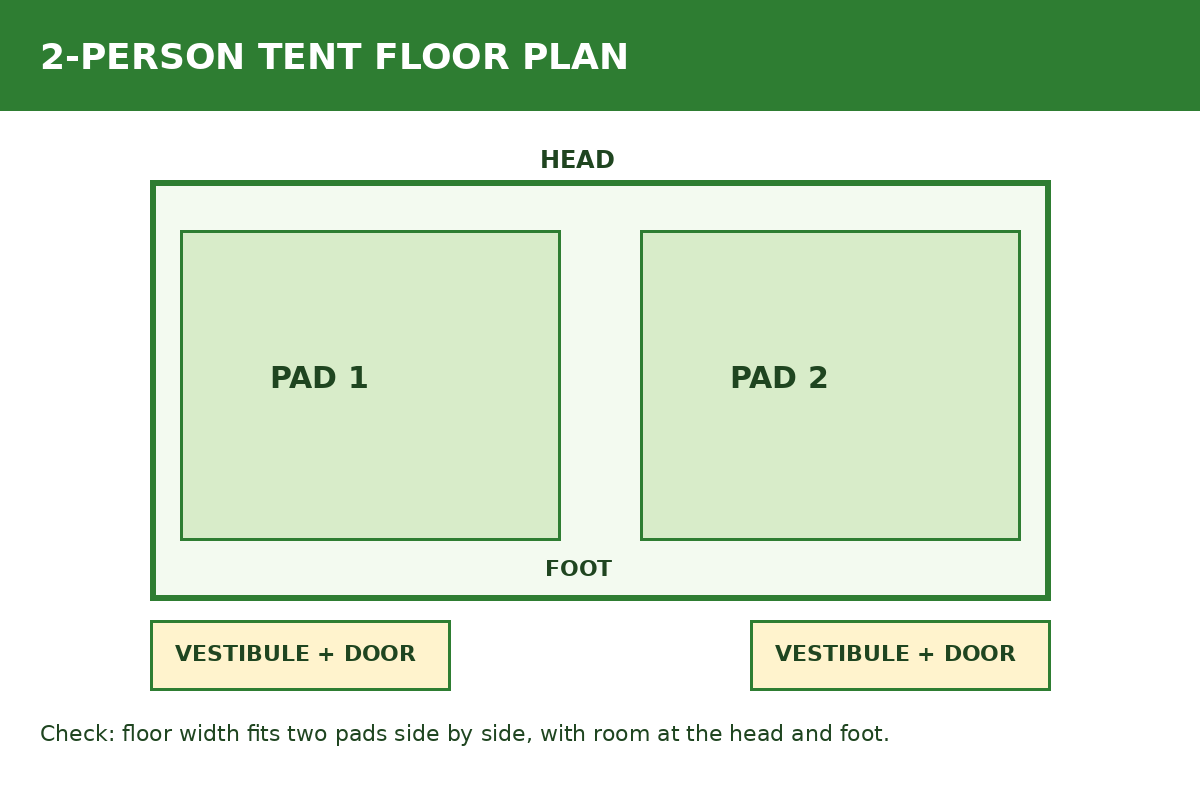
Judge the tent against the pair, too. Two narrow pads, two wide pads, a tall sleeper and a short one, a couple and two friends — each pairing uses the same floor differently. The pad widths in our best backpacking sleeping pads roundup are the measurements to add together before trusting any floor plan, and our how to choose a backpacking tent guide works through the wider tradeoffs this roundup assumes.
What Two People Actually Need From a Tent
Start from the floor, because everything two people do in a tent happens on it. Two pads sit side by side, two sleepers turn without climbing over each other, and the gear that cannot live in a vestibule ends up along the walls. A floor that tapers hard at the foot, or narrows where shoulders sit, turns a rated two-person tent into a one-and-a-half. Look at the floor plan as a rectangle your pads have to fit, not as a headline area figure, and check head and foot widths separately where a design tapers.
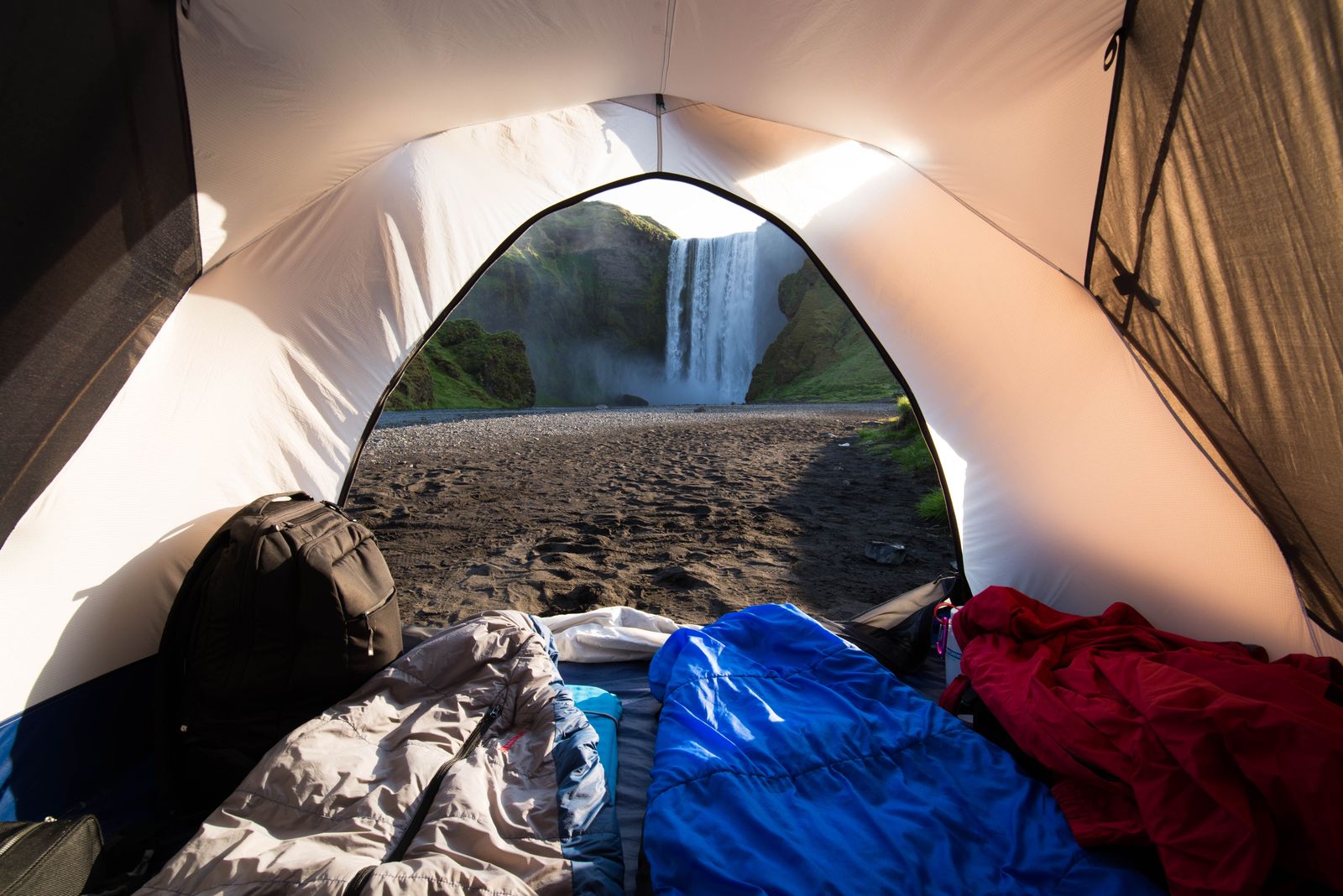
Doors are the second need, and they are about independence, not luxury. One door means one sleeper climbs over the other for every exit, and one vestibule means both packs share one wet space. Two doors and two vestibules give each person an exit, a gear store and a place to sit and lace boots without negotiating. Where a trip involves permits or designated camps, the wilderness guidance from Mount Rainier National Park is a reminder that backcountry camping runs on permits and set sites — a tent that fits established pads and pitches where sites dictate earns its keep there.
The Footprint Question, Settled Simply
A footprint protects the floor, and the floor is the part of the tent that ground damages first. The guide from REI describes a footprint as a purpose-cut sheet placed between tent and ground to protect the floor from abrasion, sized slightly smaller than the floor so rain does not pool between the layers, with denier as the measure of how rugged the fabric is. On rocky, gritty or debris-covered sites a footprint is cheap insurance in any design class; on soft, clean ground it is the first accessory an ultralight pair can leave behind. Either way, clear the site before pitching rather than asking fabric to survive what a minute of tidying removes.
Best Freestanding Double-Wall Tent for Most Pairs
This is the default pick, and it earns that place on forgiveness. A freestanding body pitches on rock, sand, platforms and packed earth where stakes alone would fail, the inner stands before the fly goes on, and the whole shelter can be lifted and moved a few feet when the first spot turns out to slope. The double wall — a mesh or fabric inner under a separate rainfly — manages condensation better than a single wall, because moist air meets the fly first and the inner keeps sleepers off the wet surface.
It suits the way most pairs actually camp. Trips are three-season, sites vary, and weather arrives whether it was forecast or not. The seasonality guidance in REI draws the same line: a three-season tent serves most backpacking below exposed, stormy conditions, while true winter weather asks for a sturdier four-season shelter. Inside this class, shop the floor width and door count first, and let our multi-day backpacking checklist confirm the rest of the shared kit divides as cleanly as the tent does.

Big Agnes Blacktail 2 Tent
- DO IT ALL TENT – The Blacktail and Blacktail Hotel tents are light enough for the backcountry and strong enough for the front country. If you like to spend time at the campground but want to be able to backpack with one tent, the Blacktail series is for you! Features two doors and two vestibules.
- ROOMY AND STRONG – The symmetrical pole structure makes set up super easy and the pre-bent poles give you plenty of head space. Plastic clips easily attach the tent body to the pole frame. Rest assured there are two fly vents for increased air flow and reduced condensation. Use the low vent feature on the vestibule doors for more air flow while still providing vestibule coverage.
- FULL FEATURED – The two dual-zipper side doors and vestibules featuring storm flaps on vestibule zipper keeps you protected from outside weather; the dual-zipper door is smooth closing and allows for easy entry. Use only one zipper for quick reach-through access. You’ll love the Quick Stash door keeper on the tent body door that makes stowing unzipped door quick and easy!
New starting from: 342.84 $
Go to AmazonWho Should Skip This Type
Pairs counting every ounce, and pairs who always carry trekking poles, pay for structure they do not need. The pole set that makes this class so easy to pitch is also its weight floor. If your trips are long, your sites are reliable, and your base weight is already lean, the two classes below trade a little forgiveness for a lot of saved weight.
Best Semi-Freestanding Ultralight Tent for Weight-Conscious Pairs
Choose this class when the trips are getting longer and the standard freestanding tent is the heaviest thing either of you carries. A semi-freestanding design keeps poles for most of the structure, then stakes out one end — usually the foot — to save the weight of a full pole architecture. The pitch still feels familiar, the living space stays upright where heads and shoulders are, and the saving is real without changing how you camp.
The trade is ground dependence at one end of the tent. That staked end needs soil, sand or something to anchor to, and on solid rock or a wooden platform it needs improvisation with rocks or gear as anchors. The shelter advice in REI makes the wider point about this class of gear: for a two-person shelter, lighter designs ask you to give up some space and features, and double-wall construction remains the benchmark for ventilation and condensation control. Pairs who accept a slightly smaller floor and a stake-dependent foot end get most of the freestanding experience at a noticeably lighter carry, especially when the load is planned with our best way to pack a backpack for hiking method so the split shelter rides close to the frame.

Big Agnes Copper Spur HV UL2 Tent
- The design allows for high volume pole architecture resulting in steeper walls
- High volume angle hub increases stability and strength while creating optimal livable space
- Features one door and one vestibule with storm flaps on the vestibule zippers
New starting from: 599.95 $
Go to AmazonCheck the Foot End Before You Trust It
A tapered, staked foot end is where this class saves weight and loses room. Wide pads that fit at the head may overlap at the foot, and tall sleepers feel a low foot end first. Lay both pads out in the tent before a trip, lie down together, and confirm the fit the way our how to choose a sleeping pad for backpacking guide recommends judging any pad pairing: shoulders and hips supported, with no pad forced up a wall.
Best Trekking-Pole Tent for Long Miles
Choose this class when you already hike with trekking poles and the miles matter more than the minutes at camp. The poles you carried all day become the tent’s structure at night, so the shelter itself is mostly fabric, stakes and cord — the lightest full tent a pair can carry, and one that packs small because there is no pole bundle to find room for. For long-distance pairs, that saving repeats on every climb of every day.
The pitch is the product, so judge it honestly. A trekking-pole tent is fully staked: its shape, headroom and weather resistance come from tension, site choice and practise, not from a frame. The basics guidance from REI frames ultralight choices the same way — weigh everything, understand the tradeoffs, and accept that the lightest gear asks more skill of its user. Pitch this class at home, then in a garden, then on an easy night, before trusting it with a remote camp; pairs who do that homework find the pitch becomes quick, and pairs who skip it learn in the rain. Match the shelter to the sleep system with our how to choose a sleeping bag temperature rating guide, because a light tent and a well-matched bag are one decision, not two.

3F UL Gear Lanshan 2 Trekking Pole Tent
- Experience superior protection with 3FULGear ultralight 2 person tent, featuring a 5000+ mm waterproof rating, 15D nylon, and silicone/PU coating for extreme weather resistance. Ideal for camping, backpacking, or emergency survival situations.
- Designed for outdoor enthusiasts, 3FULGear Lanshan 2 Trekking Pole Tent combines a tear-resistant, sun-proof, and windproof construction with an exquisite, compact design. Perfect for hiking, bivvy, or professional expeditions.
- Weighting just under 43oz, this ultralight backpacking tent offers a spacious interior for two, making it a top choice for 2 man tents for camping waterproof needs. Its small footprint ensures easy setup in any terrain. NOTICE: Two trekking poles are NOT included
New starting from: 187.88 $
Go to AmazonWhen Poles Are Not Available
A broken, loaned or forgotten pole leaves this class without a structure. Carry the habit of checking poles before the trip, know whether a repair sleeve or a sturdy stick can stand in for a night, and treat this design as the specialist tool it is. Pairs who do not hike with poles at all should not buy poles to save tent weight — the freestanding classes above exist for them.
Best Budget Freestanding Tent for New Backpackers
The budget freestanding class is how new pairs start without learning on fragile gear. It keeps the easy, forgiving pitch of the default class and pays for its lower price with heavier fabrics, simpler poles and a bigger packed bundle. For weekend trips, short approaches and a first season of finding out whether backpacking suits you at all, that is the right trade: the tent is easy to pitch, hard to pitch wrong, and cheap enough that its first scuffs are lessons rather than losses.
Spend the saving on the rest of the sleep system, not on nothing. A heavier tent carried between two people costs less comfort than a poor pad costs either of them. The camping-tent guidance from REI notes that two sleepers typically use a modest floor area and that comfort grows quickly when there is room beyond the minimum — budget pairs should read floor dimensions with the same care as premium buyers, because a cheap tent that fits beats a cheap tent that merely sleeps two on paper. Plan the trip itself with our plan a national park hike guide, and let the tent’s weight set an honest distance for the day.

ALPS Mountaineering Lynx 2 Tent
- Easy Two-Person Tent Setup & Weatherproof: Free-standing 2-pole aluminum design for quick setup of this 2 person tent (Base: 7’6″ L x 5′ W, Center Height: 3’10”). Stay dry with 75D 185T Polyester fly & 75D 185T Taffeta Floor with 2000mm coating, plus sealed seams for superior weather protection in any outdoor tent conditions.
- Spacious 2-Person Design with Dual Entry & Vestibules: Comfortable camping for two with two doors and two vestibules (20 sq. ft. area) for ample gear storage. Interior mesh pockets & gear loft offer excellent organization within this roomy camping tent.
- Optimal Ventilation for Comfortable Camping: Half mesh walls maximize airflow and rainfly vents promote circulation, ensuring a breathable environment inside this 2 person tent, even at a light weight of 5 lbs. 13 oz.
New starting from: 149.99 $
Go to AmazonThe Honest Limits of the Class
Weight and bulk cap how far this class travels. As trips lengthen, a heavy shelter is the first upgrade most pairs make, and that is fine — a budget tent that gets a pair through their first seasons and then becomes the loaner or spare has done its job completely. Buy it for the trips you will take this year, not as a lifetime shelter, and its limits never become a disappointment.
Best Roomy Two-Door Tent for Pairs Who Want Space
Choose this class when the pair is the point of the trip. A wider floor that takes two wide pads without overlap, near-vertical walls that keep the space usable to the edges, and a door and vestibule on each side turn the tent from a sleeping tube into a small room two people can sit up in, change in and wait out weather in. For couples, for broad-shouldered sleepers, and for any pair spending storm hours or rest days inside, this is the class that feels like an upgrade every single night.
Space is bought with weight and site size, so buy it deliberately. A bigger footprint needs a bigger flat spot, which established sites usually offer and rough cross-country spots may not. The backcountry guidance collected by the National Park Service covers the permit and site framework most park trips run inside — check the rules for your destination, choose the tent that fits the sites that system provides, and size the pack for the shelter with our what size hiking backpack do I need guide before assuming the roomier tent rides free.

ALPS Mountaineering Zephyr 2 Tent
- Enhanced Livable Space and Headroom – The Zephyr’s pre-bent aluminum poles create steeper walls and a more vertical shape, increasing headroom and interior volume for a roomier, more comfortable experience
- Superior Ventilation for Hot and Humid Conditions – The full mesh walls maximize airflow and breathability, ensuring that you stay cool and comfortable, even on muggy summer nights
- Quick and Easy Setup – The free-standing design with lightweight 7000 series aluminum poles and snap-on pole clips allows for a fast and simple setup, saving you time and effort at the campsite
New starting from: 169.99 $
Go to AmazonOne Door Each Changes the Whole Night
Judge this class by its exits before its area figure. Each sleeper leaves without climbing over the other, each vestibule holds one pack and one pair of boots, and a midnight exit stops being a negotiation. If a roomy model somehow offers only one door, it has kept the cost of the class and given away its best feature — keep looking.
How to Choose the Right Design Class for Your Trips
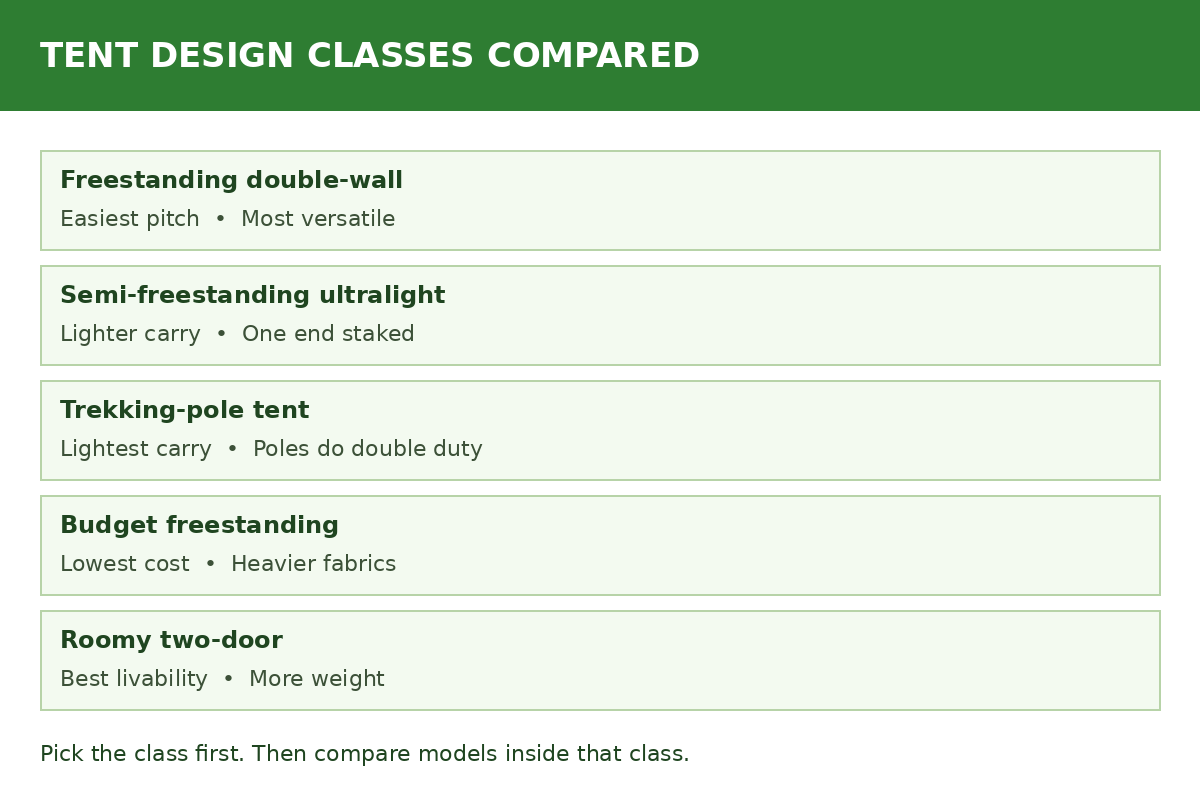
Match four things: the ground you camp on, the miles you walk, the pads you sleep on, and the weather you accept. Unpredictable ground and mixed sites point to freestanding classes; long miles and reliable sites point to semi-freestanding or trekking-pole designs; new hikers and short trips point to the budget class; couples who value the tent as a living space point to the roomy two-door class. Most failed purchases come from matching only one of the four — usually weight — and discovering the others on the first trip.
Start From Your Hardest Regular Night
Choose for the hardest trip you take often, not the easiest or the most extreme. A tent bought for a once-imagined expedition sits heavy on every ordinary weekend, and a tent bought for perfect summer nights fails the first shoulder-season storm. The choosing framework returns to the same anchors — capacity, seasonality, weight and livability — because they are the questions every trip asks again. Run your shortlist past the full decision sequence in our how to choose a backpacking tent guide, then check the winner against the sleep system in our best backpacking sleeping pads roundup before money moves.
Split the Carry Before You Judge the Weight
A two-person tent is a shared load, and shared loads change what heavy means. Body in one pack, fly and poles in the other, stakes split or carried by whoever has room — a shelter that looks heavy as a single figure becomes ordinary once divided. Judge every candidate as a per-person carry, keep the split balanced with the rest of the shared kit, and revisit the total with our backpack too heavy audit if the combined load still climbs.
Setup, Site and Care Mistakes That Shorten Tent Life
The commonest mistake is meeting the tent for the first time at the trailhead. Pitch every new tent at home first: inventory the parts, learn the pole order, and find the quirks while the light is good and the stakes are optional. The setup guidance from REI builds the whole pitch on that preparation, then on campsite selection, careful pitching and proper guyline use when wind is part of the forecast. A practised pair pitches any class in this roundup calmly; an unpractised pair fights even the easiest freestanding design.
The second mistake is choosing a site the tent cannot forgive. Camp on durable surfaces, use established sites where they exist, and keep distance from water — the principles set out by the National Park Service ask campers to travel and camp on durable surfaces and to protect riparian areas by camping well away from lakes and streams. Avoid hollows that collect rain, clear sharp debris instead of pitching over it, and orient a door away from the prevailing wind where the site allows.
Care Is Mostly Drying
More tents die in storage than on trails. The care guidance from REI puts the rule first: never store a tent wet, be gentle with zippers and poles, and clean the tent and fly from time to time. The storage guidance from REI adds the second half — store the tent loosely in a cool, dry place rather than compressed in its stuff sack, so fabrics relax and coatings survive. Dry the tent fully after every trip, even the dry-looking ones, and a tent from any class in this roundup lasts for seasons of two-person trips.
Our view
The best two-person tent is the one whose class matches how you actually travel — freestanding for most pairs, lighter classes for long miles, and two doors whenever the pair can carry them. Start with the full decision in our how to choose a backpacking tent guide, fit the floor against our best backpacking sleeping pads roundup, and divide the carry with our multi-day backpacking checklist, and the tent stops being the thing a trip is remembered for.
— Brian Ka
FAQ
Is a 2-person tent big enough for two people?
For most pairs, yes — if the floor fits two pads. Capacity is rated by the maker and sizing varies by brand, so add your two pad widths together and compare them with the floor width at head and foot. Pairs using wide pads, or who simply sleep better with space, are the natural customers for the roomy two-door class or the next size up.
What is the difference between minimum weight and packaged weight?
Packaged weight is everything in the bag; minimum weight is only the body, fly and poles. Stakes, cords and sacks sit in the gap between the two figures. Plan carries and compare models on packaged weight, because that is the shelter as you will actually load it into two packs.
Freestanding or trekking-pole tent — which is better for two?
Neither, in general — they suit different trips. Freestanding designs pitch anywhere and forgive rough sites, which serves most pairs on varied trips. Trekking-pole designs carry lightest and pack smallest, which serves pole users on long miles with reliable sites. Match the class to your ground and your mileage, not to a ranking.
Do two people need two doors?
Need, no — but most pairs strongly prefer them. Two doors end the climb-over exit, give each sleeper a vestibule for a pack and boots, and make storm waits and midnight exits far easier. One-door designs save weight and cost, which is why the ultralight and budget classes often keep them.
Should a two-person tent have a footprint?
On abrasive ground, yes; on soft clean ground, it is optional. A footprint takes the wear that would otherwise reach the tent floor, and it should be slightly smaller than the floor so rain does not pool underneath. Ultralight pairs often leave it behind on gentle sites and carry it whenever rock, grit or debris is expected.
Questions About 2-Person Backpacking Tents?
Tell us who is sleeping in it, the pads you use and the trips and ground you have in mind, and we will help you pick the design class that fits.
Contact UsSources
- REI — Backpacking Tents: How to Choose
- MSR / Cascade Designs Support — Packaged Weight vs. Minimum Weight
- REI — What Is a Tent Footprint?
- REI — Winter Camping and Backpacking Basics
- REI — Ultralight Backpacking Gear Essentials
- REI — Ultralight Backpacking Basics
- REI — Tents for Camping: How to Choose
- National Park Service — Backcountry Camping
- Mount Rainier National Park — Wilderness Guidelines and Regulations
- REI — How to Set Up / Pitch a Tent
- National Park Service — Leave No Trace Seven Principles
- REI — How to Clean, Waterproof and Care for a Tent
- REI — How to Store a Tent