
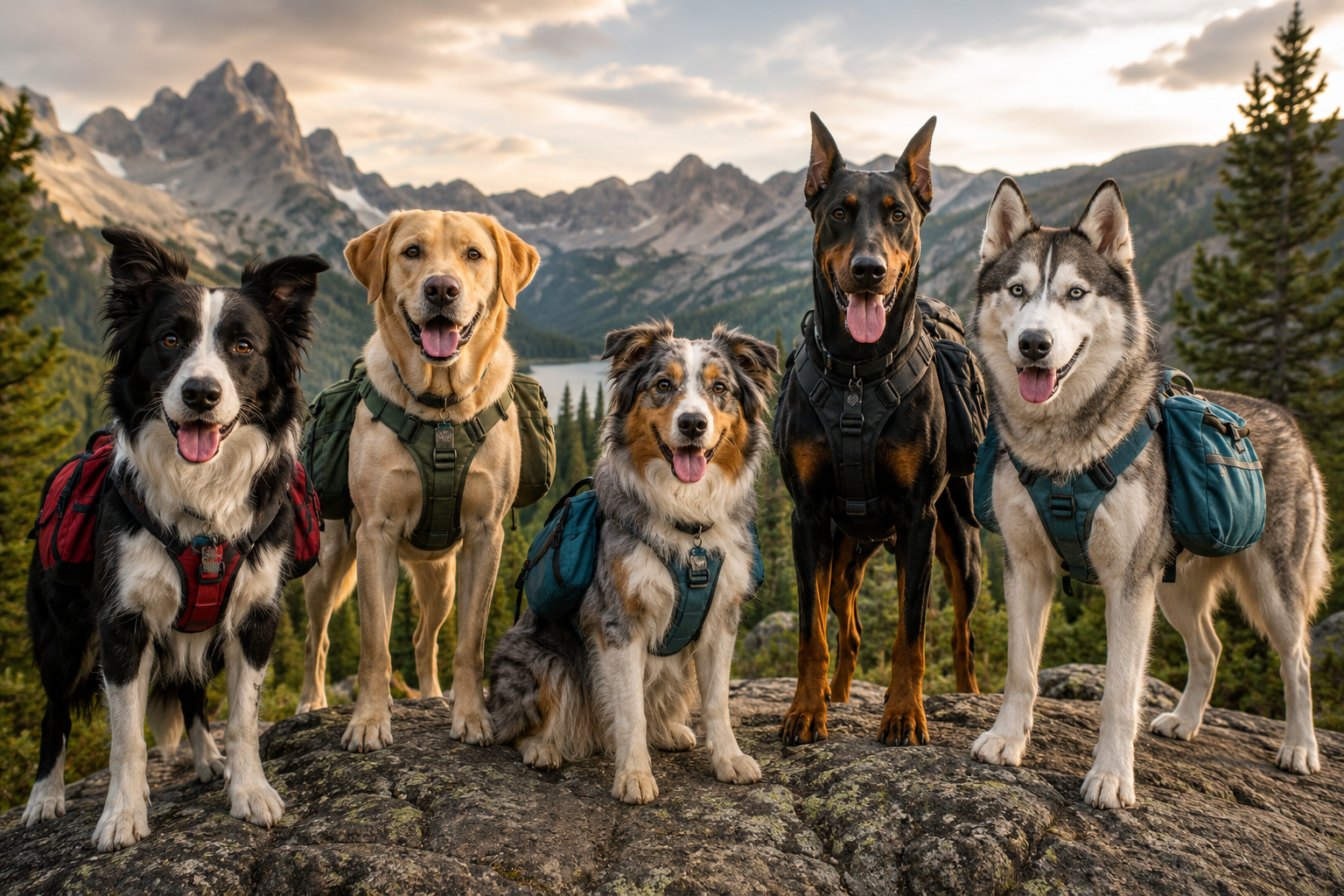
You want a dog who lives for switchbacks, sticks close on exposed ridgelines, and has the good sense to settle quietly once camp is set up. The reality is that plenty of dogs — purebred and mixed alike — can become genuinely excellent hiking partners, but certain breeds consistently excel because of how their endurance, structure, temperament, and trainability line up with what trail life actually demands.
This guide covers the 10 best hiking dog breeds — what each one is genuinely great at, where they struggle, and how to set them up for success — plus a practical framework for matching a breed to your specific terrain, climate, and pace before you fall for a pair of soulful eyes and commit to the wrong fit.
For gear once you’ve chosen your trail partner, our best dog backpacks for multi-day hiking trips and best hiking snacks for dogs guides cover the essentials. For first-time owners specifically, our best hiking dogs for first-time owners guide covers a more beginner-friendly breed shortlist.
A note on mixed breeds: If your heart is set on a rescue, use the trait framework below rather than fixating on purebred labels. Plenty of mixed-breed dogs make phenomenal trail companions when their temperament, body type, and health genuinely fit the work.
How to Pick a Hiking Dog: The 6-Factor Fit Test
Before choosing a breed, run both the dog and yourself through this framework — it matters more than brand-name breed appeal.
1. Endurance and energy profile. Look for moderate to high endurance with steady energy rather than frantic, unfocused intensity. Endurance-built gundogs, herding breeds, and sled-lineage dogs tend to shine here. Be realistic about your own mileage: a German Shorthaired Pointer’s weekly demands suit a dedicated distance hiker, while a casual weekend hiker is often happier with a Labrador or Golden Retriever.
2. Structure and size. Medium to medium-large bodies, roughly 35 to 70 pounds, often balance trail durability with long-term joint health. Smaller dogs hike well too but can struggle in deep snow or over long rock-step sections. Prioritize balanced, athletic structure — a level topline, moderate joint angulation, clean movement — and avoid extremes like very short muzzles, exaggeratedly long backs, or tiny legs under a large torso, all of which carry elevated orthopedic or respiratory risk.
3. Coat and climate match. Cold mountain hiking favors double coats — Huskies, Samoyeds, well-insulated retrievers. Hot, arid trails favor short-coated, lean breeds that shed heat efficiently — Vizslas, Ridgebacks, German Shorthaired Pointers. Wet forest hiking favors water-friendly coats with good natural oils, which is part of why Labradors handle damp climates so well.
4. Trainability and off-leash reliability. A strong recall is non-negotiable anywhere off-leash hiking is legal and safe. Look for biddable, handler-focused breeds — Australian Shepherds, Border Collies, Labradors. High prey drive, common in some hounds and northern breeds, can be managed but requires genuinely diligent training investment.
5. Temperament and social ease. Trails are social spaces shared with other hikers, dogs, and wildlife. Prioritize dog- and human-neutral or positive temperaments with low reactivity. Nervy, barrier-reactive, or dog-selective individuals can still hike successfully, but the training and management burden is real.
6. Health and longevity. Ask breeders or rescues about hip, elbow, eye, and other breed-relevant health testing. Avoid lines with known severe dysplasia or early-onset orthopedic problems that would limit a dog’s trail career before it starts.
The bottom line: pick temperament and structure first, breed name second, and then condition properly regardless of which breed you choose.
The 10 Best Hiking Dog Breeds
1. Labrador Retriever — Best All-Around Trail Partner
Best for: families and first-time hiking dog owners who want a friendly, versatile partner for everything from forest loops to alpine lake swims.
Labradors bring a legendary, stable temperament to the trail — social, handler-oriented, and easy to read even for a novice owner. Their water confidence and natural retrieving drive pair beautifully with lake and river hikes specifically, and their coat sheds water reasonably well in moderate climates.
Watch-outs: Labs are genuinely prone to obesity without strict food management, and extra weight punishes joints hard on descents. Expect a goofy, high-energy adolescent phase in some lines before the famously mellow adult temperament settles in.
Typical daily mileage: 6-12 miles for a conditioned adult, more with progressive training.
Training and care: Reinforce recall early and consistently — Labs can be sociable to a fault around other trail users. Keep body condition lean (roughly a 4-5 out of 9 score), measuring food carefully since Labs will happily overeat given the chance. Rinse after silty swims and dry ears thoroughly to reduce infection risk.
2. Australian Shepherd — Best for Technical Terrain and Precision
Best for: active hikers who love technical singletrack and want a dog that reads subtle cues and moves with genuine agility.
Aussies are highly biddable with sharp handler focus, excelling at off-leash heel work and precise trail manners. Their agility and sure-footedness on rocky, rooty terrain is genuinely impressive, backed by excellent mental stamina alongside physical endurance.
Watch-outs: Aussies need structured mental outlets alongside physical exercise — a bored Aussie will invent their own jobs, and it’s rarely the job you wanted. Some individuals show motion sensitivity or mild herding nips toward joggers and cyclists that need early, deliberate training to manage.
Typical daily mileage: 7-15 miles with conditioning, though Aussies often want more brain engagement than raw mileage alone provides.
Training and care: Teach a genuine “settle on mat” cue so your dog can actually rest at camp rather than staying keyed up. Maintain regular de-shedding grooming, since the undercoat mats if neglected after wet hikes. Use impulse-control games around passing mountain bikers and runners specifically.
3. German Shorthaired Pointer — Best Endurance Athlete
Best for: runners and long-distance hikers in warm-to-temperate climates who want a tireless, affectionate, genuinely high-drive companion.
GSPs bring a top-tier cardiovascular engine that thrives on steady, sustained mileage day after day. Their short coat sheds heat quickly and requires minimal post-hike grooming, and they’re generally deeply people-oriented and eager to connect with their handler on trail.
Watch-outs: Prey drive is genuinely significant in this breed — early, rigorous recall training around wildlife is critical rather than optional. GSPs can become restless and destructive indoors without sufficient daily exercise and mental structure.
Typical daily mileage: 10-20 miles with conditioning, watching heat index closely in warm climates.
Training and care: Teach default check-ins and reinforce recall with high-value rewards and long-line practice. If trail running together, start with a 2:1 run-to-walk interval ratio and build pad toughness and cardio gradually over weeks. Monitor closely for foxtails and grass awns in ears and between paw pads after every hike.
4. Vizsla — Best for Close-Bond Distance Hiking
Best for: hikers who want an intensely affectionate, close-following companion for run-hike hybrids in mild-to-warm weather.
Vizslas carry a genuinely bonded, handler-loving temperament that keeps them within a reasonable radius without extensive off-leash training — the trait that earns them the “velcro dog” nickname. Their smooth, efficient gait makes serious distance feel effortless, and their short coat means minimal grooming burden and fast drying after water crossings.
Watch-outs: Vizslas are genuinely sensitive to harsh corrections and thrive specifically on upbeat, consistent positive training. They’re notably cold-prone and need a jacket and a warm sleep system during shoulder-season trips.
Typical daily mileage: 8-18 miles — genuinely mileage-friendly, but protect them from cold conditions.
Training and care: Use positive reinforcement exclusively; avoid collar corrections or other aversive methods with this sensitive breed. Pack a light jacket and a compact sleeping pad for cold rest stops. Watch for sun exposure on their pale, thin-coated skin — plan shade breaks and consistent water access.
5. Border Collie — Best for Owners Who Want a Thinking Partner
Best for: technical hikers who genuinely enjoy training and want a dog with extraordinary body control and responsiveness.
Border Collies bring unmatched responsiveness and movement precision to trail — genuinely capable of picking across talus fields like a mountain goat. Their trainability supports advanced off-leash obedience and refined trail etiquette that few other breeds can match, backed by excellent endurance once conditioned and mentally engaged.
Watch-outs: Mental stimulation needs are genuinely high — without consistent jobs to do, Border Collies can develop anxious or obsessive behaviors. Many individuals fixate intensely on motion (runners, cyclists), requiring deliberate counter-conditioning work.
Typical daily mileage: 8-16 miles, ideally mixed with mental engagement rather than raw mileage alone.
Training and care: Rotate search games, trail patterning exercises (like checking in at every switchback), and trick repetitions at scenic stops to keep the mind engaged. Teach robust “leave it” and “with me” cues for managing passing trail traffic. Vary terrain and build in rest days to prevent overuse injury given how hard this breed will work if allowed.
6. Australian Cattle Dog — Best Compact, Durable Trail Dog
Best for: rugged hikers who value genuine grit, sure-footedness, and a dog that simply does not quit.
Cattle Dogs bring a compact, muscular build with excellent feet and real joint durability to demanding terrain. Their heat tolerance is fair for a double-coated breed, and their dense coat repels trail debris effectively. They’re often deeply loyal and intensely focused — a genuine asset on tight, technical trails.
Watch-outs: This breed can be genuinely hard-headed and needs fair, consistent rules from an owner willing to enforce them. Some individuals are dog-selective, making early and thorough socialization important.
Typical daily mileage: 7-14 miles — a sustainable, steady worker that still needs summer heat management.
Training and care: Channel herding tendencies into structured positions (heel, side) when passing other trail users rather than letting the instinct express itself uncontrolled. Establish cooperative care habits — nail trims, paw checks — early, since this saves genuine battles later. Watch weight carefully, since their dense frames hide fat gain easily.
7. Weimaraner — Best for Long, Rolling Trail Days
Best for: ambitious hikers with time for weekday conditioning who want elegant, athletic movement paired with a devoted, versatile partner.
Weimaraners bring a long, ground-covering stride with genuinely excellent aerobic capacity to sustained trail days. Their short coat dries instantly and collects minimal burrs, and they typically form a strong, handler-attentive bond.
Watch-outs: Separation sensitivity is genuinely common in this breed — independence training is worth prioritizing from the start. Real prey drive exists here too, meaning wildlife reliability has to be earned through deliberate training.
Typical daily mileage: 9-18 miles — well suited to long, rolling trails with heat management in warm conditions.
Training and care: Build independent settle skills deliberately so your dog can genuinely relax during trail breaks rather than staying anxious near you. Practice long recalls with real distractions — moving lures, tossed treats — in safe, open fields before trusting it on trail. Check ears carefully after dusty hiking days to prevent irritation.
8. Siberian Husky — Best Cold-Weather Specialist
Best for: snowshoeing, winter hiking, and cool-morning alpine missions with an owner who understands and respects northern-breed independence.
Huskies bring world-class cold endurance to winter trail conditions — feet and coat genuinely built for snow. They maintain an efficient, steady pace over real distance and are generally social and dog-friendly when properly socialized.
Watch-outs: Heat risk is genuinely significant in warm seasons — plan hikes for dawn, dusk, or high altitude specifically. Huskies are often independently minded and prey-driven, meaning recall needs to be thoroughly proofed, and a leash may simply be the safer default more often than with other breeds.
Typical daily mileage: 6-12 miles, meaningfully more in cold conditions and far less in heat.
Training and care: Shift your hiking schedule toward winter-focused adventures and early or late outings during summer. Condition specifically for loose-leash trekking and invest in a genuinely comfortable no-pull harness. Offer cooling breaks and treat snow as enrichment, while watching for road salt and ice-melt chemical exposure on paws.
9. Rhodesian Ridgeback — Best Heat-Tolerant Strider
Best for: warm-climate hikers who want a calm, genuinely athletic dog capable of logging real distance when temperatures allow.
Ridgebacks bring a short, sleek coat that handles heat significantly better than thick double-coated alternatives, paired with an even, efficient stride and real muscular stamina once conditioned. They’re typically sensible and calm indoors when adequately exercised.
Watch-outs: Some lines can run aloof or genuinely cat-curious, making recall and neutrality training a priority. Cold sensitivity in winter means a jacket at camp is worth carrying in cooler seasons.
Typical daily mileage: 8-16 miles, excellent in mild-to-warm temperatures while avoiding peak heat.
Training and care: Build recall using high-value reinforcers, and practice specifically around small mammals on a long line before trusting off-leash reliability. Manage sun exposure through shade, hydration, and electrolyte-appropriate nutrition; nose and ear balm may be needed for sun-sensitive individuals. Teach a relaxed trail “place” cue near lunch and rest spots to keep the dog settled.
10. Standard Poodle — Best Undercover Athlete
Best for: hikers who want genuine brains, biddability, and a coat that handles wet brush without the shedding.
Standard Poodles are highly trainable, deeply people-focused, and often naturally athletic in ways their grooming-focused reputation obscures entirely. Their low-shedding coat handles water and wet brush well with the right functional trim, and their long legs make trail obstacles genuinely easier to clear.
Watch-outs: Coat maintenance is real — trail-appropriate trims should be short and functional around the paws, eyes, and belly. Their lean build needs careful, progressive conditioning to prevent soft-tissue strain, particularly early in a hiking career.
Typical daily mileage: 7-14 miles, more with proper conditioning, avoiding extreme heat.
Training and care: Ask your groomer specifically for a “sport clip” — short, functional, eye-clearing, and paw-friendly rather than a show-style cut. Build rear-end strength through cavaletti exercises and gentle hill repeats to protect the knees over a hiking career. Practice polite trail greetings, since Poodles tend to be genuinely charming extroverts who want to meet everyone.
Honorable Mentions
Golden Retriever: A Lab-like heart wrapped in a silkier coat — a genuinely great family hiker, though heat and burr management require attention and lean body condition matters as much as it does for Labs.
English Springer Spaniel: Cheerful, bird-driven, and excellent in cool forest terrain — watch closely for ear and seed debris after every hike.
Samoyed: A cold-weather dream with a genuinely joyful temperament, limited primarily by heat tolerance in warm seasons.
Belgian Malinois / Tervuren: Incredible trail athletes, but appropriate specifically for experienced handlers with real training time to invest.
Jack Russell Terrier / Parson Russell: Small but genuinely mighty rocky-terrain scramblers with real heart — protect from overjumping onto hard surfaces.
Conditioning Your Trail Dog: An 8-Week Progressive Plan
Dogs hide fatigue well and pay for overexertion later — build pads, joints, and cardio slowly regardless of breed.
Weeks 1-2 — Foundation walks (45-60 minutes daily total): Two to three short walks plus one brisk 20-30 minute session. Add surface variety — grass, packed dirt, small gravel — to begin toughening paw pads. Start recall drills on a long line in open, low-distraction fields.
Weeks 3-4 — Elevation and intervals: Progress to 3-4 mile hikes with 400-800 feet of elevation gain at an easy pace. Introduce 2:1 walk-to-jog intervals if trail running is part of your plan. Begin basic strength work — sit-to-stand repetitions, gentle hill walks.
Weeks 5-6 — Distance and technical footing: Extend to 5-7 miles with 1,000-1,500 feet of gain, including roots and rocky sections. Add balance work over downed logs and rock-hopping with safety spotting and rewards. Teach trail position cues — “left,” “right,” “behind,” “with me” — for navigating narrow singletrack safely.
Weeks 7-8 — Goal hikes: Two weekly hikes in the 6-10 mile range, adjusted for climate. Practice genuine rest breaks — your dog settling on a mat for 10-15 minutes on cue. If your dog will carry a pack, start at 5% of body weight and never exceed 10-12% for most adult dogs, using a lower ceiling for young or lean individuals.
A note on puppies: Protect growth plates. Long hikes, repetitive jumping, and stair sprints carry real risk before plates close, often between 12 and 18 months depending on breed. Consult your vet for age-appropriate mileage and prioritize enrichment and skill-building over distance until then.
Heat, Cold, and Weather Safety
Heat management: Schedule hikes for dawn and dusk in hot conditions, prioritizing shaded, water-rich routes. Offer water every 15-30 minutes during heat exposure, with a rough daily hydration target of 25-60 ml per kilogram of body weight, increasing with exertion. Cool your dog by soaking the belly and chest at streams, and consider a lightweight cooling vest for dark-coated dogs specifically. Watch for excessive panting, glassy eyes, slowing pace, weaving gait, or hot and dry gums — these are heat stroke warning signs that demand stopping, cooling, hydrating, and exiting the trail immediately. For a complete emergency response guide, see our what to do if your dog gets injured or overheated on the trail guide.
Cold and wet conditions: Wind combined with wet fur creates genuine hypothermia risk even in moderate temperatures. Pack a canine jacket for shoulder-season trips. Apply paw balm before and after hikes, and consider booties on snow, ice, or sharp talus terrain. Watch for hidden holes in snow, crusted surfaces that can slice pads, and snowballs forming between toes — trimming paw fur appropriately and using balm helps prevent this.
Altitude: Dogs experience altitude effects too. Allow gradual acclimatization and keep the first days at elevation shorter than planned, watching appetite and energy levels closely.
Paw and Joint Care
Paw pad routine: Apply a thin layer of paw wax or balm before hiking to reduce abrasion. Check mid-hike for cracks, embedded grit, or burrs. Rinse with lukewarm water after the hike, pat dry, and reapply balm. Fit booties carefully and practice at home before relying on them for shale, snowmelt salt exposure, or lava rock terrain.
Nails and coat: Keep nails trimmed short — overly long nails change stride mechanics and load joints unnaturally. Trim foot fur flush with the pads to prevent ice ball formation and debris matting.
Weight and supplements: Keeping your dog lean is a genuine kindness — every extra pound stresses elbows and hips significantly on descents. Discuss joint support supplements like omega-3s, glucosamine, or green-lipped mussel with your veterinarian, particularly for senior dogs or larger breeds.
Trail Nutrition and Water
Carry dog-specific water rather than assuming stream access will be safe or available. As a general rule, warm days and longer efforts call for more frequent, smaller sips rather than large infrequent servings. For hikes over two to three hours, bring calorie-dense, high-value snacks — freeze-dried meat, training treats — and offer small portions during rest breaks to maintain steady energy. Keep the post-hike meal at a normal or slightly increased portion depending on output, and avoid introducing new foods on big trail days, since GI upset can genuinely ruin a trip. Most healthy dogs don’t require specialized electrolyte supplements — water and regular food are typically sufficient, though it’s worth checking with your vet before adding anything new.
Trail Etiquette
Know and follow local leash laws without exception. Where off-leash hiking is legal, your dog needs genuinely trail-neutral manners to earn that freedom. Heel or call your dog to your side and have them sit while others pass on narrow singletrack. Never allow chasing wildlife — keep distance, recall immediately, and leash up the moment wildlife is sighted. Pack out dog waste or bury it in a proper 6-8 inch cathole where permitted; never leave bags trailside. Give anglers and swimmers appropriate space, and ask before your dog joins anyone else’s water activity. If you can’t reliably stop, recall, and down your dog under real distraction, keep them leashed in busy trail areas.
Minimal Dog Trail First Aid Kit
Self-adherent wrap (Vetrap) and nonstick pads, gauze and cotton for pressure and padding, a saline vial or clean water for flushing wounds or eyes, small hemostats or tweezers for splinters and ticks, paw balm with spare booties, diphenhydramine (Benadryl, with vet-confirmed dosing), a tick removal tool where relevant to your region, a compact emergency blanket for hypothermia and shock prevention, a muzzle (even the calmest dog can bite reflexively under pain or stress), and current ID and microchip information. Practice applying a bootie and a wrap at home — fighting with unfamiliar gear on a windy ridge is nobody’s idea of a good time.
Choosing Between Two Great Options
“We hike 5-8 miles on weekends, mild climate, kids in the house.” A Labrador or Golden Retriever — friendly, forgiving, genuinely easy to live with.
“We trail run three times a week, summers are hot, we love 10-15 mile loops.” A GSP, Vizsla, or Weimaraner — heat-savvy coats and real endurance engines. Start hikes at dawn during peak summer heat.
“We love rocky scrambles, narrow singletrack, and precise obedience work.” A Border Collie or Australian Shepherd — build mental games into rest stops and manage motion-fixation deliberately.
“We live where winters are long and snow is deep.” A Siberian Husky or Samoyed — plan cool-season adventures and protect carefully from summer heat.
“I want a tough, compact partner for rugged trails, and I’m consistent with rules.” An Australian Cattle Dog — durable and driven, with thorough early socialization.
“I want a smart, non-shedding dog that can genuinely hike.” A Standard Poodle — an underestimated athlete when kept in a proper sport clip and conditioned correctly.
Quick Answers
Can small dogs be great hikers? Absolutely — fitness and structure matter more than raw size. Terriers and small herding breeds can cover serious mileage; just factor in step height over obstacles, deep snow limitations, and raptor risk in open terrain for genuinely small dogs.
How old should my dog be before serious hiking? Growth plates need to be mostly closed, typically between 12 and 18 months depending on breed. Before then, prioritize varied surfaces, shorter adventures, and skill-building over serious mileage.
Is a dog backpack a good idea? Often, yes — start light at 5% of body weight and never exceed 10-12% for a fit adult dog. Some dogs move more naturally unloaded, particularly on technical terrain, so it’s worth trying a few hikes both ways before committing either direction.
What about off-leash hiking in wildlife-heavy areas? When there’s any doubt, leash up. A hands-free hiking belt keeps this comfortable for you. Your recall genuinely isn’t tested until a deer explodes out of a thicket ten feet away.
How do I protect my dog’s paws on lava rock or talus? Quality booties, trimmed nails, consistent balm application before and after hikes, and a genuinely progressive approach to building distance on abrasive terrain. Stop and check pads frequently on these surfaces regardless of how tough your dog seems.
Final Thoughts
The best hiking dog isn’t a single breed — it’s the individual dog whose temperament, structure, and health genuinely match your trails and your lifestyle. Want a do-everything family hiker with a genuine love of lakes? The Labrador remains close to a perfect default. Does your heart live on switchbacks and your hands love training work? An Australian Shepherd or Border Collie will meet you halfway and then some. Chasing sunrise miles across desert terrain? A GSP, Vizsla, or Weimaraner will match your cadence and keep your spirits high. Dreaming of snowshoe tracks through quiet winter woods? A well-managed Husky turns cold weather into pure joy.
Whichever breed you choose, conditioning, manners, and consistent kindness are the real trifecta. Keep your dog lean, your recall genuinely reliable, your rest breaks frequent, and your first aid kit ready for surprises — and you won’t just have a hiking dog, you’ll have a trail teammate.
For more on preparing your dog for the trail, check our how to train your dog to hike long distances guide, and for gear once you’ve chosen your breed, our best dog backpacks for multi-day hiking trips guide covers large and XL breed options.