
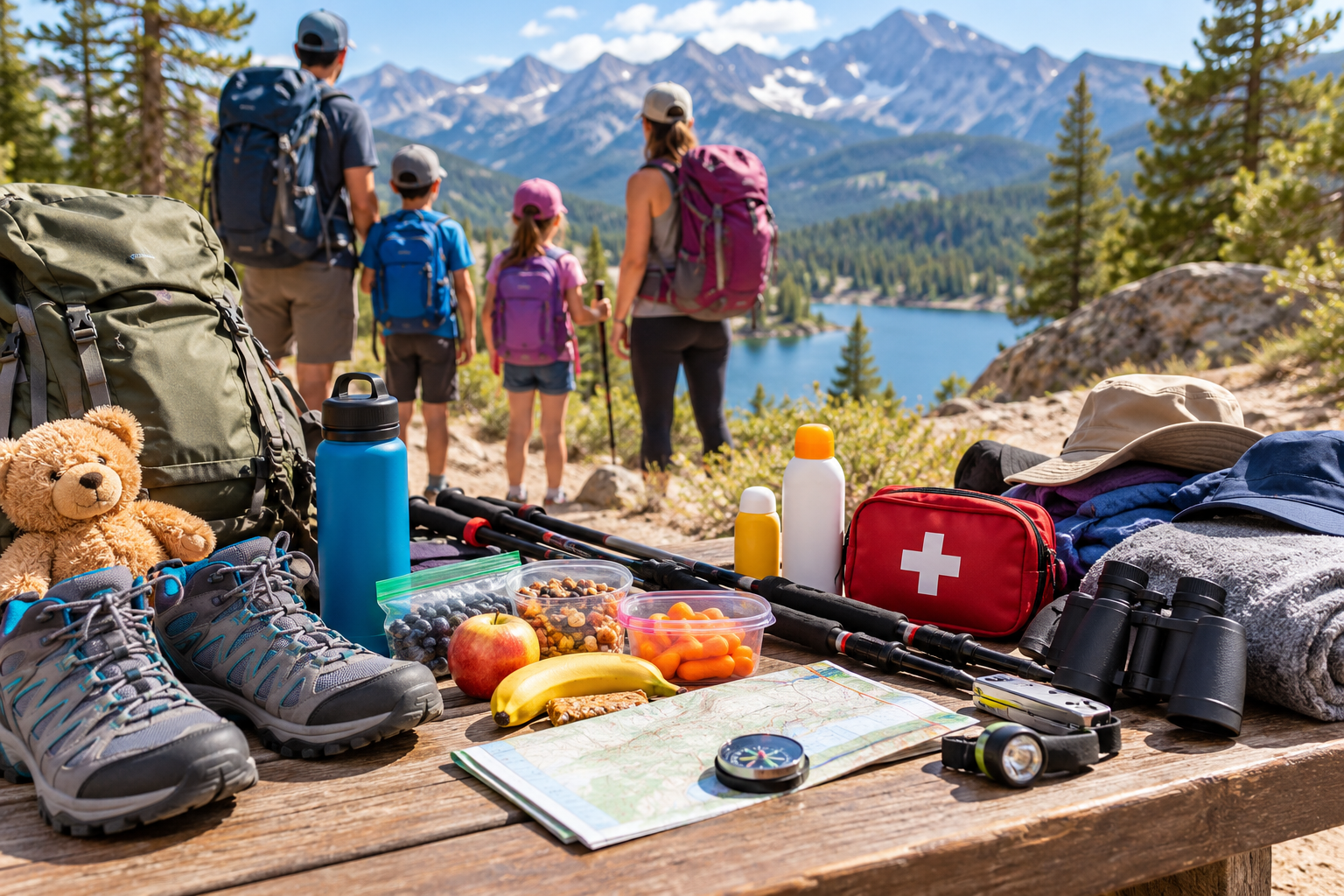
Hiking with kids genuinely demands a different kind of packing logic than a solo or adult-only trip. A missing snack on your own hike is a minor inconvenience you shrug off; the same gap with a tired, hungry six-year-old two miles from the trailhead can turn a pleasant afternoon into a genuinely miserable slog for everyone involved. The good news is that a family day hike checklist doesn’t need to be complicated once you understand the categories that actually matter — hydration and food that account for kids’ faster dehydration and lower blood sugar tolerance, sun and bug protection sized for smaller bodies, and a first aid kit built around the scrapes and minor mishaps kids actually experience on trail.
This guide walks through exactly what to pack for a family day hike with kids, organized by category, so you can build a genuinely complete kit without overpacking or missing something that matters. For age-specific gear recommendations, hikingbackpackpro.com’s best hiking equipment for kids guide covers products across different age ranges, and our best sun protection gear for kids on the trail guide covers that category specifically.
Water and Hydration
Bring more water than feels necessary, genuinely more than you’d carry for an adults-only hike of the same distance. Kids dehydrate faster than adults relative to their body size, and they’re also considerably less likely to recognize or communicate early thirst signals — by the time a kid says they’re thirsty, they may already be meaningfully behind on hydration. A reasonable baseline is roughly half a liter per hour of hiking per child, adjusted upward for heat, and it’s genuinely better to carry too much than to run short partway through.
A dedicated kids’ hydration pack removes the friction that keeps kids from drinking consistently. A hands-free bite valve means water is always immediately accessible without needing to stop and dig out a bottle, which matters directly since kids are considerably less likely to interrupt play or walking to specifically ask for a water break.
Pack a backup water source or purification method for longer hikes. Even on a day hike, carrying slightly more water than the trip’s estimated needs, or knowing where a reliable refill point exists along the route, adds a genuine safety margin if the hike runs longer than planned.
Food and Snacks
Bring genuinely more snacks than you think you’ll need, and pack them for easy, frequent access rather than a single planned lunch stop. Kids’ blood sugar and energy levels swing faster than adults’, and a hungry, tired kid on the trail can shift from happy to miserable in a way that’s considerably harder to reverse than simply preventing it in the first place through regular snacking.
Prioritize familiar, well-liked foods over anything genuinely new or experimental. A hike is the wrong place to introduce a food a kid has never tried and might reject — stick to snacks you already know work, since a kid refusing to eat mid-hike because they don’t like a new snack creates exactly the energy-crash problem you were trying to prevent.
Pack snacks that don’t require much prep or create a genuine mess. Trail mix, granola bars, dried fruit, and pre-cut fruit or vegetables in a spill-proof container all work well specifically because they don’t demand a flat surface, utensils, or significant cleanup at a rest stop.
Consider a small, kid-accessible pocket in their own pack for self-serve snacking. Letting an older kid manage their own snack access, rather than stopping the whole group every time someone wants something, genuinely reduces the friction that leads to under-eating simply because getting a snack feels like a bigger interruption than it needs to be.
Sun Protection
A wide-brim hat with a neck flap covers the areas sunscreen most commonly misses. The face, ears, and back of the neck are consistently the zones that end up sunburned on kids wearing a standard baseball cap or no hat at all, and a genuine wide-brim design with rear coverage addresses this directly rather than relying purely on sunscreen application.
A UPF-rated long sleeve shirt provides all-day protection that doesn’t wear off the way sunscreen can. This matters especially for kids who resist sitting still for a sunscreen reapplication every two hours — a UPF 50-plus shirt keeps working continuously regardless of how consistently you manage to reapply.
Mineral sunscreen is generally the gentler, pediatrician-preferred choice for kids’ skin specifically. Apply it to any exposed skin a hat and UPF shirt don’t cover — face, hands, ears if the hat doesn’t fully shield them — and reapply roughly every two hours, more often if kids are sweating heavily or getting wet.
Sunglasses genuinely matter for kids too, not just adults. Eye protection is easy to overlook when packing for kids specifically, but UV exposure affects children’s eyes the same way it does adults’, and a properly fitted pair of kids’ sunglasses is worth including on genuinely sunny, exposed hikes.
Bug Protection
Insect repellent appropriate for children’s skin is worth packing on essentially any hike, not just ones through obviously buggy terrain. Mosquitoes and ticks show up in places that don’t always look buggy from a parking lot, and having repellent on hand rather than realizing you need it mid-hike saves a genuinely miserable afternoon.
Check for ticks during rest stops and definitely at the end of the hike, not just when you get home. Catching an attached tick earlier rather than later genuinely matters for reducing disease transmission risk, and a quick check during a snack break costs almost no extra time.
Consider permethrin-treated clothing for hikes through genuinely tick-heavy regions. This is a real step beyond standard repellent for families hiking regularly in areas with known high tick activity, providing an additional layer of protection that topical repellent alone doesn’t fully replicate.
First Aid Essentials
A dedicated kids’ first aid kit, built around the specific injuries kids actually get on trail, is genuinely more useful than a generic adult kit. Scrapes, splinters, and minor cuts are the overwhelming majority of what you’ll actually treat on a family day hike, and a kit stocked specifically for those scenarios — bandages in kid-friendly sizes, antiseptic wipes, tweezers for splinters — serves you better than a bulkier kit built around scenarios more relevant to serious backcountry trips.
Pack any child-specific medications your family might need, clearly labeled with dosing information. Children’s pain reliever, an allergy medication if anyone in the family has known allergies, and anything else specific to your kids’ needs should travel with the kit rather than being assumed unnecessary for “just a day hike.”
Include a basic understanding of what’s in the kit, not just the supplies themselves. Knowing how to actually use what you’re carrying — proper wound cleaning, how to remove a splinter safely — matters as much as having the physical supplies on hand.
Clothing and Weather Protection
Dress kids in layers, exactly the same principle that applies to adult hiking, adjusted for how much faster kids can overheat or get cold. A base layer, a light mid layer, and a packable rain shell cover the range of conditions a day hike might encounter, and kids benefit from this system just as much as adults do, arguably more given how quickly their body temperature regulation can swing.
Always pack a rain jacket regardless of the forecast’s confidence. Weather shifts faster than most forecasts capture reliably, and a kid caught in genuine rain without a shell gets cold considerably faster than an adult in the same conditions, given their smaller body mass.
Bring an extra pair of socks, and consider an extra full change of clothes for younger kids specifically. Wet feet and wet clothing are both genuinely common on a hike involving any water crossing, mud, or simple clumsiness, and having a dry backup means a wet mishap doesn’t end the hike early.
Choose footwear that’s actually broken in and appropriately fitted, not just “close enough” hand-me-downs. Ill-fitting shoes cause blisters considerably faster on kids than adults, partly because kids are less likely to notice or mention discomfort until it’s already become a real problem.
Navigation and Safety
Carry a physical map or a downloaded offline map, even on a well-marked trail. Cell service is unreliable in a genuine trail environment, and a map that doesn’t depend on signal is a real backup worth having regardless of how familiar or well-marked the route seems.
Give each kid old enough to understand it a personal safety item — a whistle is the simplest, most effective option. If a child becomes separated from the group even briefly, a whistle provides a genuine way to signal location without needing to shout repeatedly, which matters for both effectiveness and for keeping a scared kid calmer through having a concrete action to take.
Establish a clear plan for what to do if someone gets separated, and actually discuss it with kids before the hike starts. “Stay where you are and use your whistle” is a simple, genuinely memorable instruction that removes the panic-driven instinct to keep wandering and searching, which tends to make a separation situation worse rather than better.
Carry a fully charged phone even knowing service may be unreliable, and consider a portable charger for longer hikes. Even spotty signal can sometimes get an emergency call through, and a dead phone removes that option entirely.
Comfort and Morale Items
Pack a few genuinely engaging distractions for younger kids specifically, without overloading the pack with entertainment. A small notebook for nature observations, a simple scavenger hunt list, or a pair of kid-sized binoculars can meaningfully extend a younger child’s patience and engagement on a hike that might otherwise feel long or boring to them.
Bring a lightweight sitting pad or small blanket for rest stops. A comfortable place to sit during a snack break genuinely matters more for kids than it might for adults, who are generally more tolerant of sitting on a rock or bare ground for a few minutes.
Consider a carrier for genuinely younger children who can’t yet hike the full distance themselves. A properly fitted child carrier lets you bring a toddler or infant along on a hike that would otherwise be beyond their walking capability, extending the family hiking window to include kids too young to walk the full route.
Packing It All: A Suggested Approach
Rather than treating this as one undifferentiated list, it helps to think in terms of who carries what. Parents typically carry the bulk of water, first aid supplies, extra clothing layers, and navigation tools in their own pack. Older kids, if they’re carrying a small pack of their own, can genuinely manage their own snacks, a water bottle or bladder, and a personal item like a whistle or a small notebook — giving them some real ownership over their own gear tends to increase engagement with the hike itself.
Build the checklist around your specific kids’ ages and the actual hike’s distance and terrain rather than packing identically for every trip. A short, flat one-mile loop near a parking lot genuinely doesn’t need the same kit as a four-mile trail with real elevation gain, and overpacking for every single outing creates its own fatigue — both for the parent carrying everything and for a family’s overall willingness to keep hiking regularly if every trip feels like a major production to prepare for.
Conclusion
A genuinely complete family day hike checklist comes down to a handful of categories working together — enough water and food to prevent the energy crashes that end hikes early, sun and bug protection sized appropriately for kids’ more sensitive skin and lower risk tolerance, a first aid kit built around the specific minor injuries kids actually experience, and a simple, clearly communicated safety plan everyone in the family actually understands before you start walking.
Get those fundamentals covered, and the rest of what you pack becomes a matter of preference and trip-specific judgment rather than genuine necessity. Start with a shorter, easier hike if you’re building this habit with younger kids, refine your checklist based on what you actually used and what stayed in the pack the whole time, and the family hiking kit will genuinely get more efficient with every trip you take.