
Thru-hiking is a genuinely different physical demand than even serious weekend backpacking, and the gap matters enormously when you’re deciding whether to bring a dog along for weeks or months on a long trail. A dog covering 15 to 20-plus miles a day, day after day, for a sustained stretch of a thru-hike faces cumulative wear on paw pads, joints, and energy reserves that a single demanding hike simply doesn’t replicate. The breeds that genuinely excel here aren’t necessarily the same ones that make excellent weekend trail companions — sustained endurance over consecutive days, genuine paw durability, and a body built for efficient, repeated exertion matter more here than raw athleticism on any single outing.
This guide covers the breeds genuinely suited to long-distance thru-hiking specifically, the real logistical and trail-access considerations that matter for a multi-week or multi-month trip, and how to actually condition a dog for sustained daily mileage rather than a single ambitious hike.
For general hiking breed selection across shorter trips, our best hiking dog breeds guide covers the broader picture, and our how to train your dog to hike long distances guide covers the conditioning fundamentals that any thru-hiking prep builds on.
What Thru-Hiking Actually Demands, Beyond a Single Long Day
Sustained daily mileage over consecutive days is fundamentally different from an occasional demanding hike. A dog can handle an ambitious 15-mile day reasonably well and still struggle badly with the same distance repeated day after day for a week or more, because recovery time between efforts shrinks to nearly nothing on a genuine thru-hike itinerary. Cumulative fatigue compounds in a way that a single big hiking day, followed by real rest, simply doesn’t test.
Paw pad durability becomes a genuine limiting factor over hundreds of cumulative trail miles. Rock, root, and varied trail surfaces wear on paw pads progressively, and a dog whose pads aren’t conditioned for sustained daily contact with abrasive terrain can develop real, trip-ending injuries well before their cardiovascular fitness becomes the limiting factor.
Weight management and body condition matter more over a long trail than a short one. A dog carrying even modest extra weight faces meaningfully more joint stress accumulated over weeks of daily miles than the same excess weight would create on an occasional hike, and a genuinely lean, well-conditioned body composition becomes a real safety factor rather than just a performance consideration.
Recovery and rest-day management is part of the actual plan, not an afterthought. Serious thru-hikers build recovery days into their itinerary specifically because sustained daily mileage without adequate rest produces overuse injuries in dogs the same way it does in human distance athletes — a genuinely fit hiking dog still needs periodic lower-mileage or rest days built into a multi-week plan.
Breeds Genuinely Suited to Long-Distance Thru-Hiking
Siberian Huskies are frequently cited as close to the definitive answer for genuine endurance distance, developed by the Chukchi people of northeastern Siberia specifically to cover enormous ground efficiently across brutal, sustained conditions. That heritage of covering serious distance day after day translates directly to thru-hiking demands in a way few other breeds match, though their thick double coat means genuine heat management becomes the limiting factor on warm-climate trails rather than endurance itself.
German Shorthaired Pointers bring genuinely elite trail navigation and endurance capability, bred as hunting dogs specifically for working outdoors across demanding terrain for sustained hours. Their trainability ranks among the easiest of any working breed, and their short coat handles varied climates more flexibly than heavier-coated endurance breeds — a real practical advantage on a thru-hike that crosses multiple climate zones over its length.
Vizslas were bred in Hungary specifically as hunting dogs built to work outdoors across rough terrain for extended hours alongside their handlers, and that heritage produces a lean, powerfully built body genuinely wired for sustained exertion rather than short bursts. Their close-bonding temperament also means they naturally stay oriented toward their handler across long trail days, a genuine practical advantage for sustained off-leash or long-line thru-hiking use.
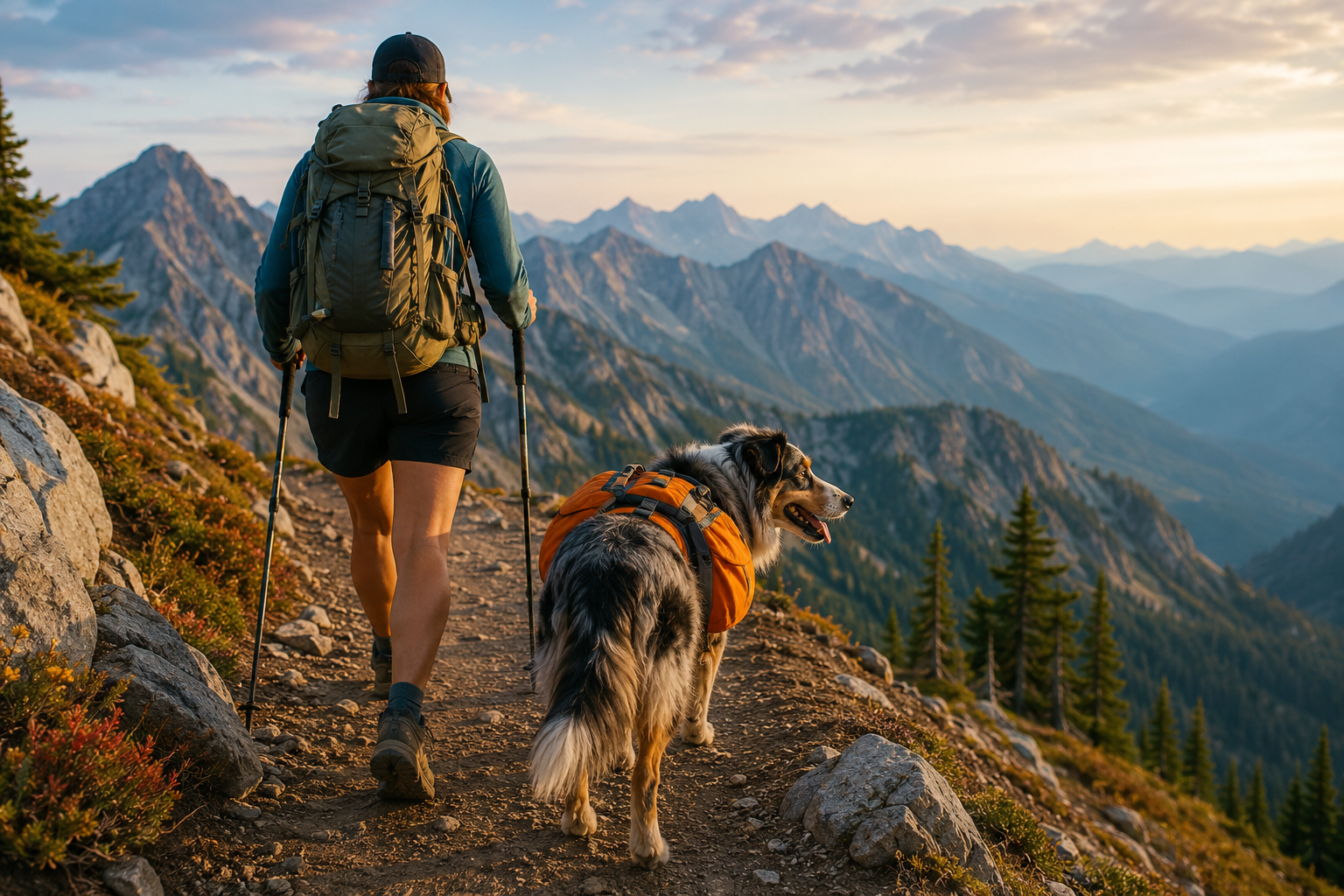
Australian Shepherds bring genuine athletic capability developed through herding work across large ranch grounds, where covering real distance and varied terrain was the daily norm rather than an occasional demand. Their agility and coordination handle the technical trail sections a long thru-hike inevitably includes, and their intelligence supports the sustained trail discipline — recall, pacing, trail manners — that a multi-week trip genuinely requires more consistently than a single day hike does.
Labrador Retrievers, while not appearing as conventionally lean as dedicated endurance breeds, handle genuine multi-mile daily hiking and moderate trail running comfortably with proper conditioning. Their waterproof coat and webbed feet suit trails with regular water crossings well, and their strong recall and trainability make them reliable off-leash thru-hiking partners once properly conditioned. Veterinary guidance specifically emphasizes maintaining a genuinely lean body condition in active Labradors on high-mileage trips, since their body type is more prone to joint stress if allowed to carry extra weight during sustained daily hiking.
Rhodesian Ridgebacks, bred in Africa specifically for hunting over long distances, remain genuine long-distance exercise enthusiasts even in modern working and companion lines. Their heat tolerance suits warm-climate thru-hiking sections meaningfully better than heavier double-coated breeds, and their calm, undemonstrative temperament on trail — not inclined to bother other hikers passed along the way — suits the social realities of a popular long trail with regular other-hiker contact.
Border Collies carry both genuine cardio capacity and the trainability to manage the sustained recall, pacing, and trail-discipline demands of a multi-week trip, backed by a herding heritage built around covering serious ground repeatedly across working days. Their mental engagement needs are real and worth planning around specifically on a thru-hike, since sustained daily hiking alone may not fully satisfy their need for problem-solving and structured tasks the way it does for lower-drive breeds.
Small breeds with genuine endurance heritage — Jack Russell Terriers and similar hunting-derived small dogs — can cover real sustained mileage with proper conditioning, despite their size suggesting otherwise. Jack Russells specifically were bred in England for hunting and genuinely thrive with substantial daily exercise; their smaller size means proportionally more steps per mile than a large breed covers, worth factoring into realistic daily mileage expectations on a genuine thru-hike.
Load-Carrying on a Thru-Hike
A well-conditioned hiking dog can carry up to roughly 25% of their own body weight in a properly fitted dog backpack — a genuinely meaningful contribution on a long trail where every pound matters to the human hiker’s own pack weight as much as it does the dog’s. Dogs carrying their own food, a collapsible bowl, and a small first-aid kit is a realistic and common practice among experienced thru-hikers traveling with dogs, though this capacity should be built up gradually alongside general mileage conditioning rather than loaded onto a dog from day one of a long trail.
Bernese Mountain Dogs specifically are cited as capable of easily carrying their own essential gear on longer thru-hikes given their genuine size and structural strength, though their thick coat and cold-climate heritage make them considerably better suited to cooler-climate long trails than warm, sustained-heat sections.
Trail-Specific Access Considerations
Long-distance trail access for dogs varies considerably by trail and by specific section, and this is genuinely worth researching in detail before committing to bringing a dog on any specific long trail. Some sections of major long-distance trails prohibit dogs entirely — a well-known example is the Great Smoky Mountains National Park section of the Appalachian Trail, where dogs are not permitted on the trail at all, requiring thru-hikers with dogs to arrange boarding or an alternate route around that specific section. Other sections of major trails have leash requirements, seasonal wildlife closures that affect dog access, or specific permit conditions that don’t apply to the trail as a whole.
Before committing to a genuine thru-hike with a dog, research the specific trail’s dog policy section by section rather than assuming a blanket policy applies across the entire route — this is a genuinely common planning gap that catches unprepared thru-hikers off guard partway through a trip, forcing an unplanned boarding arrangement or route deviation mid-trail.
Conditioning for Sustained Daily Mileage
Building a dog up to genuine thru-hiking capability requires a meaningfully longer and more gradual conditioning timeline than preparing for a single demanding hike. Start with shorter trails at a comfortable distance, then increase both single-day distance and consecutive-day frequency over a period of months rather than weeks, specifically building the cumulative endurance and paw pad toughness that sustained daily mileage genuinely requires. A dog conditioned for one 15-mile day is not automatically ready for 15-mile days repeated across a week or more — that cumulative capacity has to be built specifically and deliberately.
Watch paw pads closely throughout conditioning, since this is genuinely the most common physical limiter for sustained trail dogs rather than cardiovascular fitness. Rough or varied terrain — hot rock, sharp scree, extended pavement sections some trails include — accelerates paw wear, and building genuine pad toughness takes real, gradual exposure over the same extended timeline as broader conditioning.
Watch for the standard warning signs throughout both conditioning and the actual trip — hard panting beyond what exertion explains, slowing pace, limping, excessive drooling, vomiting, or disorientation are all signals to stop and, if they don’t resolve with rest, contact a veterinarian rather than pushing forward on trail-day mileage targets. Flat-faced breeds, overweight dogs, puppies, seniors, and dogs with any existing medical condition all warrant a genuinely more conservative approach or a vet-approved specific plan before attempting sustained long-distance thru-hiking mileage at all.
Build a genuine post-hike routine into each day of a multi-week trip, not just the final day. A quiet water break, a chance to physically settle, and calm downtime help a dog transition out of trail-alert mode into genuine rest — meaningfully more important on a sustained multi-week trip than on a single-day hike where the dog simply goes home and recovers over several full rest days afterward.
Final Thoughts
The breeds genuinely suited to long-distance thru-hiking share specific underlying traits — sustained cardiovascular endurance bred through genuine working heritage, paw and joint durability appropriate to cumulative daily mileage, and trainability sufficient to manage weeks of sustained trail discipline rather than a single day’s enthusiasm. Siberian Huskies, German Shorthaired Pointers, Vizslas, and similarly endurance-bred working breeds consistently top this specific category for real physiological reasons, while breed alone still doesn’t guarantee any individual dog’s actual readiness — genuine, gradual conditioning built over months matters as much as breed selection for whether a specific dog is actually ready for a genuine thru-hike.
Research your specific trail’s section-by-section dog policies before committing, build conditioning gradually with particular attention to paw pad durability, and plan rest days into a long itinerary the same way you’d plan them for your own sustained physical effort.
For more on preparing any dog for serious trail distance, check our how to train your dog to hike long distances guide, and our best dog backpacks for multi-day hiking trips guide for gear once your dog is ready to carry their own supplies on a long trail.