
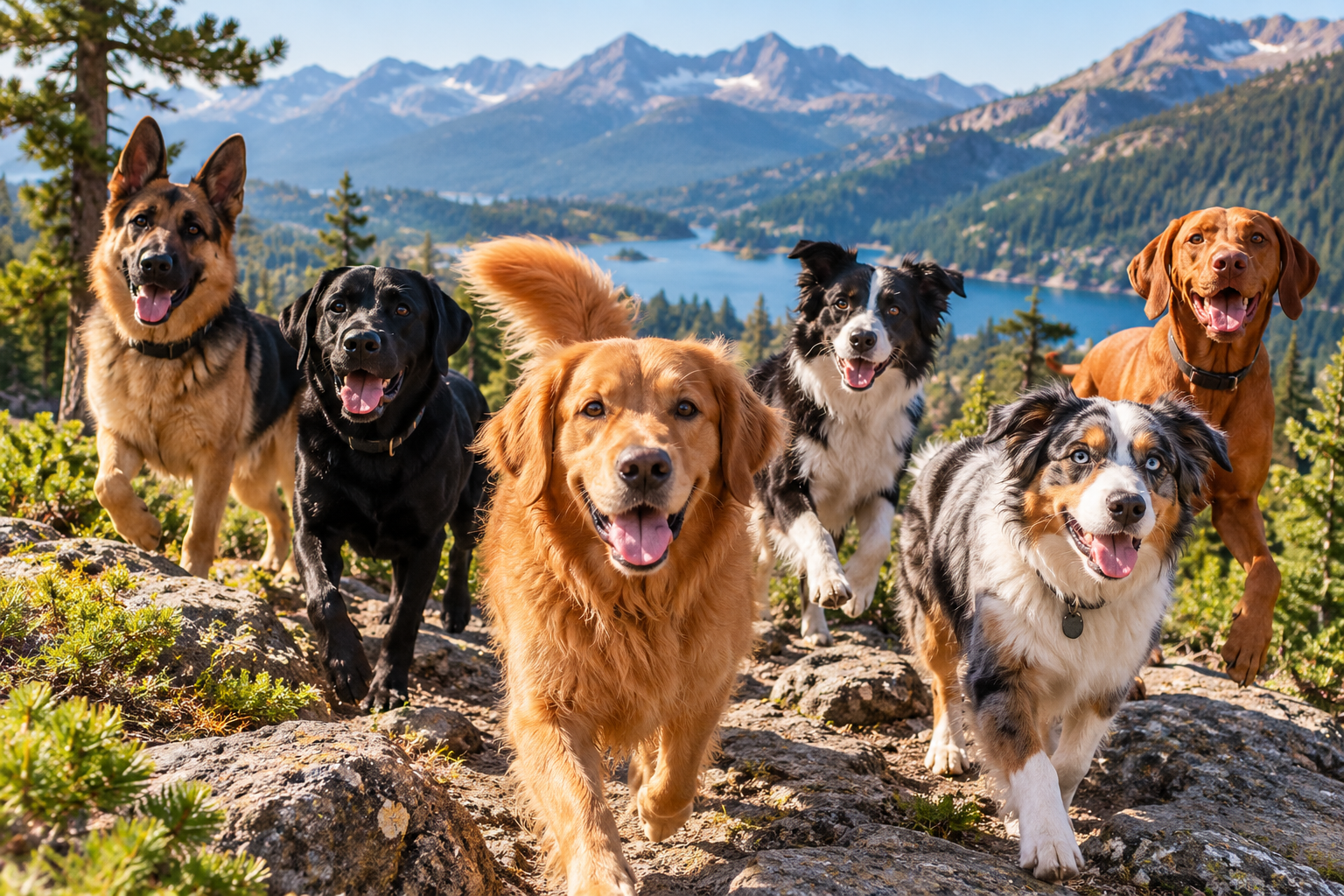
Off-leash hiking with a dog is genuinely one of the most rewarding parts of trail life, and it’s also one of the most consequential decisions you can get wrong. A dog with unreliable recall isn’t just an inconvenience off-leash — it’s a real risk to wildlife, other hikers, and the dog itself, since a moment of distraction on an unfamiliar trail can mean a genuine emergency if your dog bolts after a scent or a startled animal and doesn’t come back when called. Breed genuinely matters here in a specific, mechanical way: dogs bred for generations to work near a handler — herding and gundog breeds especially — have a real instinctive tendency to stay in your orbit that scent hounds and independent terrier breeds simply don’t share, no matter how much training you put in.
This guide covers the breeds genuinely best suited to reliable off-leash hiking, the training fundamentals that actually make recall dependable regardless of breed, and the honest limitations worth understanding before trusting any dog off-leash on a real trail. For broader hiking-dog guidance, hikingbackpackpro.com’s best hiking dog breeds guide covers general trail suitability beyond the recall-specific focus covered here.
Why Breed Genuinely Predicts Recall Reliability
Before the breed list, it’s worth understanding the real mechanism behind why some breeds are so much more consistently reliable off-leash than others. The working group a breed comes from predicts recall potential better than almost any other single factor. Herding and gundog breeds were selected across generations specifically to operate near a handler — a Border Collie working sheep or a Labrador retrieving a downed bird both depend on staying oriented toward the person directing them, and that genuine instinctive orbit carries directly into hiking behavior. Scent hounds and many terriers were selected for the opposite trait entirely — following a trail or quarry independently, which is precisely the wrong wiring for staying close off-leash regardless of how much training you invest.
Neither group is inherently a “problem” dog; it’s a genuine question of matching the dog’s underlying wiring to the training commitment you’re actually willing to make. A scent hound can still be trained to a reliable recall with serious, sustained effort — it’s simply working against instinct rather than with it, the way a herding breed’s recall training does.
Best Breeds for Off-Leash Reliability
1. Border Collie — Best Overall for Trainability and Focus
The Border Collie is genuinely one of the smartest dog breeds in existence, and that intelligence translates directly into off-leash reliability — this breed learns new commands remarkably fast, and its intense, almost laser-like focus on the handler means off-leash commands, including recall, are exceptionally dependable once trained. Bred for herding, Border Collies naturally check in with their handler constantly rather than ranging independently, and they navigate technical terrain, rock scrambles, and winding trail sections with genuine agility.
The real caveat here is energy level, not trainability — this breed has an extremely high exercise requirement, and a Border Collie without adequate physical and mental stimulation can become genuinely restless in ways that work against the very focus that makes them such strong off-leash hikers in the first place.
Best for: hikers who want the single most trainable, most consistently focused off-leash companion available, and who can genuinely match this breed’s substantial exercise needs.
2. Labrador Retriever — Most Forgiving for First-Time Owners
Labrador Retrievers are genuinely the most forgiving breed for first-time owners specifically working on off-leash reliability — they’re soft-tempered, food-motivated, eager to please, and genuinely tolerant of the training mistakes a newer handler is likely to make along the way. This breed naturally orbits and checks in with a handler by instinct, a real inherited trait from generations of retriever work that depended on staying oriented toward the person directing the hunt.
Labs handle genuinely long hikes with real strength and stamina, and their adaptability to different weather conditions — including a genuine willingness to swim if a hike includes water crossings — makes them versatile beyond just the recall question alone.
Best for: first-time dog owners specifically who want a breed that’s genuinely forgiving of training mistakes while still delivering strong natural recall instincts.
3. Golden Retriever — Best for Loyalty-Driven Recall
Golden Retrievers bring genuine intelligence and a friendly, loyal temperament that translates directly into dependable off-leash behavior — this breed’s strong bond with its handler and genuine desire to stay close make recall training considerably easier than with more independent breeds. Strong, muscular dogs capable of hiking for genuine hours, Goldens adapt well to different weather conditions and terrain, and their real loyalty specifically as an off-leash trait means they’re less likely to range far even before recall training is fully dialed in.
Best for: hikers who want a breed whose genuine loyalty and desire to stay close functions almost as a built-in safety net alongside formal recall training.
4. Australian Shepherd — Best for Technical, Rocky Terrain
The Australian Shepherd packs genuine herding-bred drive and agility into a medium-sized frame, and that heritage shows up directly in how confidently this breed navigates technical trails — rough ranch terrain shaped the breed’s balance and footing, and that translates naturally to rocky, uneven hiking terrain. Their intelligence supports genuinely quick trail-etiquette learning, and they tend to stick close to their group during hikes rather than ranging far, a real protective instinct toward their family that supports off-leash reliability without being aggressive toward other hikers or dogs.
Best for: hikers on genuinely technical, rocky terrain who want a breed with real herding-bred agility and a natural tendency to stay close to the group.
5. Vizsla — Best “Velcro Dog” for Staying Close by Instinct
Vizslas are genuinely known as “Velcro dogs” specifically because they glue themselves to their owner, happiest trailing right behind on every step rather than ranging ahead independently — a real, distinctive trait that makes off-leash reliability almost instinctive rather than purely trained. This breed’s keen senses and quick learning support genuinely strong direction-following, and a lean, short-coated build lets them move swiftly and handle high-energy trail activity without overheating as quickly as heavier-coated breeds.
Vizslas rarely bolt ahead solo, a real behavioral tendency worth understanding directly — their instinct to stay close functions alongside formal training rather than requiring training to overcome an opposing instinct the way it does with more independent breeds.
Best for: hikers who want a breed whose genuine “Velcro” instinct to stay physically close makes off-leash reliability feel almost automatic once basic training is in place.
6. Standard Poodle — Best Trainable Non-Sporting Breed
The Standard Poodle brings genuine intelligence and trainability to this list from outside the herding and gundog groups most other picks come from, sharing the same biddability and handler focus that makes those groups so reliable off-leash. Poodles respond well to structured training and genuinely enjoy the mental engagement that recall and trail-command work provides, translating their well-known obedience-competition intelligence directly into real trail reliability.
Best for: hikers who want genuine gundog-level trainability from a breed outside the traditional sporting or herding categories, particularly those who also want a low-shedding coat.
7. Brittany — Best Compact Gundog for Close-Range Hunting Style Focus
The Brittany naturally orbits and checks in with a handler by instinct, sharing the same core gundog wiring found in Labradors and Vizslas but in a more compact frame. This breed stays close by genuine instinct rather than purely through trained behavior, and its natural hunting-companion heritage means staying within reasonable range of the handler is deeply embedded rather than something fought against.
Best for: hikers who want genuine gundog-level natural recall instincts in a more compact, moderately sized breed than a Labrador or Golden Retriever.
8. Miniature Schnauzer — Best Small-Breed Off-Leash Standout
The Miniature Schnauzer is genuinely the small-dog standout in this category — confident, alert, and considerably more trainable than most terrier breeds, with real enough handler focus to develop a recall many toy breeds never reach. This matters specifically because most terriers carry the independent, prey-driven wiring that works against off-leash reliability, but the Miniature Schnauzer breaks from that pattern more than its terrier classification might suggest.
Best for: owners who specifically want a small breed with genuinely above-average off-leash trainability, an exception to the general terrier pattern of independence.
9. Shetland Sheepdog — Best Small Herding Breed for Off-Leash Agility
The Shetland Sheepdog’s agility and genuine intelligence make this small-package breed stick close like a pro on trail, and quick learning means off-leash mastery comes considerably faster than with most small breeds. A genuinely light build eases long hiking days, and the breed’s herding heritage provides the same handler-focused wiring found in its larger Border Collie relative, just in a more compact frame better suited to owners who specifically want a smaller hiking companion.
Best for: hikers who want Border Collie-level herding instinct and off-leash focus in a genuinely smaller, lighter breed.
10. Australian Cattle Dog (Blue or Red Heeler) — Best for Sustained High-Energy Off-Leash Work
The Australian Cattle Dog brings genuinely intense herding-bred focus and stamina to off-leash hiking, sharing the core wiring found across this list’s strongest herding picks — bred to work cattle across vast, rough terrain, this breed’s endurance and trail confidence are genuinely substantial. Their intelligence supports real trainability, though like the Border Collie, this breed’s very high energy and drive mean recall training and adequate exercise need to go hand in hand, since an under-stimulated Cattle Dog can develop the same kind of restlessness that undermines off-leash focus in any high-drive herding breed.
Best for: experienced hikers with genuinely high mileage or sustained activity needs who want a herding breed’s off-leash focus paired with real endurance for demanding trail days.
Breeds Worth Approaching With Real Caution Off-Leash
Scent hounds and most terrier breeds carry genuinely opposing instincts to reliable off-leash behavior. These breeds were selected across generations specifically to follow a trail or quarry independently, which is precisely the opposite of the handler-focused wiring that makes the breeds above so naturally reliable. This doesn’t make them untrainable — a Harrier or Coonhound can genuinely be trained to a dependable recall with serious, sustained effort — but it means working against instinct rather than with it, and the training commitment required is genuinely greater than with a herding or gundog breed.
High-drive working breeds like the Belgian Malinois are worth avoiding until you’ve successfully trained an easier breed first. These dogs are genuinely capable of extraordinary trainability, but their intensity and drive demand a level of handling experience that a first-time or even moderately experienced owner may not yet have, and attempting off-leash reliability with a breed this demanding before building that foundation is a real, avoidable risk.
Rhodesian Ridgebacks and similar independent hunting breeds require extensive recall training before off-leash use is genuinely reliable. The same independent hunting instinct that made these breeds excellent at their original purpose can override training entirely under high-distraction conditions — a Ridgeback catching a genuine scent trail may simply not respond to a recall command the way a herding breed reliably would, regardless of how much training has gone in.
Training Fundamentals That Matter More Than Breed Alone
Breed sets the genuine ceiling, but conditioned recall is what actually makes any specific dog reliable off-leash. Even the most naturally handler-focused breed on this list still requires real, sustained recall training — breed predisposition makes that training considerably easier and faster, but it doesn’t substitute for it entirely.
Pick the individual dog, not just the breed, since recall potential varies enormously even within a single litter. Two puppies from the same Border Collie litter can show genuinely different levels of handler focus and independence, and breed guides like this one describe general tendencies rather than guarantees for any specific dog.
Build recall reliability in low-distraction environments first, then genuinely test it under increasing distraction before trusting it on a real trail. A dog that reliably comes when called in your backyard hasn’t necessarily proven the same reliability around a startled deer, another hiker’s dog, or an interesting scent trail — testing recall under realistic trail-adjacent distractions before relying on it off-leash in a genuine wilderness setting is a real, necessary step most owners skip too quickly.
Respect leash laws and trail-specific regulations regardless of how confident you are in your dog’s recall. Many trails and parks require leashes specifically to protect wildlife and other visitors, independent of any individual dog’s actual training level — breed and training quality don’t override posted regulations.
Final Thoughts
Breed genuinely predicts off-leash reliability more than most new owners initially expect, and the underlying reason is mechanical rather than mysterious — herding and gundog breeds were bred across generations to stay oriented toward a handler, while scent hounds and independent terriers were bred for the opposite instinct entirely. Border Collies, Labradors, Golden Retrievers, Australian Shepherds, and Vizslas all sit at the strongest end of that spectrum, each bringing genuine, instinct-backed handler focus into their off-leash hiking behavior.
But breed alone is a starting point, not a guarantee — conditioned recall training, tested honestly under real trail distractions, is what actually makes any individual dog trustworthy off a leash. Choose a breed whose instincts work with you rather than against you, then invest the genuine, sustained training effort that turns that instinctive advantage into dependable, real-world reliability on the trail.
For more on choosing and training a hiking dog, check our best hiking dog breeds guide for broader trail-suitability coverage beyond the off-leash-specific focus covered here.