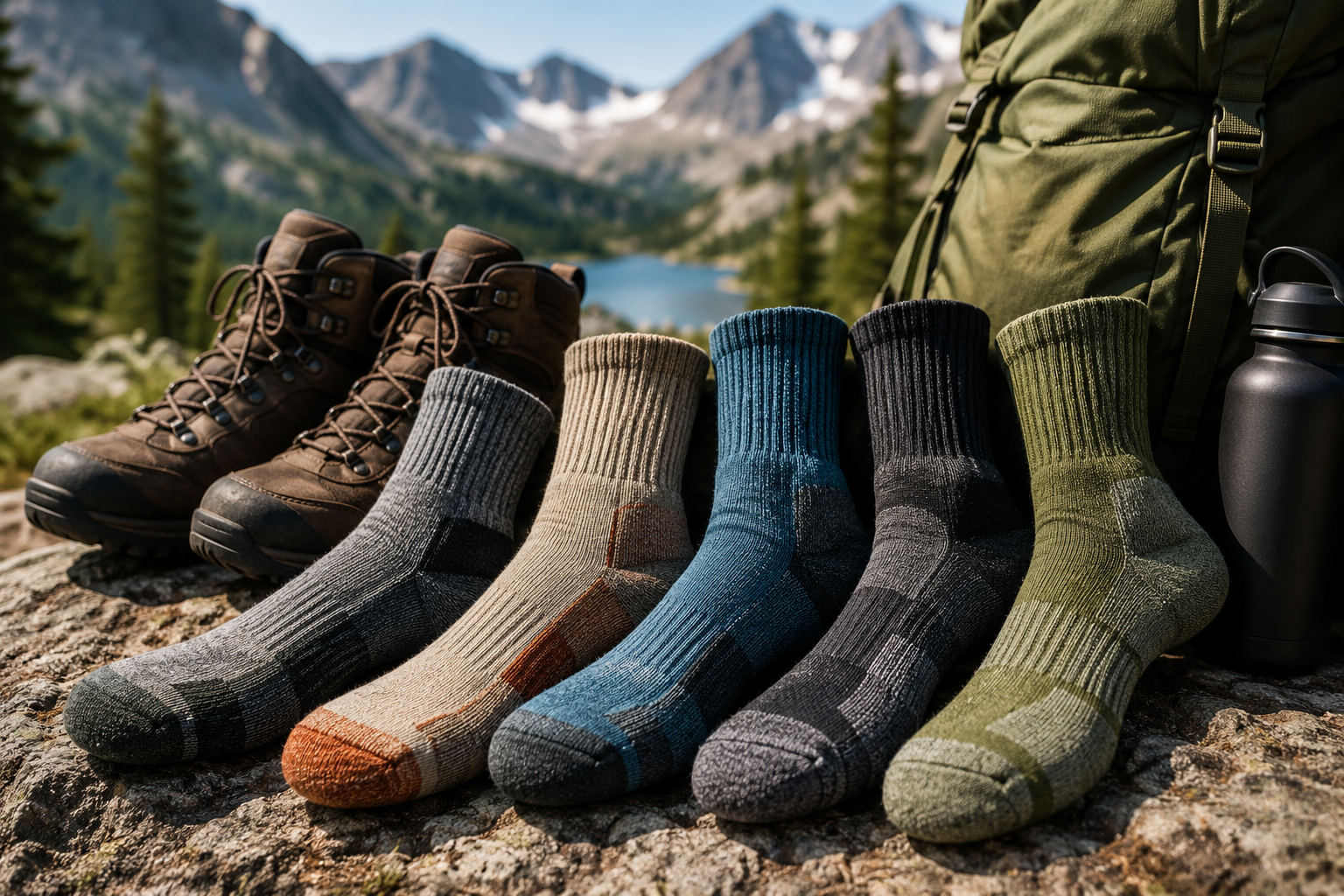
Most hikers grab whatever socks happen to be in the drawer and wonder why their feet are wrecked by mile six — and the problem is almost never the trail itself. It’s the sock. Blisters end more hikes than elevation gain, bad weather, or fitness level ever do, and they come down to one simple mechanical cause: friction combined with moisture. Get the material, cushioning, and fit right, and you eliminate the two biggest contributors to blisters before you’ve taken a single step.
This guide breaks down exactly what matters when choosing hiking socks — fiber type, cushion density, height, and fit — so you can match a sock to your actual trail conditions rather than grabbing whatever’s cheapest or most familiar. Once you’ve settled on the right profile, our best hiking socks that prevent hot spots, blisters and moisture roundup and our best hiking socks for women guide cover specific product picks across these categories — and if you’re building out the rest of your kit, hikingbackpackpro.com’s broader footwear guides cover the boots and insoles that work alongside whatever sock you choose.
Why Material Matters More Than Anything Else
The single biggest lever in blister prevention is moisture management, and that comes down almost entirely to fiber choice. Wet skin has meaningfully higher friction than dry skin, which means a sock that keeps your feet genuinely dry directly reduces blister formation — this isn’t marketing language, it’s the actual mechanism.
Cotton is the one material to avoid outright. Cotton hits its moisture saturation point at roughly 7% of its own weight, meaning it soaks through fast and then stays wet, holding that moisture directly against your skin for the rest of the hike. That’s the gap between dry feet at mile twelve and blisters at mile three.
Merino wool is the material most experienced hikers reach for, and the reasons are genuinely mechanical rather than just tradition. Merino can absorb up to 30% of its own weight in moisture before it starts to feel wet against the skin — a dramatically higher threshold than cotton. Beyond moisture handling, merino does three things simultaneously that no synthetic fully replicates in one material: it regulates temperature (working to keep feet warm in cold conditions and comfortable in warm ones), it resists odor at the fiber level rather than just masking it, and it manages moisture without the clammy feeling synthetics can produce.
Synthetic materials — nylon, polyester, spandex — earn their place through durability and speed rather than comfort chemistry. Nylon adds real strength to a sock’s weave, polyester (often branded as Coolmax or similar) helps with wicking and breathability, and synthetic blends dry considerably faster than merino once they do get wet. The tradeoff is odor: synthetics hold onto smell more persistently than wool, since they lack merino’s natural antimicrobial properties. For hot-weather hiking and high-output days specifically, synthetics genuinely shine — they shed heat and dry fast in exactly the conditions where merino’s insulating properties become a liability rather than a benefit.
Nearly every serious hiking sock on the market today is actually a blend, not a pure fiber, and this is worth understanding before you shop by material alone. Pure merino wouldn’t survive a week of regular hard use, and pure synthetic would develop a genuinely unpleasant odor within days. Premium socks typically run 55-65% merino wool blended with nylon for strength and a small amount of spandex or elastane for shape retention and stretch. The nylon is what keeps the sock’s structure intact over hundreds of miles; the elastane is what keeps it from sagging or bunching as it wears.
Don’t judge a sock purely by its merino percentage. A sock listed at 79% merino isn’t automatically better than one at 61% — knit density and construction quality matter as much as raw fiber percentage. A denser weave holds its shape and resists wear better regardless of the exact wool content, so treat the percentage as one data point rather than the whole story.
Cushioning — Matching Density to Conditions, Not Just Comfort Preference
Cushioning does more than add comfort; it absorbs impact from rocks, roots, and uneven terrain, and it directly affects warmth and overall sock volume inside your boot. The mistake most first-time buyers make is picking cushion level purely on how plush a sock feels off the shelf, rather than thinking through how it’ll perform once you’re actually moving.
Cushion density matters more than raw thickness. A well-engineered midweight sock with cushioning concentrated where it’s actually needed — the heel and forefoot, the areas that take real impact — will outperform a bulkier heavyweight sock with poor construction. Some premium socks specifically target cushioning to those high-impact zones rather than padding the entire foot uniformly, which keeps the sock from adding unnecessary bulk and heat where you don’t need it.
Match cushion level to temperature and trail conditions, not personal comfort preference alone. In cooler weather, extra cushioning provides real warmth and impact protection that’s genuinely welcome. In hot weather or during high-output days, that same cushioning becomes a liability — trapped heat leads to sweatier feet, and sweatier feet are blister-prone feet. As a rough guideline, avoid heavyweight cushioned socks in temperatures above roughly 80°F, where the added insulation works against you rather than for you.
For genuinely cold conditions, a thin merino liner sock paired with a full-cushion outer sock adds real insulating value beyond what either sock alone provides — the air gap trapped between the liner and the outer sock functions as an additional layer of warmth, similar to how layered clothing works.
Height and Cuff — Matching the Sock to Your Footwear
Sock height should match your boot or shoe height directly, not personal preference alone, since a mismatch here creates its own friction problems independent of material or cushioning.
Trail running and low-cut hiking shoes pair best with ankle or quarter-crew height socks — anything taller bunches awkwardly above a low shoe collar and can create its own pressure point.
Standard hiking boots generally call for crew height, which covers the ankle bone and boot collar area where rubbing most commonly occurs.
Multi-day backpacking trips in taller boots often benefit from over-the-calf height, which provides additional coverage and can help prevent debris and moisture from working down into the boot from above.
Fit — The Detail Most Buyers Get Wrong
Sizing matters as much as material or cushioning, and it’s the detail most casual buyers skip past entirely. A sock that’s too small creates real pressure points and can actually contribute to cold feet by restricting circulation; a sock that’s too large bunches inside the boot, and that bunching is a direct and reliable cause of blisters, since folded fabric creates exactly the kind of concentrated friction point that leads to hot spots within the first few miles.
Look specifically for reinforced heel and toe construction. These are the two zones that take the most repeated wear and friction on rough terrain, and a sock built with extra reinforcement in those specific areas holds up considerably longer and resists developing thin spots that can eventually lead to blisters as the fabric wears through.
A contoured, snug fit that hugs the foot outperforms a looser generic fit for serious trail use. Socks built with actual left-right foot shaping, rather than a straight tube sock construction, stay in place better over a full day of hiking and are considerably less prone to slipping or bunching inside the boot.
Matching Sock Choice to Your Actual Trip
Day hikes on maintained trails are well served by midweight merino-blend crew socks — look for at least 50% merino content with nylon reinforcement specifically in the heel and toe. This combination provides enough cushioning for a 3-to-6-hour outing without overheating on warmer days.
Multi-day backpacking trips genuinely demand more from a sock. Heavier cushioning, higher merino content (65% or more), and taller cuff height for boot coverage all matter more when you’re accumulating hundreds of miles rather than a single day’s worth of wear.
Hot-weather or summer hiking calls for lightweight merino or merino-blend socks specifically, prioritizing quick-drying performance and breathability over cushioning depth. Thick socks in genuinely hot conditions create the exact steaming, sweat-trapped environment that leads to hot spots and blisters.
High-output days with a heavy pack — even in moderate temperatures — benefit from lighter cushioning than you might otherwise choose, since exertion alone generates enough heat that a thick sock can push feet into that same overheated, blister-prone state faster than the ambient temperature alone would suggest.
When to Replace Your Hiking Socks
There’s no fixed mileage number that applies universally — merino-nylon blends from quality manufacturers typically stay genuinely functional for several hundred miles of real hiking before heel compression or thinning becomes noticeable, while cheaper blends and pure synthetics tend to show wear meaningfully earlier. The practical signal to watch for isn’t holes — by the time you can see through the fabric, you’ve likely been hiking in a compromised sock for a while already. Replace a sock once the cushioning feels genuinely packed down and no longer springs back, or once you can see the knit thinning at high-wear spots, rather than waiting for a hole to actually form.
Final Thoughts
Getting hiking socks right comes down to three decisions working together rather than any single spec: choose a material — almost always a merino-nylon-elastane blend rather than a pure fiber — that manages moisture for your actual climate, match cushioning density to your trail conditions rather than just comfort preference, and confirm the height and fit genuinely suit your footwear and foot shape. Skip cotton entirely, prioritize reinforced heel and toe construction, and don’t assume a higher merino percentage automatically means a better sock — knit density and blend construction matter just as much.
Get those fundamentals right, and the sock stops being an afterthought item and becomes exactly what it should be: the first and most reliable layer of defense between your feet and a genuinely miserable hike.