
As an Amazon Associate I earn from qualifying purchases.
Flat feet change the job a hiking boot has to do, and the wrong boot makes that clear by the second climb, when the arch aches and the ankle rolls inward. This roundup compares the boot designs that actually support a flat foot on trail, matches each one to the hiker and the hike it suits, and covers how to fit and break in a supportive boot.
Start With How to Choose the Right Boot
Flat feet make the basics matter more, so read the full boot-choosing guide before you spend anything on a new pair.
Read How to Choose the Right Hiking BootsKey Takeaways
- Judge a boot by its midsole and heel cup, not by how soft it feels in the shop.
- A firm, structured boot beats a soft, flexible one for flat feet on rough ground.
- Buy the width your foot actually spreads to, never a longer boot to fake it.
- Keep the stock insole removable, so the insert or orthotic you use can move in.
- Fit late in the day, break in slowly, and let sore feet change the plan.
Table of Contents
- How We Judged These Boots
- What Flat Feet Actually Need From a Boot
- Best Firm-Midsole Mid-Cut Boot for Most Flat-Footed Hikers
- Best Wide-Option Boot for Flat Feet That Spread
- Best Stiff Backpacking Boot for Heavy Loads and Long Miles
- Best Boot-Plus-Insole System for Flat Feet
- How to Choose the Right Boot for Your Flat Feet
- Fit Mistakes That Make Flat Feet Hurt More
- Breaking In Supportive Boots and First Hikes
- Our view
- FAQ
- Sources
- Recommended
How We Judged These Boots
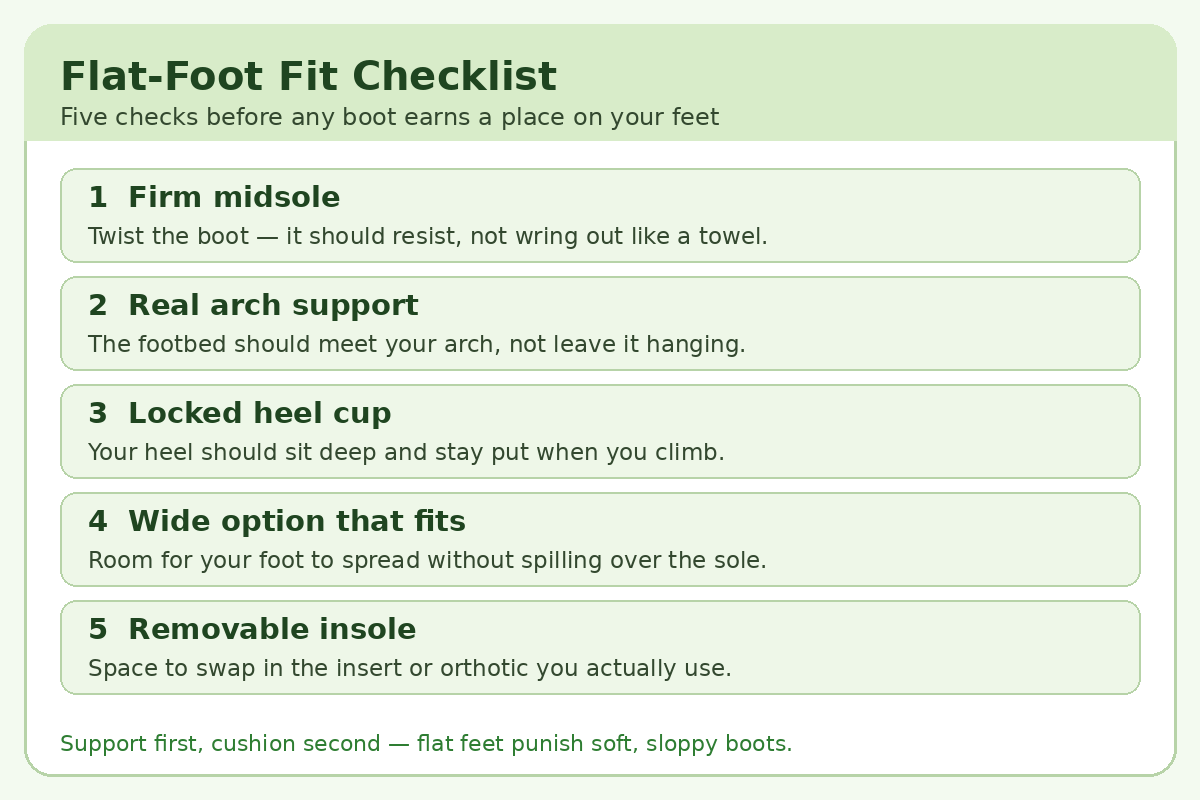
A hiking boot for flat feet has one job: keep the foot from collapsing inward under load, mile after mile. Every design here was judged against that job — midsole firmness, heel-cup hold, real arch support, a wide option for feet that spread, and a stock insole that comes out cleanly. Softness was not the deciding factor, because a soft boot folds under a pack on the third mile. The shoe guidance from WebMD makes the same point for flat feet in general: look for a supportive sole, a firm but cushioned insole, a heel that is enclosed and held, and a fit you can adjust with laces.
| Boot design | What supports the flat foot | Best for | Watch out |
|---|---|---|---|
| Firm-midsole mid-cut boot | Firm midsole and heel cup, moderate ankle collar | Most flat-footed hikers, most day hikes and weekend routes | Needs a real break-in; a stiff start is normal, pain is not |
| Wide-option boot | Wider last and toe box, same firm support underneath | Flat feet that spread under load, wide forefeet, swollen feet late in the day | A wide boot that is also too long lets the foot slide and blister |
| Stiff backpacking boot | Stiff shank, high collar, durable outsole under heavy loads | Multi-day routes, heavy packs, rugged and uneven ground | Heavier and hotter; overkill for short, easy trails |
| Boot-plus-insole system | A sound boot plus a supportive aftermarket insole or orthotic | Hikers whose arch needs more than any stock footbed gives | The insert must be tested in the boot, never stacked on the stock insole |
The Five Fit Tests That Separated the Designs
Twist, bend, press, heel and width — in that order. Twist the boot lengthwise: it should resist, because that resistance stops the foot rolling inward. Bend it at the ball of the foot, where the foot flexes, and nowhere else. Press the heel counter: it should hold its shape, not fold under a thumb. Then check width by standing on the insole with your foot flat, the way the components guide from REI describes midsoles, shanks and heel counters as the parts that decide how a boot rides under load. A boot that fails the twist test is not a candidate, however comfortable it feels standing still.
Judge the boot against your foot’s shape, too. A wide flat foot needs the wide option, not a longer standard boot, and a narrow heel needs a heel cup that actually grips. The roundups in our best hiking boots for men and best hiking boots for women show how support lands differently across lasts, and our how to choose the right hiking boots guide walks through the full type, material and fit sequence these picks sit inside.
What Flat Feet Actually Need From a Boot
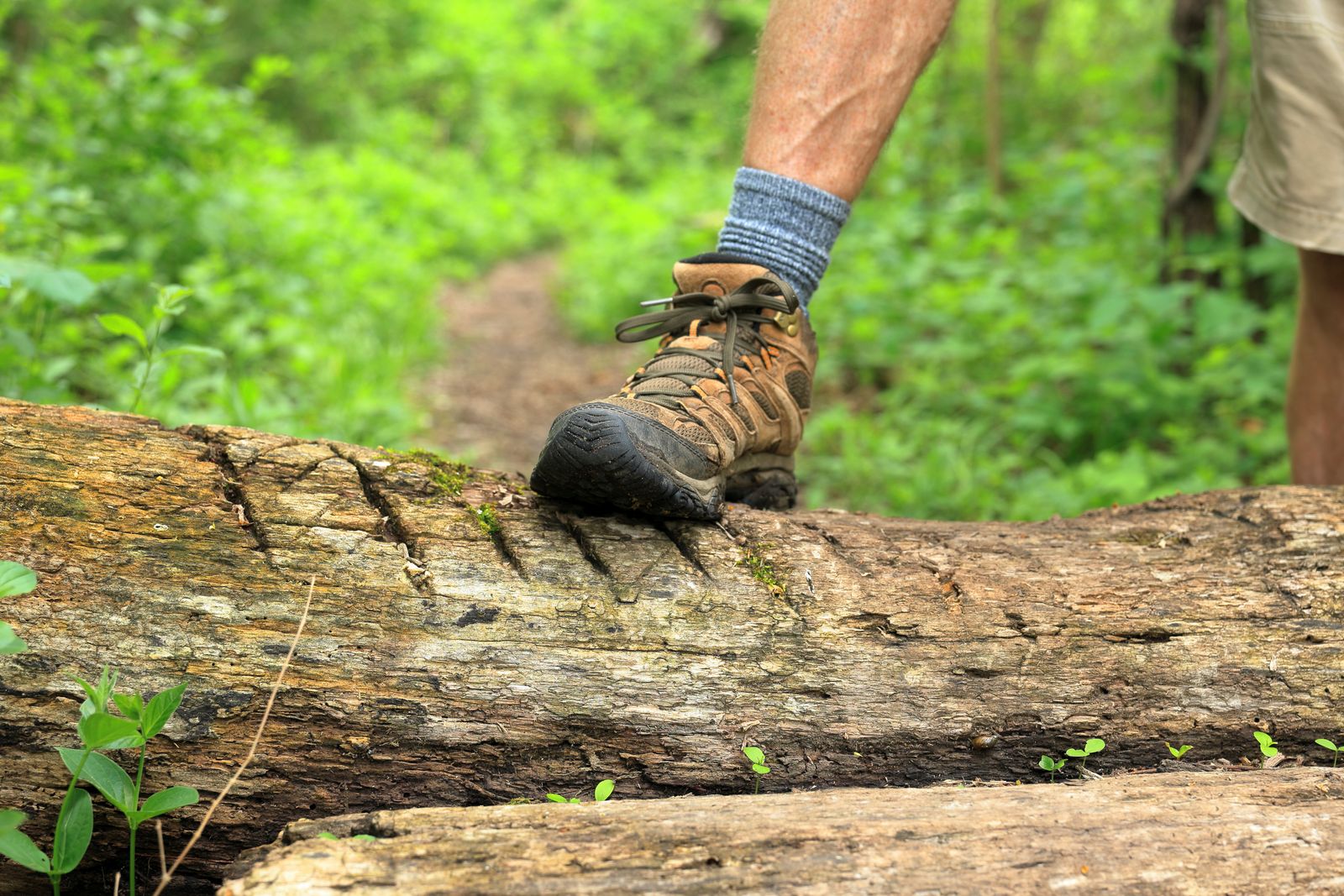
Start from what the arch does, because the boot is hired to do part of that work. The arches act as a springboard and shock absorber, store and release energy as you walk, and adapt the foot to uneven surfaces — and when an arch flattens under load, the heel points outward and the ankle rolls inward, the movement a boot has to resist. That description comes from the Cleveland Clinic overview of flat feet, which also distinguishes flexible flat feet, where the arch appears off-load and disappears on standing, from rigid flat feet, where no arch appears at all. Most hikers have the flexible kind, and the boot’s job is to hold the foot in its unloaded shape through every loaded step.
Pain is the signal, not the shape. Most people with flat feet have no symptoms, but some feel pain in the arch or along the inside of the foot and ankle, with swelling there, worsening with activity and unsupportive footwear — the pattern the Mayo Clinic describes for flatfeet. That distinction matters for buying: a painless flat foot needs a boot that creates no problem, while a painful one needs active arch support and ankle steadiness. If pain is new, worsening, one-sided, or limiting, the boot is not the first step — a clinician is.
Flexible or Rigid — Why the Difference Changes the Boot
A flexible flat foot can be supported; a rigid flat foot must be accommodated. A firm midsole, deep heel cup and supportive insole can hold a flexible foot in a better position, because the foot can still move into it. A rigid foot cannot be pushed into an arch it does not have, so its boot must fit the foot as it is — roomy, and chosen for comfort rather than correction. The simple standing test in the MedlinePlus flat-feet entry separates the two: stand on your toes, and if an arch forms, the flat foot is flexible and needs no further testing on that point; if no arch forms, or there is pain, it needs a clinician’s look. Know which kind you have before you shop, because it decides whether you are buying support or buying space.
Best Firm-Midsole Mid-Cut Boot for Most Flat-Footed Hikers
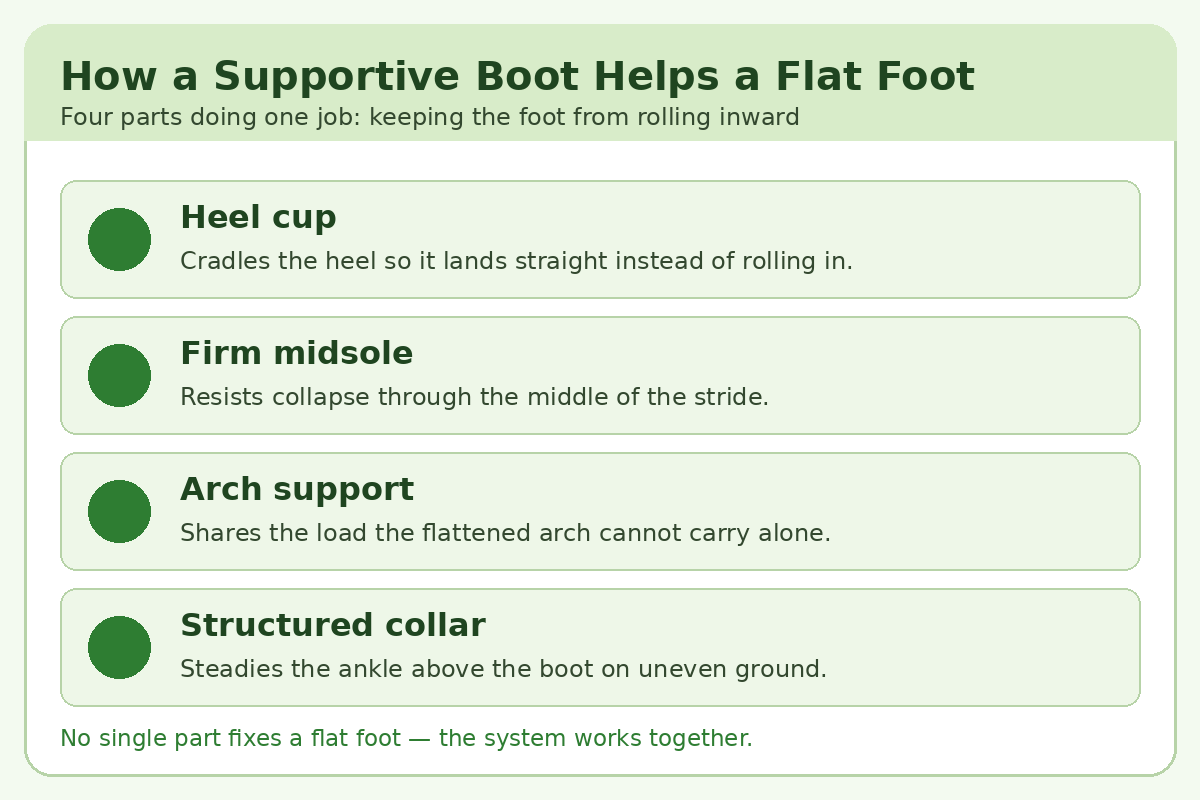
This is the default pick, and it earns that place on support you can feel working. A mid-cut boot with a firm midsole and a deep heel cup gives a flat foot three things it cannot give itself: resistance through the middle of the stride, a heel that lands straight, and a collar that steadies the ankle on uneven ground. For most flat-footed hikers on most day hikes, this is the boot to buy first.
It suits the way flat feet actually fail on trail. The failure is rarely a single bad step; it is slow inward collapse, repeated thousands of times, until the arch aches. A firm midsole interrupts that cycle on every step rather than cushioning the result. The overview of orthotics from Cleveland Clinic describes inserts and supportive footwear as tools that change how forces travel through the foot — a firm-midsole boot is that idea built in. Start your search inside our best hiking boots for men and best hiking boots for women roundups, and run every candidate through the five fit tests above first.

Merrell Moab 3 Mid Waterproof Hiking Boots
- Women’s Waterproof Hiking Boots: Waterproof and breathable membrane helps keep feet dry and comfortable on wet trails and rough terrain.
- Durable Leather & Mesh Upper: Pigskin leather combined with breathable mesh delivers long-lasting durability, ventilation, and abrasion resistance.
- All-Day Comfort & Arch Support: Removable contoured footbed, reinforced heel cushioning, and molded nylon arch shank provide stability and support for extended hikes.
New starting from: 149.8 $
Go to AmazonWho Should Skip This Type
Very wide feet and heavy-pack backpackers outgrow it first. A standard-width mid-cut crowds a spreading flat foot, and no lacing trick creates width that is not in the last — those hikers belong in the wide pick below. Heavy packs over rough ground need the backpacking pick’s stiffer shank. And rigid flat feet, or new unexplained pain, call for a clinician before a boot.
Best Wide-Option Boot for Flat Feet That Spread
Choose this type when your footprint is wide, your toes splay, or your feet swell into the sides of a standard boot by midday. Flat feet spread: with the arch lowered, the foot takes up more room along the ground, and many flat-footed hikers are wide through the midfoot as well as the forefoot. A genuine wide option keeps the default pick’s firm midsole and heel support, but gives the foot the width it actually occupies.
Width is a fit measurement, not a comfort extra. The shoe-fit guidance from FootCareMD is direct: have both feet measured, check width as its own measurement, and make sure the ball of the foot sits comfortably in the widest part of the shoe. That check matters doubly for flat feet, because a width-squeezed foot rolls and slides, undoing the support it was bought for. Hikers who need room up front will recognise the shape logic in our wide toe box hiking boots roundup — though a roomy front half still needs the firm platform underneath it.
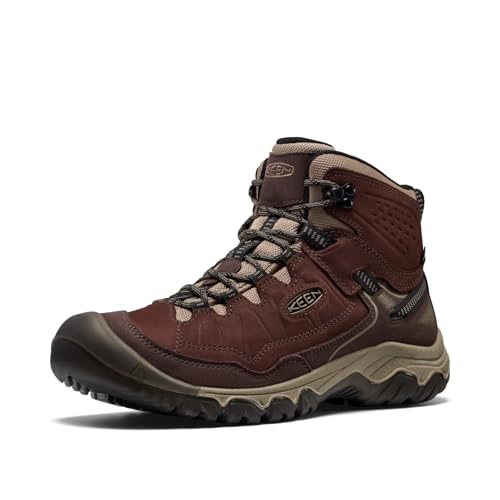
KEEN Men's Targhee 4 Mid Height Durable Comfortable Waterproof Hiking Boots, Java/Brindle, 10.5
- WATERPROOF: KEEN.DRY waterproof breathable membrane keeps your feet dry and comfortable all day long by allowing vapor out without letting water in
- CONSTRUCTION: Direct-attach construction provides long-lasting cushioning and reduces the chance of footwear separating over time, because the best boot is the one you keep wearing
- TRACTION: KEEN.ALL-TERRAIN rubber outsole provides elevated traction in muddy environments and on rocky surfaces; 100% recycled PET laces and breathable mesh lining makes these hiking boots light on your feet and the planet
List Price :
Offer: 142.44 $
Go to AmazonNever Buy Width With Length
A longer boot is not a wider boot, and the difference shows up as blisters. Sizing up moves the boot’s flex point ahead of your foot’s, lets the heel lift and slide, and turns support into friction. Buy the wide option in your measured length instead, and test it the way our blister prevention guide recommends judging any new boot: short walks first, hot spots treated as information, not as something to push through. If a brand offers no wide option in a boot you like, that boot is not for your foot, however good its reviews are.
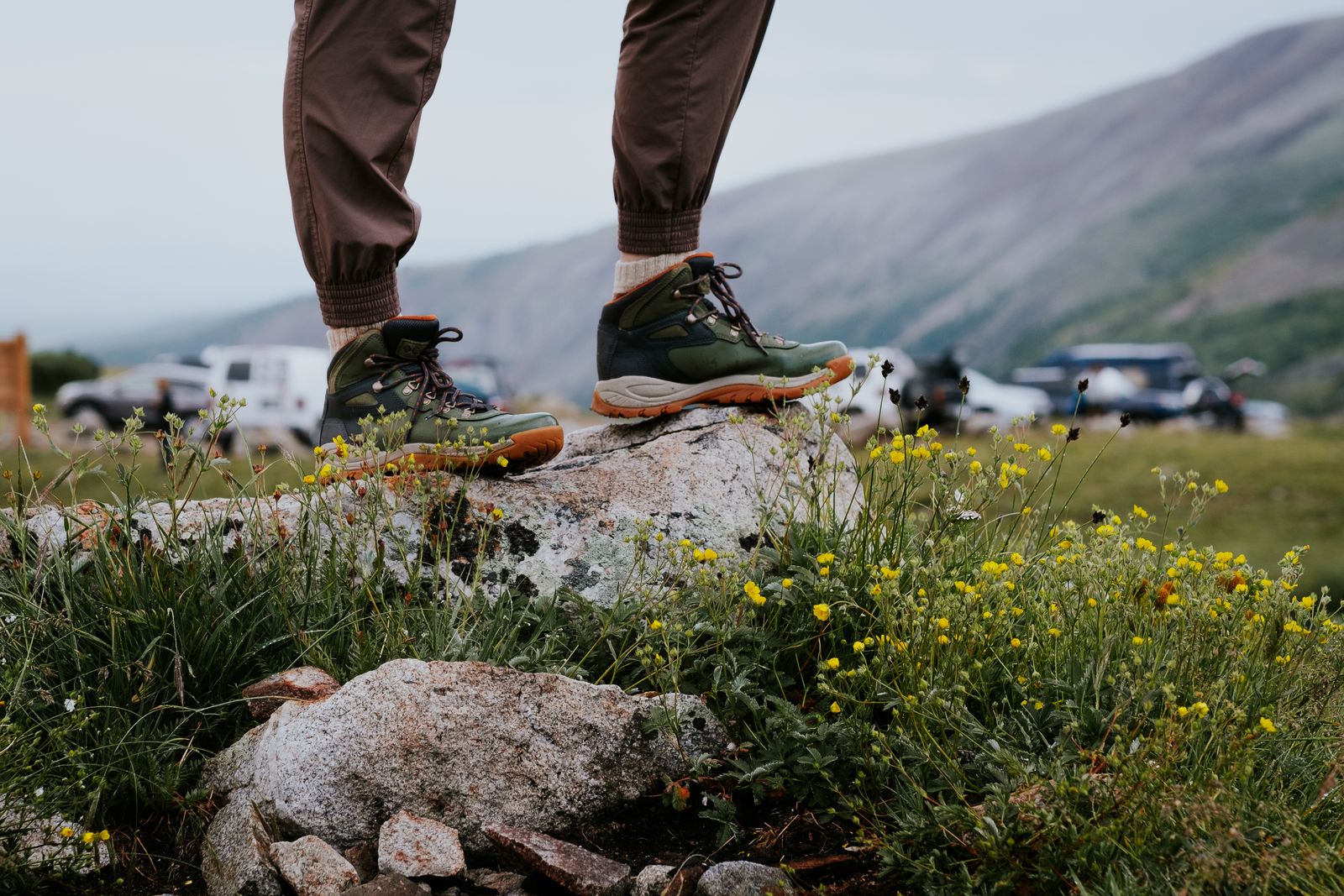
Best Stiff Backpacking Boot for Heavy Loads and Long Miles
Choose this type when the pack is heavy, the route is long, or the ground is rough enough that a day boot flexes where it should hold. A backpacking boot pairs the firmest platform in this roundup — a stiff shank, a high structured collar, a durable outsole — with the heel cup and arch support a flat foot needs. Under a heavy pack, the stiff boot keeps each step’s force from turning into inward collapse.
Support under load is also a tendon question. The posterior tibial tendon, running behind the inside of the ankle into the arch, is one of the main structures holding the arch up, and when it weakens or is overused the arch can progressively flatten, as the AAOS OrthoInfo overview explains. A boot does not treat that condition — new or worsening arch pain deserves a clinician, not an upgrade. What it does is reduce the strain each step asks of the arch’s supporting structures, which is why aching arches on long routes often feel the biggest difference from this pick. Waterproof versions earn their keep on wet routes, and our waterproof hiking boots for women roundup shows the same stiffness-and-support logic in waterproof form.

Oboz Women's Bridger Mid B-DRY, Frost Gray, 8 Wide
- B-DRY WATERPROOFING: The waterproof and breathable membrane blocks moisture while allowing water vapor to escape, helping these waterproof trekking boots handle rainy routes, damp paths and changing conditions.
- O FIT INSOLE COMFORT: Triple-density EVA combines cushioned heel and forefoot pods, a firm molded shell, deep heel cup and arch profile, giving these cushioned hiking boots lasting comfort during extended outings.
- TRAIL TREAD HD TRACTION: A heavy-duty rubber compound and multidirectional tread deliver grip across rocky ground and wet or dry surfaces, making these trail hiking boots ready for rugged routes and uneven paths.
New starting from: 98.78 $
Go to AmazonWhen Stiff Is Too Much Boot
On short, easy, well-made trails, a stiff backpacking boot is weight without benefit. The firmness that protects a loaded foot on rough ground can feel punishing on a gentle walk, and a resented boot gets left at home. Match stiffness to the hardest hiking you do regularly, not the hardest you imagine.
Best Boot-Plus-Insole System for Flat Feet
The most adjustable system is not a special boot at all — it is a sound, supportive boot with its stock insole removed and a proper supportive insole or orthotic in its place. Stock insoles are thin fillers, and replacing that filler is often the single biggest upgrade available to a flat foot. The system works with any pick above, provided the boot has the internal volume and a removable insole — which is why removability was one of the five fit tests.
Fit the insole to the foot and the boot together. The insole guidance from REI makes a point flat-footed hikers need to hear: for low or collapsed arches, what is really needed is support that stabilises the heel and distributes pressure across the base of the foot, rather than a lump of pressure pushed into the arch — and volume matters as much as shape, because a crowding insole ruins the fit. Terminology matters too: the APMA guide explains that a device prescribed and made for your foot is a custom orthotic, while anything off the shelf is a shoe insert, whatever the packaging claims. Our dedicated insoles for flat feet hiking roundup works through the insert options in detail, and our boot insoles guide covers the wider insole landscape.

CURREX HikePro Insoles for Hiking Boots & Shoes – Shock Absorbing Inserts to Help Reduce Fatigue and Increase Performance – Anti-Slip Heel Surface for Stability – for Men & Women – High Arch, Large
- FEEL BETTER, PERFORM BETTER: Our hiking insoles offer flexible support and shock absorbing cushioning to provide superior comfort, reducing fatigue and increasing performance on any trail, from short hikes to all day outings; plus, a non-slip, deep heel cup increases stability and confidence on all terrain so you can make the most of the great outdoors
- 3D Dynamic Arch Technology & SuperGrip Anti-slip: Our dynamic arch support insoles come in low, medium and high arch support profiles; they feature a deep decoupled heel cup that fits, wraps and locks the heel in place with a perfect fit for sure-footedness and stability on uneven terrain and downhill descents
- Engineered to Keep You Outdoors: Shock absorbing cushioning with flexible arch support provide superior comfort in a perfect fit, supporting your feet for less fatigue through endless adventure; insoles can be trimmed for an exact fit, providing the most comfortable hiking experience no matter where your trail takes you
New starting from: 59.95 $
Go to AmazonTest the System, Never Stack It
An aftermarket insole replaces the stock insole; it never sits on top of it. Stacking two insoles lifts the foot out of the heel cup the boot was built around, crowds the toe box, and creates the heel slip the system was meant to cure. Pull the stock insole out, put the replacement in, lace up in your hiking socks, and walk — ideally on a slope — before trusting the combination with a real route. If the support feels like a stone under the midfoot rather than a shelf, the profile is wrong and a lower-profile insert is the fix.
How to Choose the Right Boot for Your Flat Feet
Match four things: your arch type, your foot’s width, the loads you carry, and the insole you plan to use. A flexible foot that aches on long days points to the firm mid-cut or the insole system; a wide, spreading foot to the wide option in your true length; heavy packs and rough ground to the stiff backpacking boot. Most failed purchases come from matching only one of the four.
Fit Them Like It Matters, Because It Does
Shop late, measure both feet, and test in your hiking socks. Feet swell across the day, so a boot fitted in the morning is fitted to a smaller foot than the one that hikes. Stand while you are measured, fit to the larger foot, and leave roughly a finger’s width between your longest toe and the end of the boot, so descents do not drive your toes into the front. Wear the socks you actually hike in — our how to choose hiking socks guide shows how much fit a sock can change — and walk a slope if the shop has one, because heel lift announces itself on inclines, not carpet. The treatment overview from the Mayo Clinic lists the same toolkit for painful flat feet: arch supports, shoe changes toward well-supported footwear, stretching for a shortened Achilles tendon, and physical therapy where overuse has set in — the boot works best when the rest is not ignored.
The Sock and Lacing Half of the System
A supportive boot can be undone by a thin sock and a loose lace job. A cushioned hiking sock fills the boot evenly and reduces the sliding that turns support into friction — the pairs in our best hiking socks roundup are chosen with that job in mind. Lace firmly through the midfoot and use the top hooks to lock the heel on descents. If the heel still lifts, the heel cup does not match your heel, and no sock will fix it.
Fit Mistakes That Make Flat Feet Hurt More
The commonest mistake is buying cushion instead of support. A soft, flexible boot feels wonderful for the first hour, then lets the foot collapse inward for the remaining five — which is why the most comfortable-feeling boots so often produce the sorest feet. The second mistake is buying length instead of width. The third is judging fit standing still: a flat foot spreads under load and across a day, so a boot perfect at the till can be a size too small by the last mile.
The fourth mistake is treating every flat-foot ache as a shopping problem. The NHS guidance on flat feet is clear that most flat feet cause no pain and need no treatment at all — and, by the same token, pain that is persistent, worsening, one-sided, or bad enough to limit your walking belongs in front of a clinician, not in a boot review. A boot can support a foot; it cannot diagnose one. Get the order right — clinician first when the signs call for it, boot second — and rebuild the rest of the kit from our day hiking essentials checklist once the footwear is settled.
Mistakes Inside the Boot Count Too
Worn-out insoles and dead midsoles are silent mistakes. A supportive boot stops being supportive when its midsole packs down and its insole flattens — and flat feet notice first, because they leaned on that support hardest. Twist an older boot the way you tested it new: if it now folds where it once resisted, it is retired, whatever the uppers look like. Aftermarket insoles compress on their own schedule too — the replacement rhythm in our insoles for hiking boots guide is worth adopting early.
Breaking In Supportive Boots and First Hikes
Break a supportive boot in gradually, because its firmness is the feature and your feet need time to meet it. Wear them around the house, then on short walks, then a short hike, and only then a full day — the staged approach in our how to break in hiking boots guide exists because a stiff boot and an unprepared foot need time to meet. For flat feet, judge the break-in by your arches as much as by hot spots: mild awareness of new support is normal at first, while sharp arch pain or pain that changes how you walk means the fit or insole profile is wrong.
Build the Miles Like You Build the Boot
Increase distance before you increase difficulty. A flat foot that handles a flat five miles may still struggle with a rocky five, because uneven ground asks the arch to work on every step. Sequence the first hikes easy-to-hard as well as short-to-long, keep the pack light, and carry the blister kit from our blister prevention guide until the pairing is proven. Support that felt stiff in the shop usually feels, by then, like the reason the day went well.
Our view
The best boot for flat feet is one whose support you stop noticing by the second mile — firm underneath, locked at the heel, wide enough for your foot. Start with the full decision in our how to choose the right hiking boots guide, fine-tune the arch with our insoles for flat feet hiking roundup, and give the pair a fair chance with our how to break in hiking boots method, and flat feet stop being the reason a hike gets cut short.
— Brian Ka
FAQ
Do flat feet need special hiking boots?
Not special — supportive. A flat foot needs a firm midsole, a real heel cup, arch support in the footbed, and, for many hikers, a wide option. Those features exist in ordinary boots; the skill is choosing by them instead of by softness or looks. Painless flat feet can hike in any well-fitting boot; painful ones should shop support first.
Are stiff boots or soft boots better for flat feet?
Firmer, within reason. A boot that twists easily lets the foot roll inward with every step — the motion flat feet need help resisting — while a boot that never flexes at the ball creates its own problems. The target resists twisting, bends where your foot bends, and matches your loads.
Should I put insoles or orthotics in my hiking boots?
Often, yes — as a replacement, never as a stack. Many flat-footed hikers get more support from a good aftermarket insole than from any stock footbed, and prescribed orthotics should be hiked in. Remove the stock insole first, test the combination in your hiking socks, and check the added volume has not crowded the toe box or lifted your heel.
How do I know if a boot is wide enough for flat feet?
Stand on the removed insole. Your foot should sit inside its outline without spilling over the edges. In the boot, the ball of your foot should rest in the widest part without pressure and your toes should spread naturally. If you are reaching width by sizing up, the boot is the wrong shape for your foot.
When should flat feet see a doctor instead of a boot fitter?
When pain is persistent, worsening, one-sided, or limiting. Most flat feet are painless, but new pain, swelling along the inside of the ankle, trouble standing on your toes, or a visibly changing foot shape deserves a clinician before more gear.
Questions About Boots for Flat Feet?
Tell us your arch type, your foot width and the trails and pack weights you have in mind, and we will help you pick the boot design that fits.
Contact UsSources
- Cleveland Clinic — Flat Feet (Pes Planus)
- Cleveland Clinic — Orthotics
- MedlinePlus — Flat Feet
- Mayo Clinic — Flatfeet: Symptoms and Causes
- Mayo Clinic — Flatfeet: Diagnosis and Treatment
- NHS — Flat Feet
- APMA — Prescription Custom Orthotics and Shoe Inserts
- WebMD — Flat Feet? Learn How to Pick the Best Shoes
- REI — How to Choose Hiking Boots and Hiking Shoes
- REI — How to Choose Insoles
- AAOS OrthoInfo — Progressive Collapsing Foot Deformity
- FootCareMD — 10 Points of Proper Shoe Fit